How to Grow a Peace Lily: Peace Lily Care Guide
The peace lily, also known as white sail, white crane taro, spathe taro or peace taro, is called "plain sailing" among the people because of its auspicious meaning. It is often used for indoor greening and decorative arrangements, so how do you grow a peace lily?
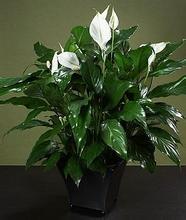
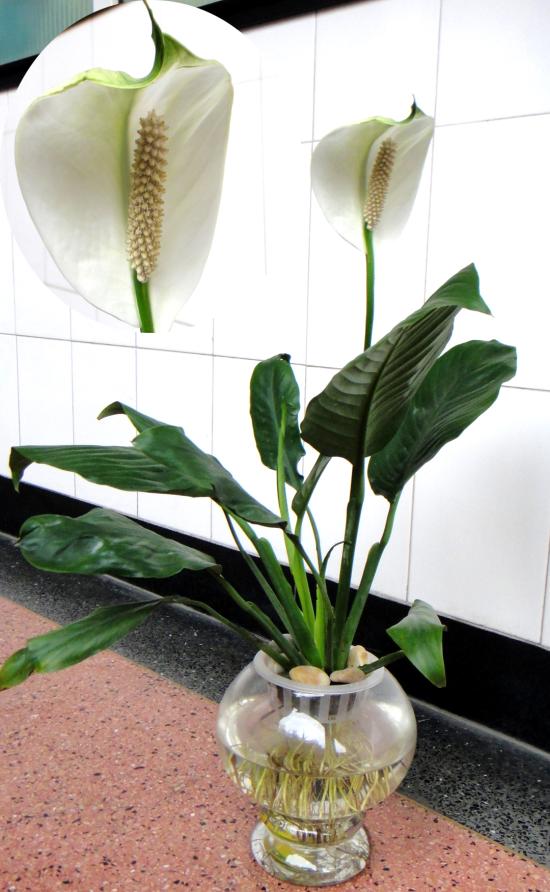
The peace lily is a perennial evergreen herbaceous foliage plant. The plant height is generally 40-60 cm, with a short rhizome, mostly growing in clumps. The leaves are oblong or nearly lanceolate, tapering at both ends, with a wedge-shaped base. The flower is a spathe, slightly fragrant, leaf-shaped, meaning its flower has no petals but is composed of a white bract and a yellow-white spadix, closely resembling a palm, hence the name white palm; its flower is large and prominent, with a long pedicel rising above the leaves, white or green. The flowering period is from May to August.
[How to Grow a Peace Lily: Substrate Selection]
The peace lily needs loose potting soil with good drainage and aeration. Before obtaining high-quality seedlings, the growing substrate must be prepared. The substrate can be ordinary Northeast peat or imported German peat, but both must be mixed with 15%-20% perlite and stirred evenly. Choose large-grained perlite, and be careful not to crush the perlite. The prepared substrate should have an EC value of about 0.7 mS/cm and a pH value maintained at about 5.5.
[How to Grow a Peace Lily: Temperature Control]
The peace lily is a heat-loving species and should be cultivated in a high-temperature greenhouse. The most suitable daytime and nighttime temperatures for the peace lily are 20°C-21°C, and the maximum should not exceed 24°C. If the daytime temperature is relatively high, the nighttime temperature can be appropriately lowered as compensation. For example, if the daytime temperature is 27°C for 6 hours, then at night the temperature should be kept at 9°C for 6 hours. Other situations follow the same pattern. Pay special attention: if the peace lily is kept at a low temperature for a long time, it is prone to leaf drop or scorched-yellow leaves.
[How to Grow a Peace Lily: Water Management]
The peace lily likes a moist environment. The substrate must always be kept moist; do not wait until the substrate is completely dry before watering. The "water when dry, dry out between waterings" approach to water management does not apply to the peace lily, and it also increases the chance of root infection, which is bad for growth. The best watering method is overhead spraying, but the seedbed must have good drainage. The EC value of the spray water should not exceed 0.8 mS/cm at most, otherwise it is unfavorable for crop growth.
[How to Grow a Peace Lily: Moisture]
The most suitable relative humidity for peace lily growth is 75%-85%. You should frequently spray water onto the leaf surface with a fine-nozzle sprayer and sprinkle water on the ground around the plant to keep the air moist, which is very beneficial to its growth and development. When the climate is dry and the air humidity is low, new leaves will become smaller and yellow, and in severe cases will wither, yellow and fall off. If the nighttime humidity is greater than 80%, be sure to raise the greenhouse temperature by 1°C-2°C 1 hour before sunrise in the early morning and maintain it until 2 hours after sunrise to avoid infection by pathogens.
[How to Grow a Peace Lily: Light Control]
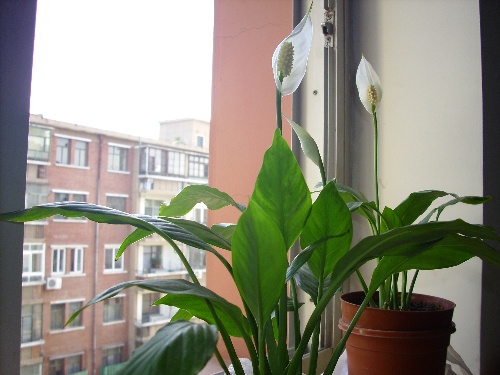
The peace lily is relatively shade-tolerant. When the light intensity exceeds 250 w/m2, the peace lily should be shaded. In northern regions, 65%-85% of sunlight can be blocked in summer. Direct strong light is taboo, otherwise the leaves will turn yellow, and in severe cases sunscald will occur.
[How to Grow a Peace Lily: Fertilization Management]
Since the peace lily has relatively many tillers, it can be fertilized more. During the vegetative growth stage, the N:K ratio of the nutrient solution applied by spraying is 2:1; during the reproductive growth stage, the N:K ratio of the nutrient solution applied by spraying is 1.5:1. This can make the reproductive growth of the peace lily dominant and promote flowering.
After reading the editor's introduction, you should know how to grow a peace lily.