How to Grow English Ivy? A Detailed Guide to Its Care Methods
English ivy (Hedera helix) is a rather popular large indoor potted foliage plant, especially suited to being placed in wider living rooms, studies and sitting rooms, where it lends an elegant, simple style with a touch of southern charm. It is a world-famous, new-generation indoor foliage plant with a graceful, neat plant shape. How do you grow English ivy? Today the editor will introduce the care methods for English ivy.
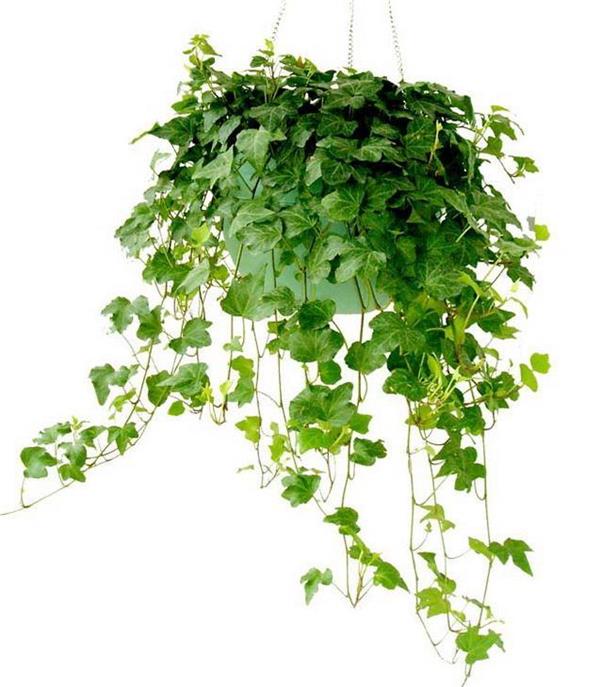
[English Ivy Habits]
English ivy originated in Europe. It likes warm, humid and semi-shady environments, is relatively cold-tolerant, and most of all dislikes high temperatures and dry conditions. It is fairly shade-tolerant, can also grow in full sunlight, but fears intense direct sun exposure, and prefers loose, fertile loam. Its optimum growing temperature is between 25-30°C. In winter it can overwinter safely above 0°C, has strong cold resistance, and can withstand a brief low of -3°C. In cold regions its leaves turn red, so it is best to overwinter it indoors. It likes light but is also fairly shade-tolerant.
[How to Grow English Ivy]
1. The temperature must be suitable. English ivy likes warmth, with an optimum growing temperature of 20°C-25°C; it fears heat and is not cold-tolerant. So when keeping it indoors, pay attention to ventilation and cooling in summer, and in winter the room temperature should best be kept above 10°C, and must not fall below 5°C.
2. Light should be moderate. English ivy likes light and is also fairly shade-tolerant. Grown under semi-light conditions, its internodes are shorter, its leaf shape is uniform and its leaf color is vivid, so it is best grown in a bright spot indoors.
3. Water moderately. During the growing season, water according to the "dry-wet" principle, and do not let the potting soil become excessively moist, otherwise root rot and leaf drop easily occur. In winter, when room temperature is low, control watering in particular, and just keep the potting soil slightly moist.
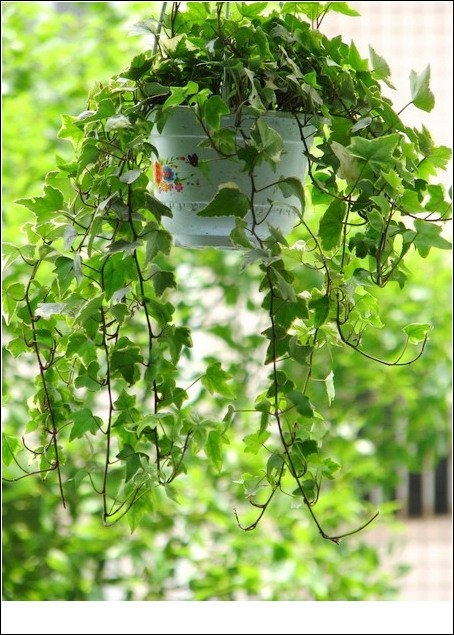
4. Fertilize reasonably. For home-grown English ivy, the potting soil should preferably be a growing medium mixed from leaf mold or peat soil plus 1/4 river sand and a small amount of bone meal. During the growing season, apply a dilute cake fertilizer solution once every 2-3 weeks. Generally, do not fertilize in summer and winter. When fertilizing, never apply too much nitrogen fertilizer, otherwise the patterns and patches on the leaves of variegated varieties will fade to green. But note that when applying liquid fertilizer, avoid contaminating the leaves, so as not to cause the leaves to scorch.
English ivy is not hard to grow; you just have to grasp its characteristics: English ivy is a typical shade-loving climbing foliage plant and cannot take direct strong light. Hot, stuffy weather is very unfavorable to its growth; from July to August, when the temperature rises above 30°C, it stops growing. At this time, do not water frequently just because the temperature is high; wait until the potting soil is dry before watering, following the principle of "alternating dry and wet."
At the same time, stop fertilizing during the hot season to avoid scorching the leaves. Right now is the peak growing season for plants, and especially so for English ivy, so its water demand is relatively high, and it needs plenty of water and fertilizer to grow quickly. If many leaves turn yellow and drop, and the pot clearly becomes much lighter, that already fully shows that watering has been too little and the plant has dried to death. You must water more; as long as there is no standing water in the pot, you cannot say there is too much water.
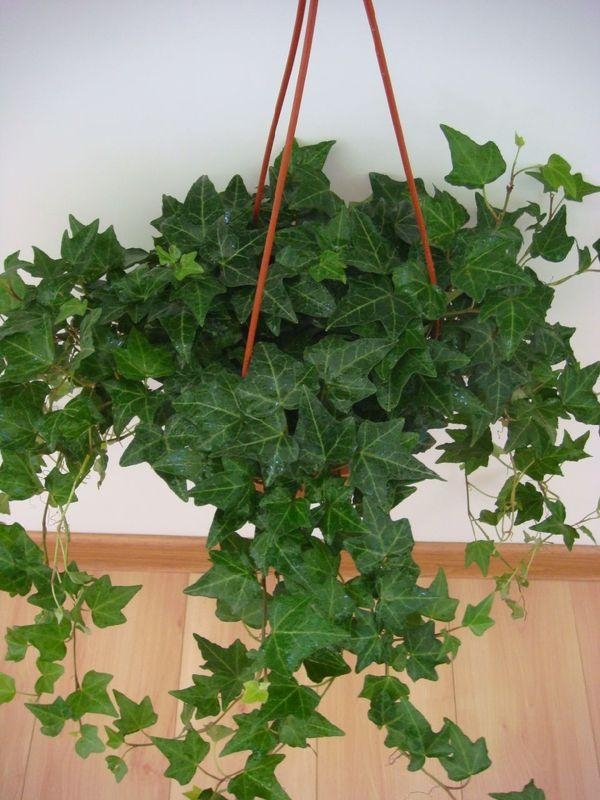
How to Grow English Ivy - Decoration Network.