Detailed Explanation of Crape Myrtle Cultivation Methods, A Complete Guide from Planting to Care
The crape myrtle has bright and beautiful flowers, a long flowering period, and a long lifespan. It has already been widely cultivated as a garden ornamental tree, and is very suitable for planting in front of buildings, inside courtyards, beside ponds, along rivers, next to lawns, and on both sides of paths in parks. It is sometimes also made into bonsai. It is an excellent flowering tree with very good ornamental value. Below, let us take a look at the cultivation methods of crape myrtle.
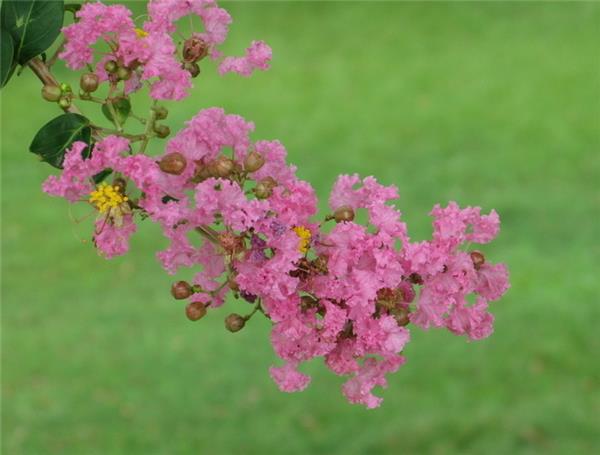
Crape Myrtle Cultivation Methods
(1) Planting
1. Ground planting: Plant from after leaf fall in November to March of the following year. When planting, keep the trunk at a height of 100-120 cm and cut off the upper part. After the new spring shoots grow, select and retain 3-4 main branches with suitable angles and let them bloom.
2. Pot planting: Using established seedlings rooted from old branches of the current year for pot planting is a good method for quickly cultivating bonsai. Because crape myrtle branches are soft, potted crape myrtle can be properly trained and tied. Generally, when spring shoot growth stops and the branches become semi-lignified, winding and shaping are carried out, using fine palm rope to pull them into various forms of bonsai.
(2) Cultivation Management
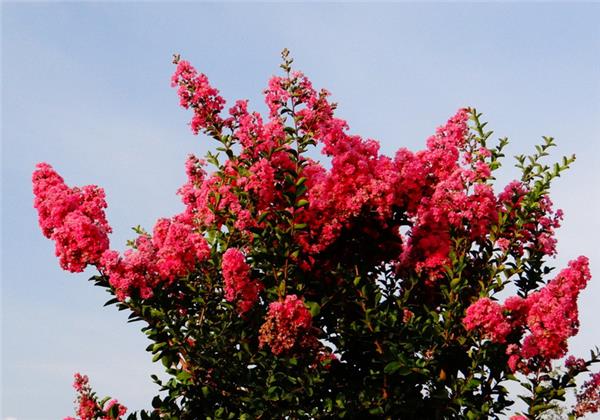
For planting crape myrtle, choose a wind-sheltered, sunny location with deep soil, fertile soil, and good drainage. When transplanting large seedlings, a soil ball must be kept, and the branches should be properly pruned; otherwise, the survival rate will be relatively low. Apply decomposed organic fertilizer in the planting hole as base fertilizer. After planting, water thoroughly, and water once again after 3 days. Crape myrtle sprouts relatively late. Under normal conditions, it does not unfold leaves until mid-April to the end of April. Newly planted plants, because their roots are damaged, will sprout even later. Therefore, do not mistakenly assume that they have not survived and give up management.
After survival, plant management is relatively extensive. Crape myrtle is vigorous and easy to cultivate, and does not have strict soil requirements, but it grows best when planted in deep, fertile sandy loam. It is light-loving, and should be planted in a wind-sheltered, sunny place or at the base of the south wall of a courtyard. Insufficient light will not only result in fewer flowers or no flowers, but may even cause weak growth, thin branches, and small leaves. Crape myrtle is relatively cold-tolerant, but during the seedling stage, cold protection and insulation should be done well. For established plants more than three years old, insulation is not needed. Crape myrtle is drought-tolerant and afraid of waterlogging. Each year, before spring growth begins and after leaf fall in autumn, water once with green-returning water and once with freezing water. At ordinary times, if it is not too dry, there is no need to water. Generally, during spring drought, water 1-3 times. In the rainy season, drainage work should be done well to prevent root rot from excessive water. It is not suitable to water in autumn. Fertilize each year after leaf fall in winter and before spring growth begins. Applying human feces and urine or sesame paste residue is even better, and can make the plant grow vigorously the following year, with large and brightly colored flowers.
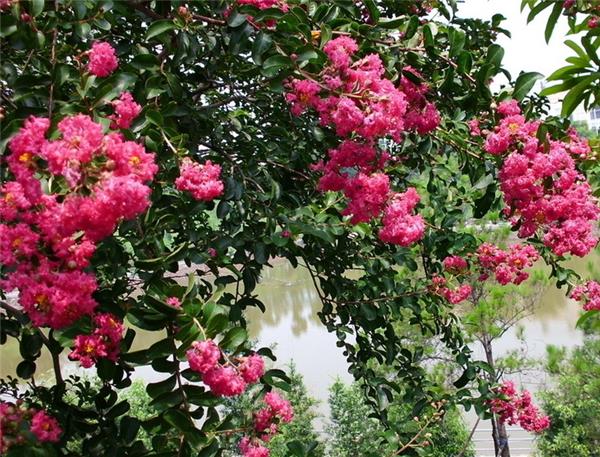
In order to make crape myrtle bloom abundantly and grow lush foliage, shaping and pruning should be carried out during the dormant period. Because crape myrtle inflorescences are borne at the tips of new branches of the current year, during pruning the one-year-old branches should be heavily pruned and cut back so that nutrients are concentrated and the branches grow robustly. Water shoots, dried branches, drooping branches, diseased and pest-infested branches, slender branches, and inward-growing branches should be cut off. During the young tree stage, lateral branches on the lower part of the trunk should also be cut off in time, so that the upper part of the trunk can obtain sufficient nutrients and form a good crown.
Crape myrtle cultivation management is extensive, but dead branches and diseased and pest-infested branches should be cut off in time and burned. In order to prolong the flowering period, branches that have already flowered should be cut off at the appropriate time, so that they sprout again and grow the next round of flowering branches. In order to thicken the trunk, a large number of flowering branches can be cut off to concentrate nutrients for cultivating the trunk. Practice has proved that with proper management, crape myrtle can be made to bloom multiple times in one year through repeated pruning, lasting as long as 100/120 days.
(3) Pruning
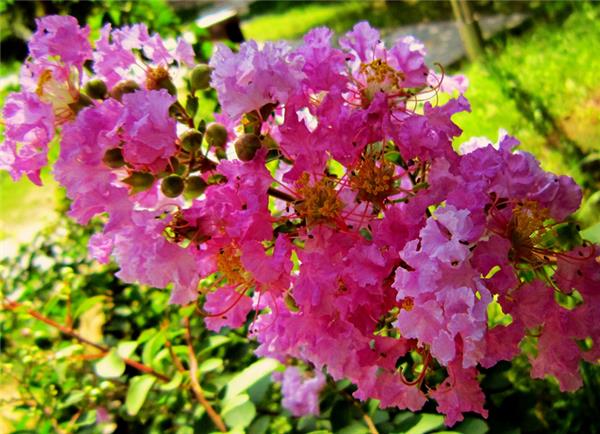
Crape myrtle flowers grow at the top of spring shoots sprouted in the current year. It has strong sprouting ability, and the crown is not neat, so pruning is needed.
1. Winter pruning: To ensure normal flowering and form large inflorescences, winter pruning is very important. For ground-planted plants, cut off the current year's branches at the height where the main branches are set (the knuckles), so that strong branches will emerge the following year and bloom. For potted plants, first cut off all root suckers, diseased and dead branches, and crossing and overlapping branches. To beautify the shape, shorten other branches at about 1 cm above a plump terminal bud, generally retaining only about 5 cm.
2. Post-flowering pruning: After flowering in summer, part of the spent flowers should be cut off to prevent seed formation, reduce nutrient consumption, and promote the sprouting of new branches and flowering. During the growing season, pruning, especially pruning or shortening of new branches sprouted in spring, must be avoided; otherwise, it is easy to cause only branch growth without flowering.