How to grow crape myrtle? Detailed guide to cultivation methods and precautions
Crape myrtle is a fairly common flowering ornamental plant. How do you grow crape myrtle? Below is an introduction to crape myrtle cultivation methods and precautions.
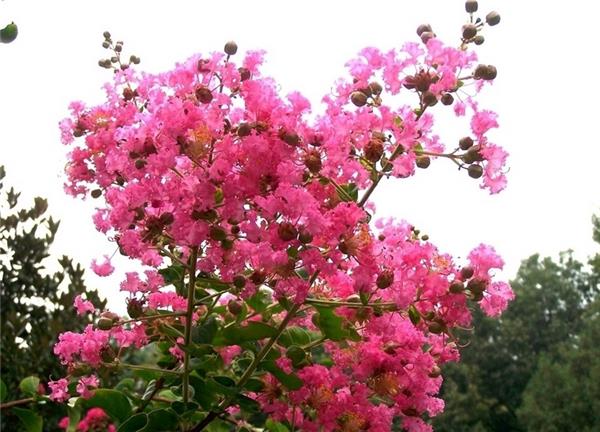
Crape myrtle cultivation methods
1. Soil: Crape myrtle is vigorous and easy to cultivate, with no strict requirements for soil, but it grows best when planted in deep, fertile sandy loam.
2. Watering: Crape myrtle is drought-tolerant and afraid of waterlogging. Each year, before spring growth begins and after leaf fall in autumn, water once with a "greening water" and once with a "freezing water." At ordinary times, if it is not too dry, there is no need to water; generally, during a spring drought, water 1 to 3 times. In the rainy season, drainage should be done well to prevent root rot from excessive water. Watering is not advisable in autumn.
3. Sunlight: It likes light. Insufficient light not only means fewer flowers or no flowers, but may even cause weak growth, with thin branches and small leaves.
4. Temperature: Crape myrtle is relatively cold-tolerant, but during the seedling stage, cold protection and warmth preservation should be done well; mature plants over three years old do not need warmth preservation.
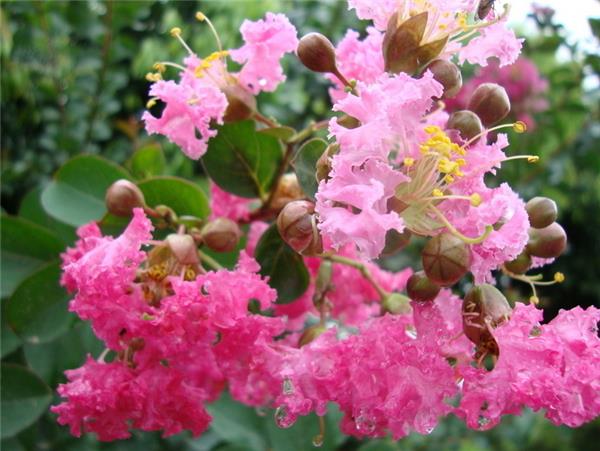
5. Fertilizing: Fertilizer can be applied each year after leaf fall in winter and before spring growth begins. Applying human manure or sesame paste residue is even better, as it can make the plant grow vigorously the following year, with large flowers and bright colors.
6. Pruning: Crape myrtle inflorescences are borne at the tips of the current year's new branches, so when pruning, one-year-old branches should be heavily pruned and cut back to concentrate nutrients and produce strong shoots. Water sprouts, dead branches, drooping branches, pest-damaged branches, slender branches and inward-growing branches should be cut off. During the young tree stage, lateral branches on the lower part of the main trunk should also be cut off in time, so that the upper part of the main trunk can receive sufficient nutrients and form a good crown.
7. Pests: Common pests of crape myrtle include felt scale, yellow stinging caterpillar and bagworm moth, and pesticides should be sprayed to control them.
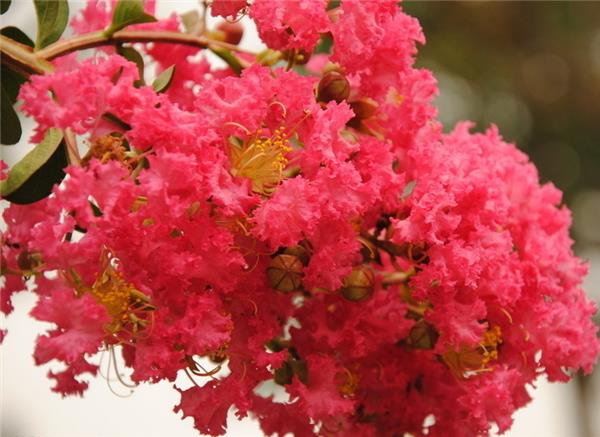
Crape myrtle cultivation precautions
If it is potted crape myrtle, repot it in time. Potted crape myrtle needs its pot soil changed once every two to three years, using a mix of 5 parts loose mountain soil, 3 parts garden soil and 2 parts fine river sand to prepare the growing medium. When repotting, organic fertilizers such as bone meal and soybean cake powder can be used as base fertilizer, mixed into the surface layer of the soil. Fertilizer must not come into direct contact with the root system, so as to avoid burning the roots and affecting plant growth.
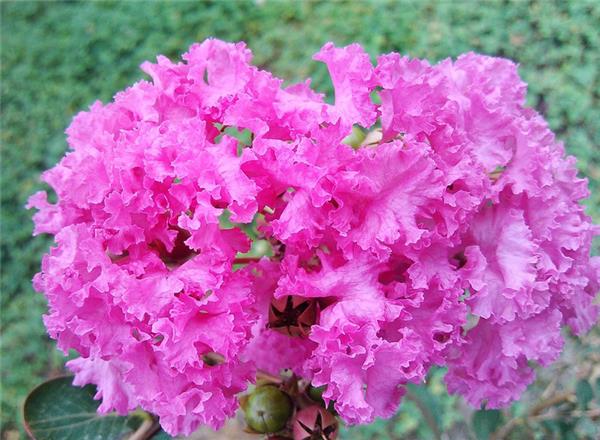
Finally, let's look at the uses of crape myrtle.
1. Ornamental
The flower colors are bright and beautiful, the flowering period is long and the lifespan is long. It has already been widely cultivated as a garden ornamental tree, and is very suitable for planting in front of buildings, in courtyards, beside ponds, along rivers, beside lawns and on both sides of paths in parks. It is sometimes also made into bonsai. It is an excellent flowering tree with very good ornamental value.
2. Air purification
Crape myrtle has strong resistance to sulfur dioxide, hydrogen fluoride and chlorine gas, can absorb harmful gases and can also absorb and retain dust. According to monitoring, in a cement plant at 200 to 250 m from the pollution source, each square meter of crape myrtle leaves can absorb and retain 4042 g of dust, giving a fairly significant effect in cleaning and improving the air.
3. Medicinal use
Crape myrtle has medicinal effects, mainly using the roots and bark as medicine. It can promote blood circulation, stop bleeding, remove toxins and reduce swelling. It is used for various kinds of bleeding, fractures, mastitis, eczema, hepatitis and cirrhotic ascites. Li Shizhen stated in "Compendium of Materia Medica" that its bark, wood and flowers have the effects of promoting blood circulation and freeing menstruation, relieving pain, reducing swelling and removing toxins. The seeds can be made into pesticides and have the effect of repelling and killing pests. The leaves treat white dysentery, the flowers treat uncontrollable postpartum uterine bleeding and infantile scalp sores, and the roots treat carbuncles, swelling and sore toxins. It can truly be said to be a treasure from top to bottom.