How to grow globeflower? A detailed guide to cultivation methods
Globeflower, also known as Indian cress, garden nasturtium, and "golden lump", is a herbaceous ornamental plant. Below, we share the cultivation methods for globeflower.
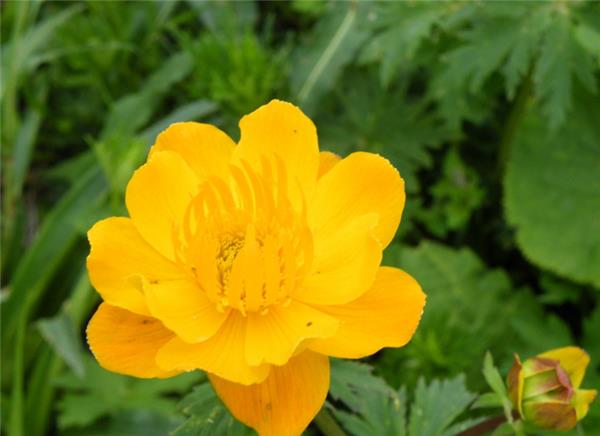
Cultivation methods for globeflower
1. Soil: Globeflower has low soil requirements. For pot cultivation, use a mix of 7 parts leaf mold and 3 parts garden soil, with an appropriate amount of cake fertilizer or other organic fertilizer added as a base fertilizer.
2. Watering: Pay attention to timely watering at ordinary times, because the stems are succulent inside, so the entire growing season requires sufficient moisture and relatively high air humidity. Do not let the potting soil become too dry or too wet; if too dry, the leaves tend to turn yellow; if too wet and waterlogged, the roots tend to rot.
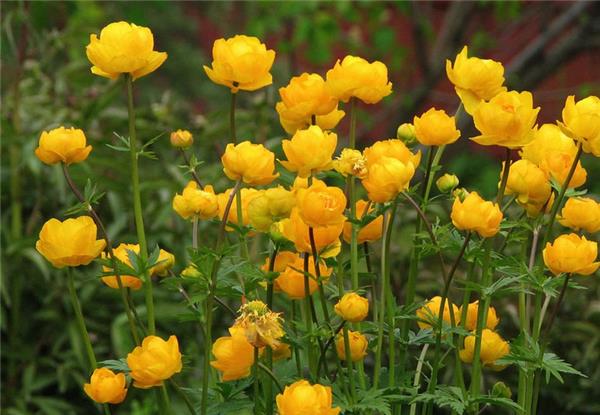
3. Temperature: Globeflower is cold-tolerant and can survive year-round at 2-15°C. If the winter is too cold, it is best to move it indoors for care.
4. Fertilizing: During the seedling stage, fertilize once every 10 days with fully decomposed cake fertilizer water. After that, it is advisable to fertilize sparingly; generally, applying a thin fertilizer solution once every 20 days is sufficient. However, before flowering, apply fertilizer water once every 7-10 days to promote abundant blooming. Fertilizing must be done appropriately; especially, too much nitrogen fertilizer will cause the result of only growing leaves and not flowering, thereby affecting the ornamental effect.
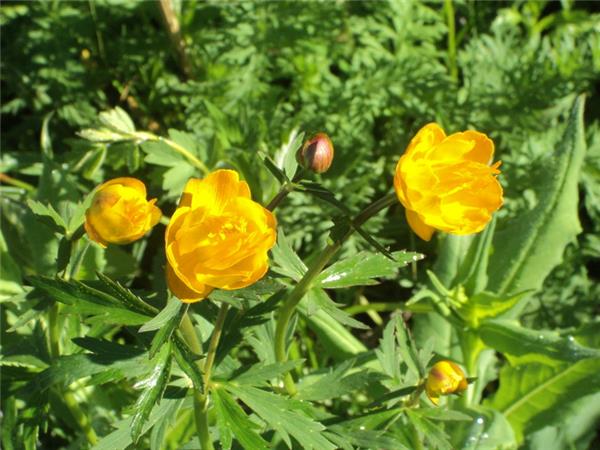
5. Pruning: To make globeflower leaves plump and flowers beautiful, you must also set up supports with fine bamboo, tie the trailing stems evenly onto the frame, and make the leaf surfaces face as much as possible in one direction. Before training onto the frame, pinch off the growing tips, keeping the main stem and thick side stems, to encourage more branching and achieve the goal of lush leaves and abundant flowers.
6. Pest and disease control: The most common diseases of globeflower include leaf spot, wilt, and viral diseases. For control, spray with a 500-fold dilution of 50% thiophanate wettable powder. In ordinary care, attention should be paid to ventilation, sterilization and disinfection, and timely drainage to prevent root rot. The main insect pests include plusiinae moths, white butterflies, whiteflies, red spider mites, mole crickets, and wireworms. If pests occur, promptly apply pollution-free pesticides such as imidacloprid, buprofezin, and deltamethrin to kill them, so as not to affect the growth of globeflower.
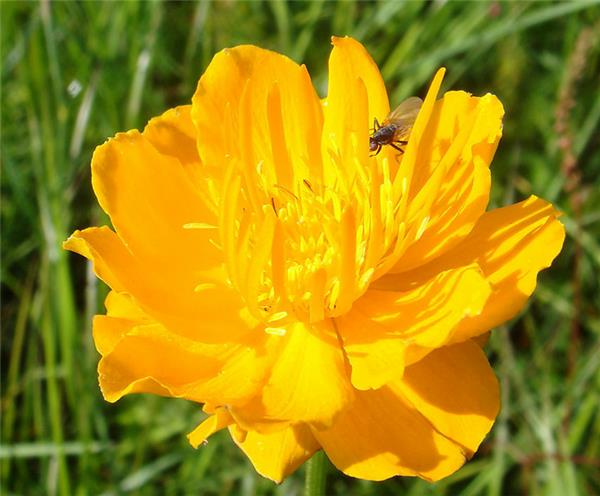
7. Field management
1) Loosening soil and weeding: In the early growth stage of globeflower, attention should be paid to weeding and loosening the soil to keep the bed clean and free of weeds. After the plants basically close the rows in July, it becomes inconvenient to operate; in order to avoid damaging the flower stems, it is best not to loosen the soil again.
2) Irrigation and drainage: Globeflower seedlings are not drought-tolerant, so they should be watered frequently to keep the soil moist, but not too wet, to prevent root rot and death of globeflower. In the rainy season, attention should be paid to drainage.
3) Topdressing: After globeflower emerges and turns green, apply nitrogen fertilizer to promote seedling growth. For small seedlings transplanted that year, apply human and livestock manure urine, which should be diluted 1-2 times. In June-July, ammonium phosphate granular fertilizer can be applied as topdressing. In winter, before the ground freezes, apply organic fertilizer at 1500-2000 kg per 667 sq m. Each fertilization should be applied in furrows, and soil should be covered after application.
4) Shading: When introducing globeflower in low-altitude areas, special attention must be paid to shading, with the shade degree controlled at 30%-50%, and the shed height at about 1 m. Materials for building the shed can be obtained locally, or intercropping with tall crops or fruit trees can also be used to achieve the shading purpose.
5) Transplanting: If globeflower is to be used as an ornamental plant, when the seedlings are fully emerged and 5-8 cm tall, choose mountain grassland, prairie, swamp meadow, etc. that best suit its growth habits for transplanting with soil. When transplanting, it is advisable to use 3-5 seedlings per clump, and at the same time remove the bottom 1-3 leaves to reduce nutrient consumption. The transplanting depth should be shallow rather than deep, and water promptly.