What is the flower language of twin lotus flowers? An introduction to their symbolism and meaning
The twin lotus is known as the "gentleman among flowers" and is the finest of all lotuses, symbolizing a harmonious union lasting a hundred years and two hearts bound forever. Below, we introduce the flower language of the twin lotus in detail.
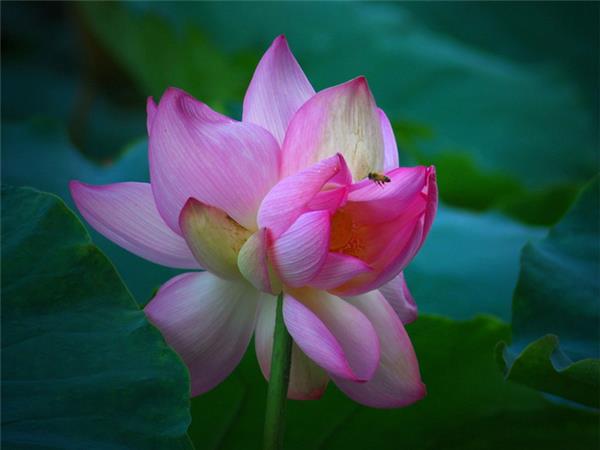
The flower language of the twin lotus
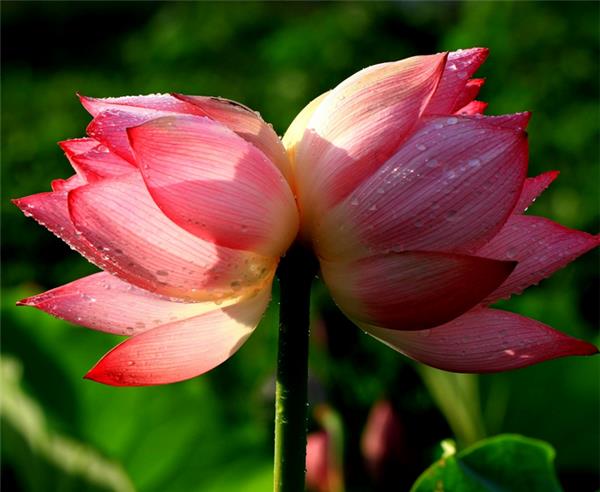
During the growth process, a lotus generally forms only one flower bud and one meristematic center, producing a single flower. If stimulated by some special external environmental condition, or by a special internal mutation, the flower bud borne on one stem may differentiate into two meristematic centers, and then develop two flower buds like twins, thus forming two flower bases on one flower stalk, blooming two flowers and bearing a pair of lotus seed pods. This is the twin lotus.
The twin lotus is known as the "gentleman among flowers" and is the finest of all lotuses, symbolizing a harmonious union lasting a hundred years and two hearts bound forever. The twin lotus, with a single stem and two blooms, can be called a symbol of shared hearts, shared roots, shared fortune and shared life. In ancient literary works, the twin lotus was hailed as a symbol of love, signifying conjugal affection and perfect happiness. It symbolizes the tender entanglement of love between men and women; and brothers as close as hands and feet, with deep affection. In folk legend, the appearance of the twin lotus is an auspicious omen.
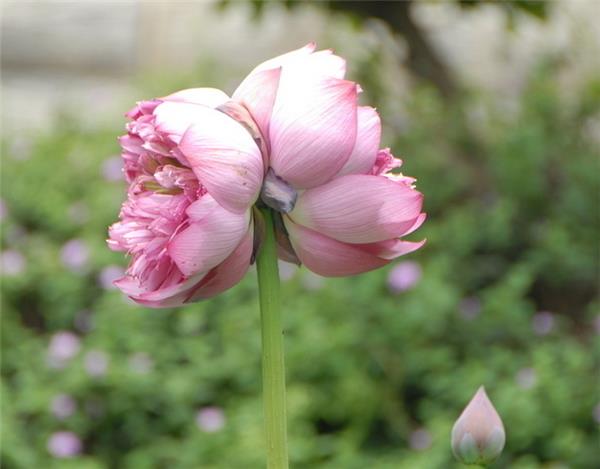
The legend of the twin lotus
It is said that long ago there was a lotus pond in a village, and the pond was filled with beautiful lotuses year after year. East of the pond lived a landlord surnamed Hong, who was very wealthy but was over forty and still had no children. That year, the landlord's wife became pregnant, and landlord Hong burned incense and worshipped the Buddha day and night, praying to the Bodhisattva to bless him with a son.
But what was born was a girl. Landlord Hong was sullen and unhappy. To comfort him, his wife discussed with him and decided to raise the girl as a boy, telling outsiders that a boy had been born, and naming the child Sailang. Later, as Sailang grew up, her dress and appearance remained just like a boy's. When she was twelve, landlord Hong built a schoolhouse in front of the lotus pond and hired a tutor to teach Sailang to read. Everyone outside believed Sailang was a boy.
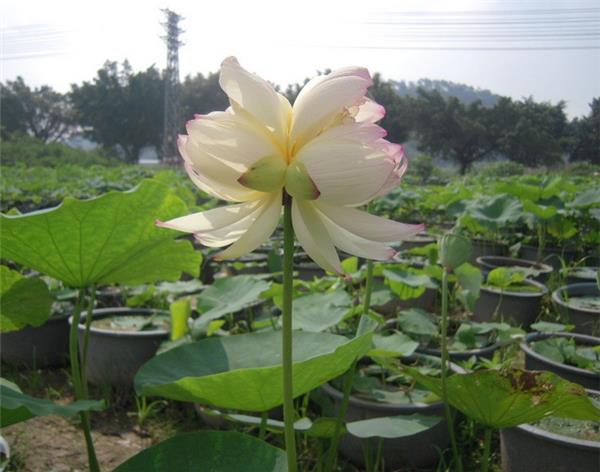
Now, west of the pond lived a family surnamed Bai; the old couple got by fairly well, but they had no son. His wife had once borne three sons, but none lived past their first birthday. For this, old Bai had several times had his fortune told, and everyone said the couple were "fated to have no son." That year, his wife became pregnant again. Old Bai thought: a daughter could still survive, but if a son were born, he feared they could not keep him. So his wife came up with a plan: if a son was born, they would simply raise him as a daughter, and then he would not die. Later, a son really was born, and the couple put earrings on the child and named him Zhenniang.
Later, Sailang and Zhenniang fell in love, but landlord Hong would not agree, and cruelly tore them apart, driving Zhenniang's family away. When Sailang learned of this, she met Zhenniang at night, and they poured out their hearts to each other. Sailang said to Zhenniang, "Father is cruel-hearted; in life we cannot become husband and wife. I hope you take care of your health and do not keep thinking of me." With that, she jumped into the water. Zhenniang stepped forward and held her, weeping, "In life we cannot be together; we would rather die together." With that, the two held each other and jumped into the water together.
The next day, the Hong household searched everywhere, and when they reached the edge of the lotus pond, they saw one of Sailang's embroidered shoes and knew she had jumped into the water. Landlord Hong hastily ordered people to retrieve them, and they saw that Zhenniang and Sailang were tightly locked in each other's arms, and several people pulling with all their strength could not separate them. Landlord Hong then ordered them buried beside the lotus pond.
That night there was only lightning and thunder, and a storm of wild wind and rain. By dawn, the water of the lotus pond had risen all the way to the graves of Zhenniang and Sailang, surrounding the graves: the lotuses growing from the graves had stems thicker than a person's thumb. On top bloomed two flowers, one red and one white, leaning tightly together, and people called them "bingtie lian," which later became "bingdi lian" (twin lotus).