What is the flower language and meaning of the blue calla lily?
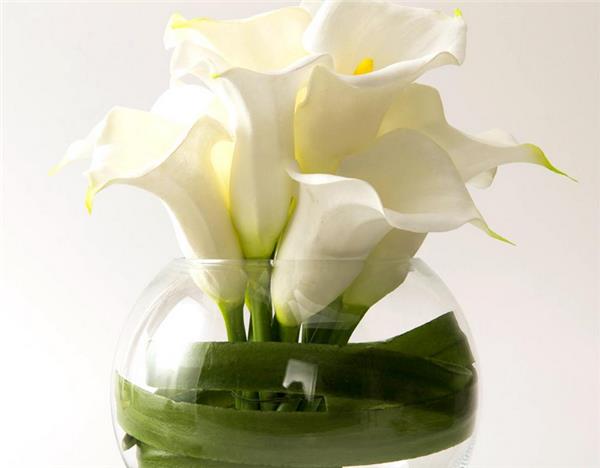
The calla lily has a large, pure white spathe shaped just like a horse's hoof, and it is very easy to grow, so many people like to place calla lilies in their homes for decoration. But have you ever seen a blue calla lily? Do you know what the flower language of the blue calla lily is?

Characteristics of the blue calla lily
The calla lily is a robust perennial herb in the Araceae family, genus Zantedeschia. It has tubers and readily tillers to form clumping plants. The leaves are basal, with a sheath at the lower part, and the leaf blades are relatively thick, green, heart-shaped-arrow-shaped or arrow-shaped, with a sharp-pointed, acuminate, or tail-like pointed tip, and a heart-shaped or halberd-shaped base. It prefers loose, fertile, humus-rich clay loam. The blue calla lily is made by dyeing white calla lilies.

What is the flower language of the blue calla lily?
At present, blue calla lilies do not exist in nature. The blue calla lilies sold on the market today are made by artificially adding blue dye to white calla lilies, and because they are rare, they are also unique.
For this reason, the blue calla lily represents "polluted, tainted love." Of course, many flowers have been developed through research and breeding, such as the black tulip, and I hope that one day a truly blue calla lily can also be bred.
Finally, let's look at how to grow calla lilies.
1. Temperature
It grows best between 15°C and 25°C. High and low temperatures will cause the calla lily to stop growing or even die. In summer, when the temperature is above 25°C, some water should be sprinkled on the leaves to cool them down, or the plant should be moved to a shady place. In winter, when the temperature is below 6°C, certain cold protection measures should be taken, and it can be moved indoors to a windowsill where it can get sunlight. Temperatures below zero may cause the rhizome to freeze.
2. Light
It does not have high light requirements. The calla lily is not a plant that especially needs sunlight, and it can be placed on a windowsill or balcony that can provide some shade. In spring, summer, and autumn, some shading should be provided, and about 40 percent of the light should be blocked. In summer, when temperatures are high, it should not be placed in strong light, so as to avoid scorching the branches and leaves. In addition, during the flowering period, it should be given more light.
3. Watering
Water more. The calla lily has relatively high water requirements, and the potting soil should often be kept moist. Do not be afraid of overwatering it; even waterlogging will not be a problem. However, in winter when the weather is cold, less water should be given to avoid freezing the rhizome. Also, during the dormant period, the amount of watering should be reduced. During the calla lily's flowering period, spray water into the surrounding air at all times.
4. Soil
It prefers loose, fertile soil. A mix of loose, fertile humus soil with a small amount of sandy soil can be used, and some base fertilizer can be applied when it is first potted.
Moderate fertilization. If you want your calla lily to grow well, you should control the fertilizer and water, and fertilize about once every 15 days. Liquid fertilizer can be used, or you can go to a flower market and buy fertilizer specifically for calla lilies. Do not fertilize during the flowering period.
5. Pest and disease control
The more common pests and diseases of the calla lily include: leaf mold, leaf spot, root rot, and seed maggots. Leaf mold causes the leaves to turn yellow and develop spots of different sizes. Leaf spot produces lesions from light brown to yellow-brown. Root rot causes the lower leaves of the plant to wilt first, and then it spreads to the inner leaves. Different control methods should be chosen for different diseases, and you can go to the market to choose control solutions specifically for the disease. In general, plant management should be strengthened in normal times, and the room should be kept ventilated.