A Detailed Guide to Growing and Caring for Guzmania
Guzmania has lush flowers and leaves, with bright red blooms that give a very festive feel. So today, the editor will introduce the growing methods for Guzmania.
As a fine member of the Bromeliaceae family, Guzmania cannot be grown outside the Bromeliaceae growing methods; for example, it should be placed in a semi-shaded, ventilated spot and grown under scattered light. Strong light easily scorches the leaves, causing mottled spots; occasionally it still needs to be taken out to get some sun, and so on!
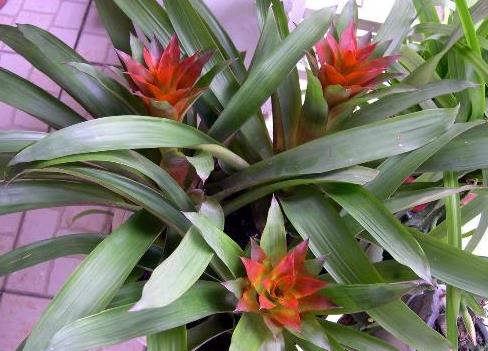
Guzmania Growing Methods and Precautions
Guzmania Growing Method 1: In dry, muggy, low-temperature conditions, the leaf margins and leaf tips of Guzmania are highly prone to scorching and withering, so the potting soil should be kept moist. You can spray clean water on the leaves 1 to 2 times a day, and the cup-shaped center of the leaf rosette can be filled with clean water. Never water too frequently! When watering, pour the water into the plant's 'cup' shape, not directly onto the potting medium.
Guzmania Growing Methods and Precautions
Guzmania Growing Method 2: Plants of the Guzmania family were originally epiphytes, with roots that are not well developed, only small and short root systems, so never apply too much fertilizer, to prevent root rot and yellowing leaves; apply diluted liquid fertilizer instead. No fertilization is needed during the flowering period. After flowering, promptly cut off the flower and replenish fertilizer. Fully water-soluble fertilizer can also be poured into the leaf cup along with watering, but others such as cake fertilizer and granular chemical fertilizers should not be applied in the leaf cup.
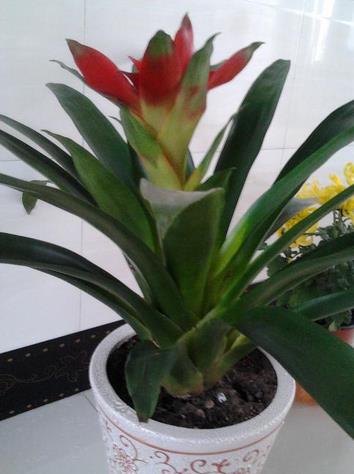
Guzmania Growing Methods and Precautions
Guzmania Growing Method 3: Observe that small shoots will continuously emerge from the leaf axils at the base of the Guzmania. When they have grown 5 to 6 leaves, they can be cut off for cutting propagation, and roots will grow in about 1 month. For Guzmania, the planting soil is best chosen as a loose mixed potting soil of peat soil, humus soil and shredded tree fern residue. After the small plants have grown, you can use a sharp knife to cut them off from the mother plant and plant them separately. Generally, the old plant will not bloom again, and afterwards it can be used as a mother plant to propagate new plants.
Guzmania Growing Methods and Precautions
Guzmania Growing Method 4: Maintain ventilation. Ventilation not only makes the plant grow robustly, but also reduces infection by diseases.
Bromeliads like warm, humid environments. The suitable growing temperature is 21-28°C during the day and 18-21°C at night. Air humidity should be high, preferably 75-85% generally; when it is below 50%, the plant will show shrunken leaves, curling and other phenomena. Ventilation is also extremely important; its effect is not obvious when the temperature is not high, but it is especially prominent in hot seasons. Ventilation not only makes the plant grow robustly, but also reduces infection by diseases.
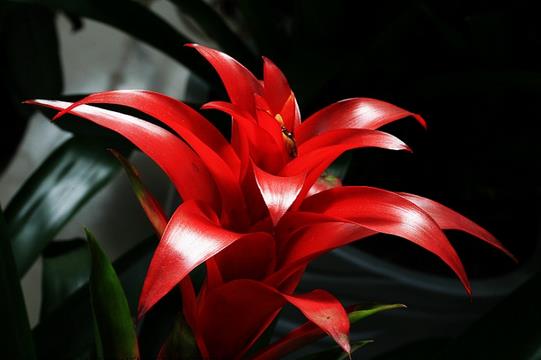
Guzmania Growing Methods and Precautions
When watering, it is best to use clean water that has been left to stand for 2-3 days, and when watering, pour it into the plant's 'cup' shape, not directly onto the potting medium. Fertilize reasonably, and spray with new high-lipid film to retain fertilizer and preserve soil moisture.
Guzmania Growing Methods and Precautions
Spraying flower-strengthening agent during the bud stage can promote strong buds, larger petals, vivid flower color, rich fragrance and a longer flowering period. No fertilization is needed during flowering. After flowering, promptly cut off the flower and replenish fertilizer. Fully water-soluble fertilizer can also be poured into the leaf cup along with watering. After the small plants have grown, you can use a sharp knife to cut them off from the mother plant and plant them separately. Generally, the old plant will not bloom again, and afterwards it can be used as a mother plant to grow new plants.