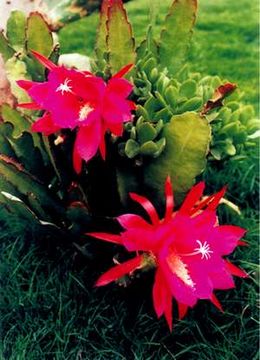
Epiphyllum Pictures and Care Methods Explained in Detail
Epiphyllum Pictures Epiphyllum Care Methods
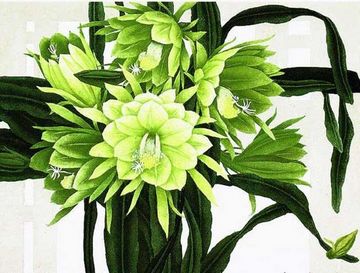
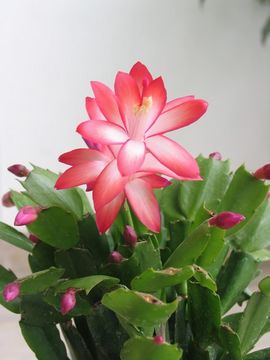
Epiphyllum is a perennial evergreen epiphytic plant of the Cactaceae family. Because its stems are flat and lanceolate, shaped like an arrow, and its flowers resemble water lilies, it is named Epiphyllum (arrow lotus). Epiphyllum has many varieties and bright flower colors. It blooms in midsummer and is an excellent choice for decorating windowsides, balconies and entrance halls. So what are Epiphyllum pictures and Epiphyllum care methods? Let us take a look together.
Repotting is needed once every two years, and spring and autumn are mostly chosen for repotting. Good potting soil is required when repotting. Generally speaking, the potting soil should be mainly sandy soil, then supplemented with an appropriate amount of nutrient soil, that is, 4 parts leaf mold, 2 parts compost soil, 3 parts garden soil and 1 part sand. After stirring and mixing, it can be moved into the new culture soil. When repotting, dead and rotten roots as well as some old soil must be removed.
Fertilizer and water management in Epiphyllum care methods
Close attention should be paid to fertilizer and water management for Epiphyllum. During the growing season, apply a thorough fertilization once every ten days to half a month, but it must be diluted. During the bud stage, fertilization can be slightly increased to promote flower growth. During fertilization, water and loosen the soil in time, and alternating dry and wet conditions is an important principle of fertilizer and water management for Epiphyllum. Therefore, water accumulation in the pot must be avoided, otherwise it will cause root rot. Watering to seventy or eighty percent is the key point of management. Then in spring and summer, watering should be in a spraying state to maintain air humidity, while after winter, watering should be controlled and fertilization stopped.
There is an important point in the growth habits of Epiphyllum, namely that it likes light and is not cold-tolerant. Therefore, after winter, the temperature will be controlled. Generally speaking, a temperature of 10 to 15 degrees Celsius is most suitable for its growth. If the temperature is too high, it will affect the growth of stems and leaves; if the temperature is too low, it will affect the growth of flower buds.
Bud stage management in Epiphyllum care methods
During the bud stage, the amount of watering for Epiphyllum needs to be increased, and the intensity of fertilization should also be increased. Keep the potting soil in a slightly moist state at all times. Normal light also needs to be maintained, with 5 to 6 hours being appropriate. In addition, it should be noted that the temperature cannot be too low, otherwise it will affect the growth of flower buds. Keeping the temperature between 15 and 20 degrees Celsius is most suitable for its growth. In addition, during the bud stage, in order to ensure sufficient nutrient supply for the flower buds, branches and leaves can be pruned to ensure nutrient supply.
Pest and disease prevention in Epiphyllum care methods
Stem rot, root-knot nematodes and brown spot disease are common diseases of Epiphyllum. For root-knot nematodes, 80% dibromochloropropane emulsifiable concentrate diluted 1000 times or 50% carbendazim wettable powder diluted 1000 times can be sprayed for control.
Repotting is needed once every two years, and spring and autumn are mostly chosen for repotting. Good potting soil is required when repotting. Generally speaking, the potting soil should be mainly sandy soil, then supplemented with an appropriate amount of nutrient soil, that is, 4 parts leaf mold, 2 parts compost soil, 3 parts garden soil and 1 part sand. After stirring and mixing, it can be moved into the new culture soil. When repotting, dead and rotten roots as well as some old soil must be removed.
Fertilizer and water management in Epiphyllum care methods
Close attention should be paid to fertilizer and water management for Epiphyllum. During the growing season, apply a thorough fertilization once every ten days to half a month, but it must be diluted. During the bud stage, fertilization can be slightly increased to promote flower growth. During fertilization, water and loosen the soil in time, and alternating dry and wet conditions is an important principle of fertilizer and water management for Epiphyllum. Therefore, water accumulation in the pot must be avoided, otherwise it will cause root rot. Watering to seventy or eighty percent is the key point of management. Then in spring and summer, watering should be in a spraying state to maintain air humidity, while after winter, watering should be controlled and fertilization stopped.
There is an important point in the growth habits of Epiphyllum, namely that it likes light and is not cold-tolerant. Therefore, after winter, the temperature will be controlled. Generally speaking, a temperature of 10 to 15 degrees Celsius is most suitable for its growth. If the temperature is too high, it will affect the growth of stems and leaves; if the temperature is too low, it will affect the growth of flower buds.
Bud stage management in Epiphyllum care methods
During the bud stage, the amount of watering for Epiphyllum needs to be increased, and the intensity of fertilization should also be increased. Keep the potting soil in a slightly moist state at all times. Normal light also needs to be maintained, with 5 to 6 hours being appropriate. In addition, it should be noted that the temperature cannot be too low, otherwise it will affect the growth of flower buds. Keeping the temperature between 15 and 20 degrees Celsius is most suitable for its growth. In addition, during the bud stage, in order to ensure sufficient nutrient supply for the flower buds, branches and leaves can be pruned to ensure nutrient supply.
Pest and disease prevention in Epiphyllum care methods
Stem rot, root-knot nematodes and brown spot disease are common diseases of Epiphyllum. For root-knot nematodes, 80% dibromochloropropane emulsifiable concentrate diluted 1000 times or 50% carbendazim wettable powder diluted 1000 times can be sprayed for control.