Cultivation Methods for Small-Leaf Rhododendron and Identification Methods for Small-Leaf Rhododendron
Small-leaf rhododendron is a special variety of rhododendron. Today we will introduce the cultivation methods and identification methods for small-leaf rhododendron. Friends who are interested, take a look!
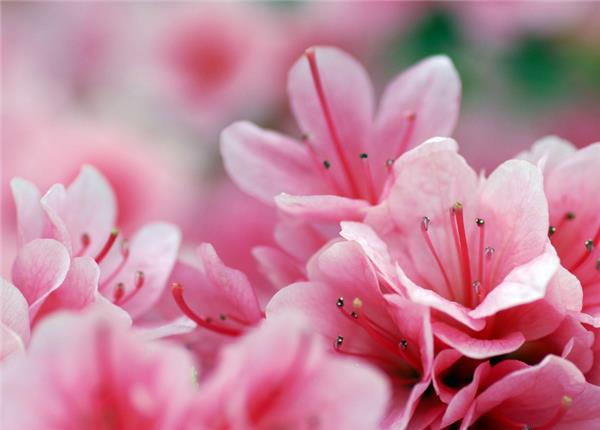
Small-Leaf Rhododendron Information
Small-leaf rhododendron is a special variety with small leaves and a flowering period from March to April. From this, it can be inferred that it is most likely a Dongyang rhododendron, though the possibility of a Western rhododendron cannot be ruled out. In addition, small-leaf rhododendron has relatively obvious cough-relieving, phlegm-resolving and anti-inflammatory effects, but its anti-asthmatic effect is not strong enough. Because rhododendron seeds are extremely small, sowing and raising seedlings has very strict requirements, including soil sterilization and air humidity maintenance, which are not easy to meet under household conditions, so cutting propagation is recommended. If rootstock is available, grafting can also be used.
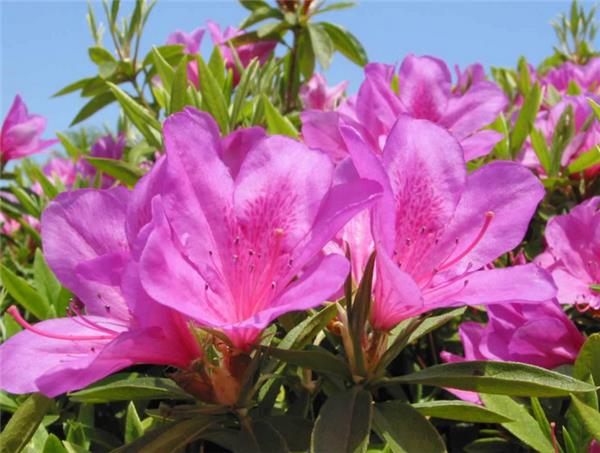
Cultivation Methods for Small-Leaf Rhododendron
To cultivate small-leaf rhododendron, you can, from May to June, select current-year semi-lignified branches with shorter internodes, cut them off from the base as cuttings, and keep 3 to 5 small leaves at the top. If the branch is too long, the tip can also be cut off. For the cutting medium, orchid soil, alpine humus soil, vermiculite, perlite or yellow subsoil can be used, with a thickness of about 15 cm to 20 cm, and a 7 cm to 8 cm drainage layer laid underneath. After moistening the medium with spray, insert the cuttings into the substrate, with the insertion depth about 1/2 of the cutting length. For a small number of household cuttings, a large flower pot filled with medium can also be used as a cutting bed.
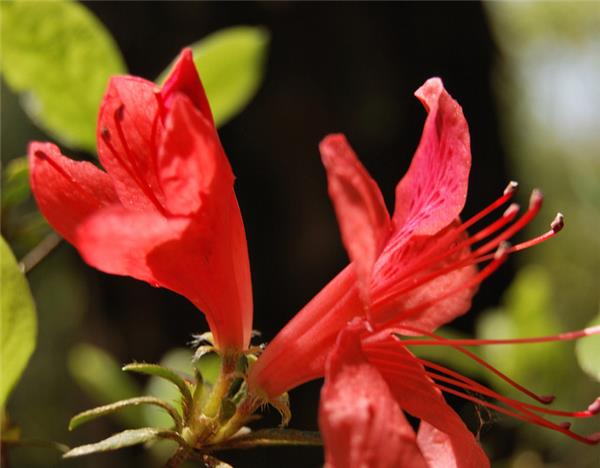
After inserting small-leaf rhododendron cuttings, cover them with plastic film to retain moisture, keep the temperature between 25°C and 30°C, set up a shade shed to block sunlight, or move them under tree shade, and always keep the cutting substrate moist. Dongjuan rhododendrons can take root in about 1 month, while Western rhododendrons need 60 to 70 days to take root. After September, the shading time can be reduced, and one topdressing of dilute urea solution can be applied, with a concentration of about 0.2%, and they can be potted in late October. In production, if full-light electronic intermittent misting equipment is used for cutting propagation, with vermiculite etc. as the cutting substrate, they can survive after 20 days, and the general survival rate can reach more than 95%.
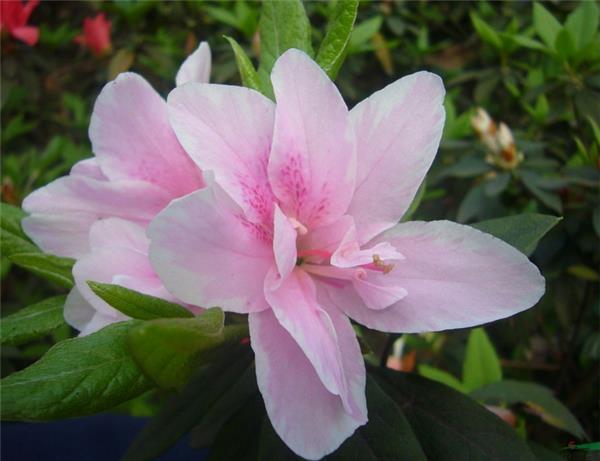
Identification Methods for Small-Leaf Rhododendron
Macroscopic Identification
Small-leaf rhododendron leaves are mostly broken; when complete ones are flattened, they are ovate, 1.0-1.5 cm long and 4-7 mm wide, with both ends bluntly rounded, entire margins, and edges slightly recurved downward. The upper surface is densely covered with silvery-white or green glandular scales. The petiole is about 3 mm long and covered with scales. Flowers are shrunken and broken, pale brownish-yellow, pale blue or purple-blue. When complete, the calyx is deeply 5-cleft, with ovate lobes, the corolla is funnel-shaped, stamens are 10, and anthers are ovate and brownish-red. The odor is strongly fragrant, and the taste is bitter and slightly astringent.
Microscopic Identification
Leaf surface view: both upper and lower epidermis have discoid glandular scales, and the lower epidermis cells have nipple-like protrusions. The discoid glandular scales are composed of multiple cells, with peripheral cells arranged radially, pale yellow or yellowish-brown, 430-540 μm in diameter, and stalk cells in 4 or 6 rows. Parenchyma cells contain calcium oxalate cluster crystals.