A Detailed Guide to Azalea Cultivation Methods: A Step-by-Step Tutorial on Growing Azaleas Well
Azaleas have lush foliage, are varied and beautiful, have strong sprouting ability, tolerate pruning, and have unusual root stumps, making them excellent bonsai material. Below, we will introduce azalea cultivation methods in detail.
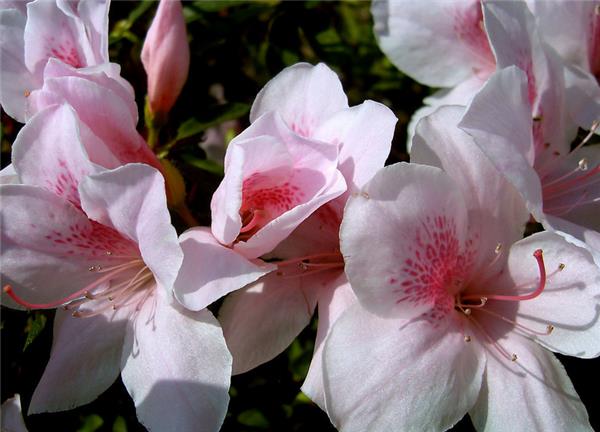
Azalea Cultivation Methods
1. Selection of Flower Pots for Azalea Cultivation
(1) Requirements for pot material: clay pots, plastic pots, porcelain pots, ceramic pots, etc. can be used.
(2) Pot size: the pot size for planting azalea seedlings should match the crown diameter of the seedlings; the pot size for planting azaleas at the middle seedling stage should be 3/4 of their crown diameter; the pot size for azaleas at the mature seedling stage should be 1/2 of their crown diameter.
2. Preparation of Potting Soil for Azalea Cultivation
Azaleas prefer acidic (pH 4.5-5.5), loose, well-drained soil. They avoid alkaline soil containing lime and avoid clayey soil. For home cultivation, the following formulas can be used: Belgian azalea: leaf mold : peat soil : sand = 5:2:3; spring-summer azalea: garden soil : peat soil : sand = 3:5:2. Add an appropriate amount of bone meal and mix thoroughly.
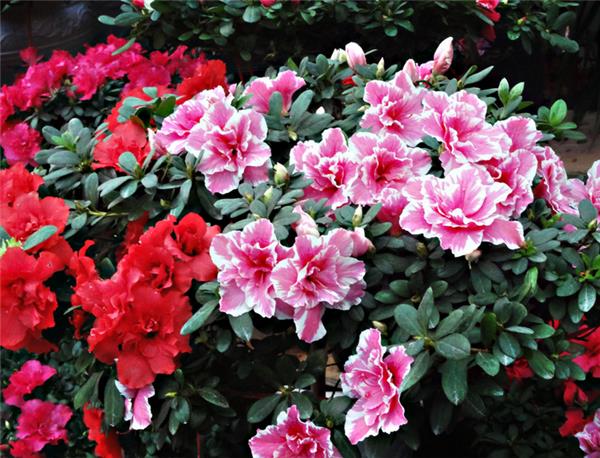
3. Temperature and Light Requirements for Azalea Cultivation
Potted azaleas are generally potted in spring from March to April, and can also be potted in autumn. When potting, they need to be transplanted with soil, and after planting, water thoroughly and place in a shaded area.
Potted azaleas in the north are generally moved indoors for overwintering in early to mid-October, and after being brought indoors, they should be placed in a sunny spot. In the early stage after being brought indoors, care should be taken to open windows frequently for ventilation. The indoor temperature in winter should be around 10°C, and should not be too high; otherwise, the physiological activity of the plant will increase, consuming a large amount of nutrients and affecting flowering and growth the following year; at the same time, sufficient light should be provided. After mid-to-late April of the following year, they can be moved outdoors; at this time the sunlight is relatively soft, and appropriate shading should be provided around noon, and after summer begins they must be moved to a cool, ventilated place for care. Since azaleas are shade-loving flowers, they need to be cared for under a shade shed in spring, summer, and autumn; especially in summer, being under strong sunlight for a long time can easily cause the branches and leaves to turn yellow and withered, growth to stagnate, and the whole plant to die. In autumn, the daily light exposure time should gradually increase, and shading should stop by late autumn.
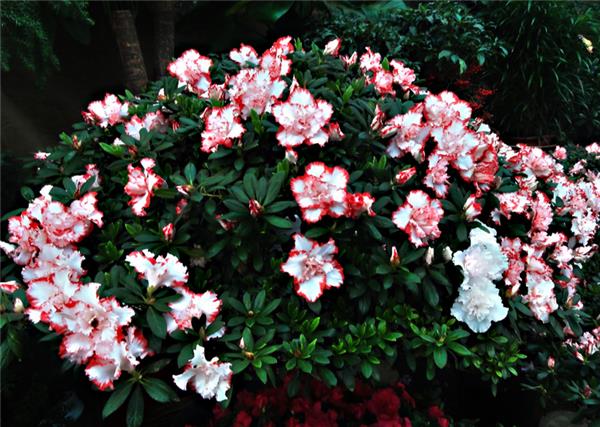
4. Watering Methods for Azalea Cultivation
During the growing period, keep the potting soil moist. From April to June, the flowering period requires a relatively large amount of water. In the high-temperature season from July to August, water should be sprayed on the ground and leaves to keep the air moist. After September, as the temperature gradually cools, the moisture in the potting soil should be gradually reduced. In winter, when the plant enters dormancy, watering should be reduced.
Because azaleas have a shallow root system, they are both afraid of drought and afraid of waterlogging. Improper watering can cause leaf drop in mild cases and death in severe cases. Therefore, watering is one of the key measures for growing azaleas well. Watering should be determined according to the plant's season and growth stage. In spring during bud formation and flowering, water consumption is relatively high, so watering should be timely; if the pot loses water, the flowers will wilt and the flowering period will be shortened. During this period, it is advisable to keep the potting soil moist. In summer, azalea branches and leaves grow vigorously, the temperature is high, and water evaporates quickly. In addition to watering thoroughly once a day, water should also be replenished at any time. If there is even a slight neglect and the potting soil becomes too dry, the leaves will turn yellow, the leaf centers will curl, and the plant may even dry up and die.
Since azaleas like moisture, in summer clean water should be used to spray the leaf surfaces and sprinkle water on the ground around the flower pot, so as to increase air humidity and lower the temperature. In autumn, flower buds have already formed, the temperature gradually drops, and the weather turns cooler; at this time, it is enough to keep the potting soil from drying out. In winter, the temperature is low, azaleas are in a dormant or semi-dormant state, and water consumption is low, so watering should be strictly controlled; too much water easily causes root rot, but during this period, every 5-7 days, clean water close to room temperature should be used to spray and wash the branches and leaves once, so as to keep the plant fresh. When watering azaleas, attention should be paid to water quality. Rainwater is more suitable; if tap water is used, it must first be stored in a container for 1-2 days before use.
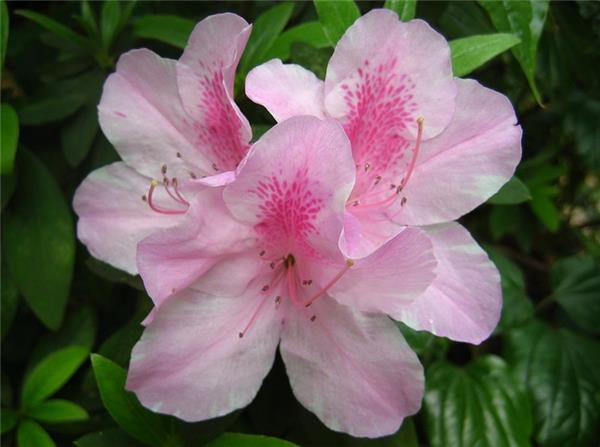
5. Fertilization Methods for Azalea Cultivation
Azalea roots are shallow and fine, and their absorption capacity is weak, so the principle of "light fertilizer applied frequently" must be followed when fertilizing. If the fertilizer is too concentrated or if undecomposed raw fertilizer is applied as a top dressing, it can easily cause root rot, scorched leaves, and even death. Especially for 1-2 year old small seedlings, even more attention should be paid to the amount of fertilizer, otherwise fertilizer damage is likely to occur.
In February to March before spring azaleas bloom, a phosphorus-based liquid fertilizer should be applied as a top dressing once every 10-15 days to promote larger and more colorful flowers; in March to April, applying the same fertilizer to summer azaleas can make the flowers larger, the color better, the petals thicker, and the flowering period longer. Fertilization should stop during the flowering period, otherwise it easily causes flowers to drop and leaves to grow, affecting the ornamental effect; after the flowers fade, apply a nitrogen-based fertilizer as a top dressing once about every 10 days to promote new branch growth. After late July, it is exactly the period of azalea flower bud differentiation, so a phosphorus-based liquid fertilizer should be applied once every 10-15 days to promote flower bud differentiation. No fertilizer is needed during the winter dormant period, and top dressing should stop.
6. Pruning Methods for Azalea Cultivation
Azaleas have strong sprouting ability, with many and dense branches, so after flowering, overly dense branches, thin and weak branches, dead branches, diseased branches, damaged branches, crossing branches, and leggy branches should be cut off to facilitate ventilation and light penetration. Do not shorten the branches that are retained. This is because azalea leaves mostly cluster at the tips of branches. After flowering, a section of new branch grows and a cluster of new leaves emerges, the old leaves then fall off, and then the terminal buds begin flower bud differentiation, becoming the flowering branches for the following year. If this section of branch is cut off, it will affect the number of flowers the following year.
to promote flower bud differentiation. No fertilizer is needed during the winter dormant period, and top dressing should stop.6. Pruning Methods for Azalea Cultivation
Azaleas have strong sprouting ability, with many and dense branches, so after flowering, overly dense branches, thin and weak branches, dead branches, diseased branches, damaged branches, crossing branches, and leggy branches should be cut off to facilitate ventilation and light penetration. Do not shorten the branches that are retained. This is because azalea leaves mostly cluster at the tips of branches. After flowering, a section of new branch grows and a cluster of new leaves emerges, the old leaves then fall off, and then the terminal buds begin flower bud differentiation, becoming the flowering branches for the following year. If this section of branch is cut off, it will affect the number of flowers the following year.