Are azaleas easy to grow? Master these methods to grow them easily
Are azaleas easy to grow? How do you grow azaleas well? Friends who want to know, let's take a look at the introduction below!
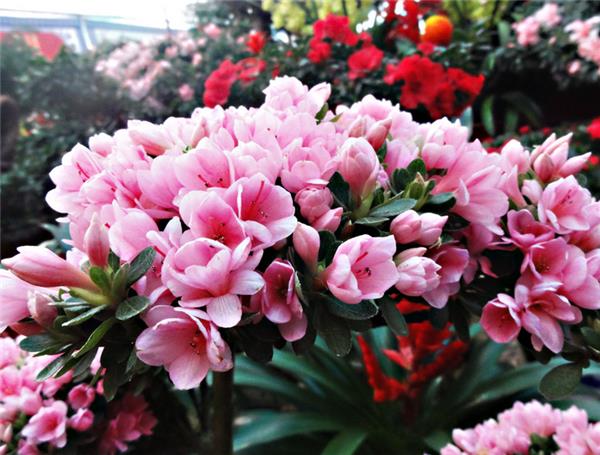
Are azaleas easy to grow?
For beginner flower growers, they are not easy to grow, but for growers with some experience, azaleas are actually fairly easy to grow. Although you may not necessarily achieve the effect seen in greenhouses, they can still be full of life.
Why is it said that azaleas are not easy to grow for beginner flower growers?
Most of the azaleas we buy are holiday flowers seen at flower markets, blooming profusely and looking very beautiful, but behind this they have been forced into bloom. Many flower growers ask for help after buying an azalea and taking it home, saying the flowers have wilted and the leaves have wilted too, and they do not know why. In fact, this is the result of the azalea not adapting to the environment. Azaleas also have requirements for humidity, and they like slightly acidic soil, which is very difficult for flower growers in the north. Therefore, many azaleas bought and taken home by flower growers also slowly die before long.
Does this mean azaleas are not suitable for growing at home?
Of course not. Although azaleas are difficult for beginners, as long as you carefully learn about them, even in the north you can grow azaleas well. The key is to have patience and perseverance. If you occasionally buy a pot on a whim at a flower market, or someone gives you one, it is very difficult to grow them well in that situation.

How to grow azaleas well
First you need to understand the growth habits of azaleas. Remember, azaleas have six likes and six dislikes: they like coolness and dislike extreme heat; they like semi-shade and dislike blazing sun; they like moisture and dislike dryness; they like acidic soil and dislike alkaline soil; they like light soil and dislike heavy clay soil; they like good drainage and dislike waterlogging. Once you master these, I believe you will be able to grow azaleas well.
Azaleas are semi-shade plants and cannot be exposed to strong sun, otherwise the leaves are easily scorched. After being moved outdoors in spring, they need soft sunlight, and around noon they should be shaded; after summer begins, place them in a cool, ventilated place, and in midsummer pay attention to shading. Before 8 a.m. and after 5-6 p.m., shading is not needed; after autumn begins, light intensity decreases, so they can be placed in a sunny spot, which helps flower bud differentiation in azaleas; in winter, place azaleas in a sunny spot indoors.
The suitable growing temperature for azaleas is 15-25°C, the maximum temperature should not exceed 32°C, and the overwintering temperature should not be lower than 5°C. Around mid-October at the end of autumn each year, azaleas should be moved indoors for care. In winter, place them in a spot with ample sunlight, and keep the indoor temperature at 5-10°C, but it must not be lower than 5°C, otherwise azaleas will stop growing or die.

When planting and changing soil, water azaleas thoroughly once so the roots make full contact with the soil, which helps the roots survive and grow. During the growing period, azaleas need more water, especially in midsummer, when they absolutely must not lack water. Water them every morning and evening, and frequently spray water on the leaves to keep them moist, but do not let water accumulate. After azaleas are moved indoors in winter, reduce watering, and only water again after the potting soil has dried.
Fertilizing azaleas is very important, but you must grasp the seasons and achieve timely, appropriate amounts and properly configured concentrations. Azaleas have a strong ability to absorb water and fertilizer, and are suitable for alum fertilizer water. From March to May, fertilize once a week; from June to August, azalea growth slows and they are in a semi-dormant state, so fertilization should stop; in late September, azaleas enter autumn growth, so apply phosphorus-containing liquid fertilizer once every 10 days; after October, azaleas basically stop growing, so fertilization should stop.

Azaleas should be pinched back regularly to encourage new branches, and during the bud stage, buds should be removed in time so nutrients are concentrated and the flowers are large and brightly colored. Azaleas have strong sprouting ability, and too many branches will affect growth, so pruning is needed to adjust this. Pruning is often done after flowers fade in spring and in autumn. Dead branches, slanted branches, leggy branches, diseased and pest-infested branches, and crossing branches need to be cut off, and faded flowers should be removed in time to avoid consuming nutrients, so azaleas bloom abundantly.
Azaleas are prone to pests and diseases such as brown spot disease, azalea lace bug, root rot, red spider mites, iron deficiency chlorosis, and gray mold, which can cause early leaf drop, weaken growth, and reduce the ornamental value of azaleas. To grow azaleas well, be sure to pay attention to pest and disease control. Usually provide more ventilation, drain water and loosen the soil, and disinfect. If pests or diseases occur, take corresponding measures promptly to treat them.