What are the characteristics of azaleas? A complete overview
The azalea has an elegant plant form and diverse flower colors, making it a highly ornamental houseplant, and it even enjoys the reputation of "the beauty of flowers." Below, we introduce the characteristics of azaleas.
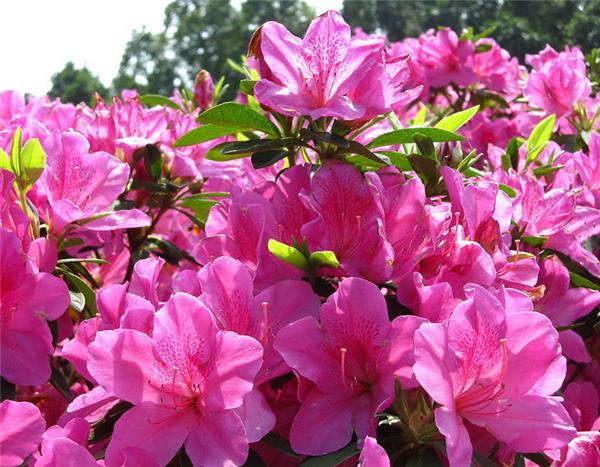
1. Morphological characteristics
The azalea is an evergreen, semi-evergreen, or deciduous clumping shrub of the genus Rhododendron in the family Ericaceae, and some are tree-like. Some varieties are even towering trees over 20 m tall, looking like a huge colorful umbrella when in bloom. But the vast majority are low-growing plants. This plant has many branches, with slender and dense twigs; young branches are hairy, brown or brownish. The leaves are alternate, and depending on the species they may be round, elliptical, ovate, lanceolate, or ovate-lanceolate. The flower colors are numerous and vary by variety, including white, purple, pink, yellow, red, light purple, and speckled gold, and some are even bicolor, while some flowers are also fragrant. The capsule is dark brown when mature, and the seeds are dark yellow and very small. Spring azaleas have relatively large leaves and bloom from April to May, flowering before new leaves emerge, with an upright tree form. The flowers come in two types, large and small; summer azaleas have relatively small leaves and bloom from May to June, leafing out before flowering, with an open tree form and large flowers with flat petals; spring-summer azaleas bloom between the two, with flowers and leaves emerging at almost the same time.
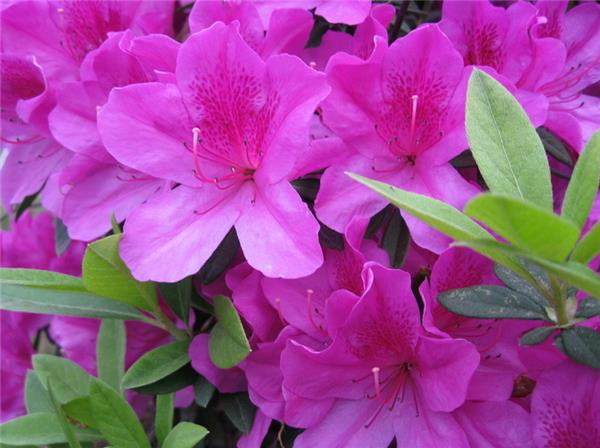
2. Growth habits
There are many species of azaleas with greatly differing habits. Most grow in mountain open thickets or under pine forests at altitudes of 500-1200 (-2500) m. They prefer cool, humid climates and dislike intense heat and dryness. They require acidic soil rich in humus, loose, moist, and with a pH between 5.5 and 6.5. Some species and horticultural varieties are more adaptable, tolerating drought and poor soil, and can also grow in soil with a pH between 7 and 8. However, they grow poorly in heavy or poorly aerated soil. Azaleas have certain light requirements but cannot tolerate exposure to intense sun; in summer and autumn they should be shaded from the scorching sun by deciduous trees or a shade shed, and the ground should often be sprayed with water. Azaleas generally send out new shoots in spring and autumn, mainly in spring. The most suitable growth temperature is 15-20°C; when the temperature exceeds 30°C or falls below 5°C, growth stalls. In winter there is a brief dormant period, after which, as temperatures rise, the flower buds gradually swell. Generally, when grown in the open, they bloom from March to May, while in high-altitude areas they bloom as late as July to August. In the north they are grown in greenhouses and can bloom in January to February. Azaleas tolerate pruning, and latent buds sprout very easily once stimulated, which can be used to control the tree shape and rejuvenate the plant. Pruning is generally carried out before May, and the new shoots that grow can all form flower buds in the same year; pruning too late will affect flowering. New shoots that emerge around the Start of Autumn can still lignify. If new shoots form too late, they are prone to frost damage in winter. It is an evergreen or deciduous shrub.
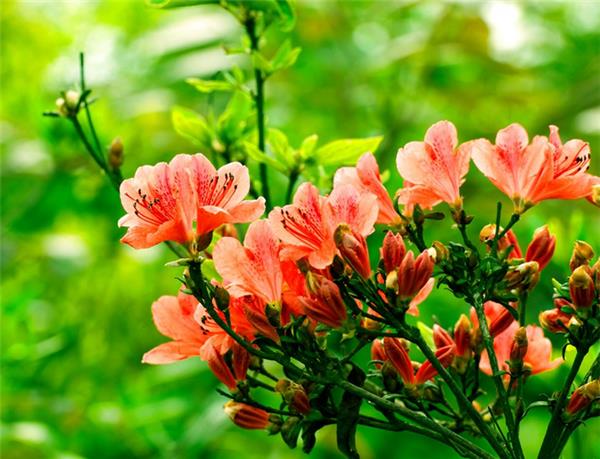
3. Medicinal value
Azalea root: sour, sweet, warm. Promotes blood circulation, relieves pain, dispels wind, and relieves pain. Used for vomiting blood, epistaxis, irregular menstruation, profuse uterine bleeding, rheumatic pain, and traumatic injuries.
Azalea leaf: sour, neutral. Clears heat and detoxifies, stops bleeding. Used for carbuncles, boils, traumatic bleeding, and urticaria.
Azalea flower: sour, sweet, warm. Promotes blood circulation, regulates menstruation, and dispels wind-dampness. Used for irregular menstruation, amenorrhea, profuse uterine bleeding, traumatic injuries, rheumatic pain, vomiting blood, and epistaxis.
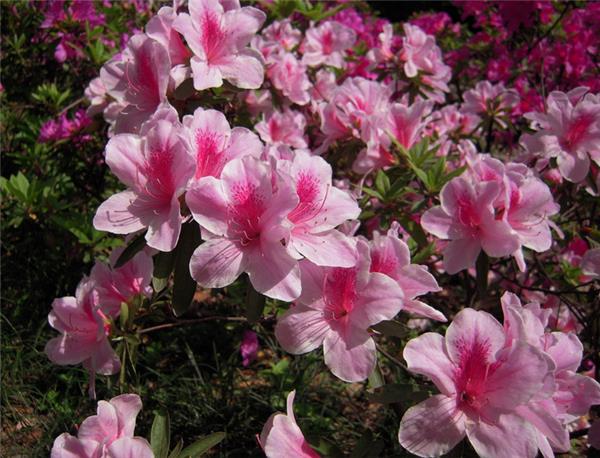
4. Economic value
In economic terms, among the characteristics of azaleas, some leaves and flowers can be used as medicine or to extract aromatic oil, some flowers are edible, the bark and leaves can be used to make tanning extract, and the wood can be made into handicrafts, etc. Alpine azaleas have well-developed root systems and are excellent plants for soil and water conservation. Azaleas are good material for flower hedges, and Rhododendron mucronatum can also be pruned and trained into various shapes. Specialized azalea gardens are highly distinctive. When they bloom in season, even though azaleas always give people a lively and bustling feeling, when out of season their dark green leaves are also very suitable for planting in courtyards as low walls or barriers.
5. Cultural characteristics
There is also a beautiful and bizarre legend about the azalea. It is said that in ancient times, the king of the State of Shu, Duyu, loved his people dearly. After abdicating, he lived in seclusion to cultivate the Way, and after he died he transformed into a cuckoo bird, which people then called the azalea bird. Every spring, the azalea bird flies over to wake the common folk: "Sow the seed! Sow the seed quickly!" It crows until blood flows from its beak, and the blood sprinkles onto the ground, dyeing the azaleas all over the mountains red.