How should the yew be grown? A full analysis of cultivation methods
I wonder how many people have heard of the yew and know about it. The yew is an endangered plant, and at the same time it is a very good plant as a potted plant. Today the editor will introduce the cultivation methods of the yew, and see how this precious yew should be grown?
[Introduction to the yew]
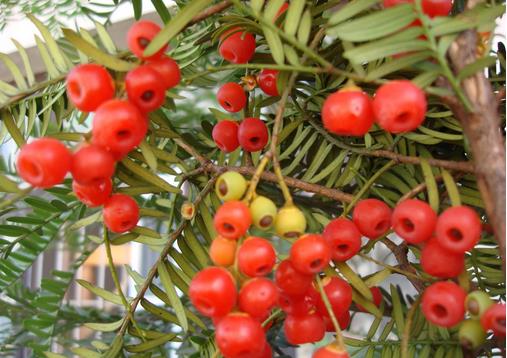
The yew is a shallow-rooted plant, with an inconspicuous main root and well-developed lateral roots. It is internationally recognized as an endangered rare natural anti-cancer plant, and the United Nations has explicitly prohibited its felling. Under natural conditions, the yew grows slowly and has very poor regenerative capacity. Therefore, for a long time, the cultivation methods of the yew have attracted much attention.
[Habits of the yew]
The yew likes to live in shady dense forests, but it also grows on rocky and barren soil on mountain tops. It likes a cool climate and can withstand low temperatures below minus 30°C, with super strong cold resistance. The most suitable temperature for yew growth is 20-25°C, and it is a shade-loving species. The most suitable soil is sandy soil with good drainage.
[Cultivation methods of the yew]
1. Soil
For potted yews, loam is the best soil. A mixed substrate made of peat soil, perlite, etc. with loam can also be chosen. Water retention, fertilizer retention, and air permeability are conducive to the growth of the yew. Although clay retains water and fertilizer, it is not breathable, which is not conducive to the growth and development of the yew's root system. Although sandy soil is breathable, it has poor fertilizer and water retention, and is also not conducive to yew growth.
2. Light
The yew is an excellent potted foliage plant. It likes shade and humidity, avoids sunlight, and is drought-tolerant. Therefore, it should not be exposed to full light, and in summer it should be properly shaded. Especially from July to August each year, under full light and strong light, the chlorophyll in the leaves is destroyed, causing young trees to die. The best light for the yew is from 7 a.m. to 11 a.m. every day, about 4 hours of light. In summer the light time should be shorter, and in autumn and spring the light time can be longer. But no light also affects the photosynthesis and growth of the yew. Remember that it cannot be placed in a place with western sunlight, and do not place it at the air outlet of an air conditioner or next to a heater, otherwise the water in the yew leaves will evaporate, and they are likely to dehydrate and dry up in the morning.
3. Temperature
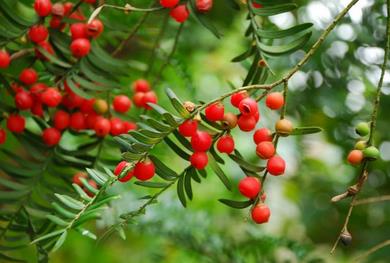
The yew should be kept at a temperature above 55°F in winter. The yew grows indoors in a well-lit position where the temperature is between 61°F and 68°F.
4. Water
When the surface of the potting soil slightly turns yellow-white and the leaves are slightly curled, the potting soil does not need watering; just spray the leaf surface. When the soil in the pot turns white, the potting soil should be watered. Note that when watering, it should be watered thoroughly at one time, so that the potting soil fully absorbs enough water.
5. Fertilizing
Chemical fertilizers should not be used for the yew. Some farmyard manure, etc. can be added as appropriate. When fertilizing, it should be applied as close to the pot wall as possible, and do not get close to the yew's roots.
The above are the cultivation methods of the yew.