How to grow succulents? These methods you need to master
How to grow succulents?
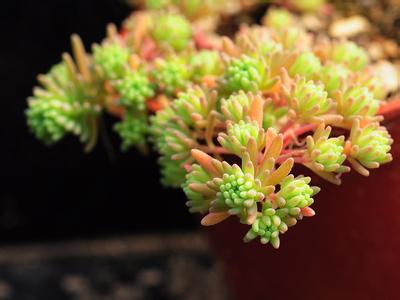
When growing succulents, the potting soil should be loose, breathable, and well-draining, yet with a certain water-retention capacity, and neutral or slightly acidic. For highland globe types (the genera Aztekium, Obregonia, and Strombocactus) and the genus Ariocarpus, a little more rice-hull ash and small-grained weathered rock can be added. For tall columnar species, coarse quartz sand can be mixed in to anchor the plant.
Transplanting and planting should generally be carried out during the recovery period just after the plant's dormancy ends. Before planting, the roots must be trimmed. After root trimming, let the plant dry for a few days, then plant it in moist potting soil; after planting, provide appropriate shade and do not rush to water, and do not fertilize within one month.
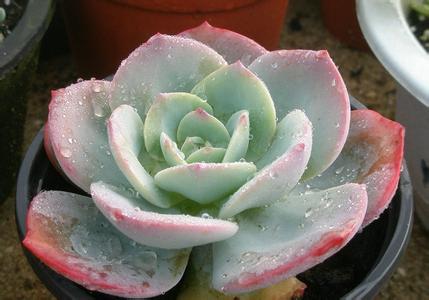
Regulation of temperature and light Cacti and succulents generally prefer warmth and a large diurnal temperature difference. Except for epiphytic types of cacti and species of the genus Haworthia, light should be abundant but soft. For this reason, apart from a few flat-stemmed segmented species, tall columnar species, and certain Agave species, they should generally be cultivated in a greenhouse year-round. Epiphytic types should be shaded except in winter; in summer, combined with cooling, the shading level should be 50% to 70%. Although Epiphyllum and Epiphyllum oxypetalum (night-blooming cereus) both have a certain cold tolerance, keeping them warm in winter favors flowering the following year. Hylocereus undatus, widely cultivated for use as rootstock, is not cold-tolerant; in winter it must be kept at at least 5°C and given full sunlight. Most terrestrial types of cacti grow most vigorously under conditions of 28°C to 35°C during the day and 10°C to 15°C at night. When indoor temperatures are often above 35°C to 38°C, growth stalls, and some species of highland globe types and woolly columnar types are also very prone to rot. Therefore, cooling is necessary, but one must not reduce light too much for the sake of cooling, as is done for epiphytic types. Most terrestrial types, when the potting soil is kept dry in winter, can withstand low temperatures of 2°C or even 0°C, but must not be directly exposed to frost or snow. Species of the genus Melocactus native to the Caribbean region and globe-shaped species that bloom in winter require higher temperatures. Succulents that grow in summer can basically have their temperature regulated by referring to terrestrial types of cacti. Their light requirements are relatively lower, and some species with enlarged stem bases are not cold-tolerant, so higher temperatures should be maintained in winter. Succulents that grow in winter should be kept cool with ventilation and cooling during their summer dormancy period, and in winter they require ample sunlight, with the minimum temperature maintained above 7°C.
Watering and fertilizing Watering should be carried out according to the plant's growth state. Whether a species is dormant in winter or dormant in summer, watering into the pot must stop during the dormancy period. However, species that are dormant in summer must have water spread on walkways and other places to maintain a certain air humidity. For plants in the vigorous growth period, their water needs should be fully met. Seedlings should be watered more, and large globes less (referring to frequency); terrestrial types should be watered less, epiphytic types more; during the bud-forming and flowering period, water more, and after flowers fade and fruits drop, water less; plants with many thin leaves should be watered more, and those with thick few leaves less. Fertilizing should be carried out during the vigorous growth period and the bud-forming period. Organic fertilizer must be fully decomposed. When applying chemical fertilizer, the ratio of nitrogen, phosphorus, and potassium should be 5:15:10 or 5:10:10, and a small amount of trace elements should be mixed in. It is better to fertilize lightly than heavily; if needed, it can be applied several more times. Plants with damaged roots, poor growth, or wounds on stems and leaves must not be fertilized.
Pest and disease control Pest and disease control should mainly be prevention-oriented. First, the environment must be clean and tidy. Strict checks must be made on introduced plants, and they should only be placed in the greenhouse after confirming they are free of pests and diseases. Concentrated pesticide spraying in the greenhouse during the three periods of early winter, early spring, and before the plum rain season has a twice-the-result-with-half-the-effort effect. In addition, disinfecting the potting soil has a very good preventive effect. Commonly used agents mainly include two categories: fungicides for preventing and treating diseases (such as carbendazim, thiophanate-methyl, chlorothalonil, zineb, etc.) and insecticides (such as omethoate, dicofol, malathion, fenvalerate, etc.), which can be applied according to the symptoms. The concentration of the agents must be strictly controlled according to the instructions, especially insecticides; a slightly stronger concentration will cause phytotoxicity, and Obregonia denegrii and some Euphorbiaceae succulents are especially sensitive to this. Spraying must be done several times in succession to be effective (with 2 days in between). After using the same chemical twice, switch to another; long-term use of a single pesticide easily breeds resistance.
I hope that after reading the above, you can grow succulents correctly.