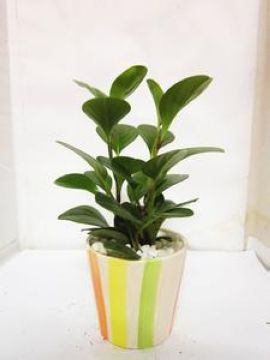
How to Grow Peperomia obtusifolia: Peperomia obtusifolia Pictures and Growing Methods
How to Grow Peperomia obtusifolia: Peperomia obtusifolia Pictures and Growing Methods
When people hear "Biyu" (jasper), most would think of beautiful jade, but what we are talking about today is a plant. Peperomia obtusifolia is one of the green plants very well suited to indoor growing. Its leaves are emerald green and glossy, and its plant shape is attractive, giving a feeling of a modest little beauty. Placed by a window or on a coffee table, it has a distinctive charm. So, how do you grow Peperomia obtusifolia, what do its pictures look like, and what are the growing methods? Let's take a look together.
Peperomia obtusifolia is native to Venezuela and likes a warm, humid, semi-shaded environment. It is not tolerant of cold, strong light, or drought.
1. Substrate: It likes to grow in loose, fertile, well-drained sandy soil rich in humus, and grows poorly in clay. A general substrate mix can be made by combining leaf mold + river sand + a small amount of decomposed organic fertilizer. If conditions allow, a mix of peat soil and perlite can be chosen for cultivation.
3. Temperature: It likes a warm environment. The suitable growing temperature is between 20-30°C. The overwintering temperature is best kept above 10°C. Below 10°C growth stops, and below 5°C it is prone to cold damage.
4. Humidity: It likes a humid growing environment. Under high-humidity conditions it grows luxuriantly and the leaf color is vivid. When the temperature is high or the air is dry, increase misting of the leaf surface or sprinkle water in the growing environment to maintain relatively high air humidity, which is extremely beneficial to the plant's growth. It can also adapt to a short period of dry conditions, but not for long; generally it should be kept at around 70%.
5. Watering: It relatively likes water and is not tolerant of drought. During the growing period, water frequently. When the temperature is above 25°C or the air is dry, water a bit more, but also prevent waterlogging. When the temperature is below 25°C, water thoroughly again only when the surface of the potting soil is dry. When the temperature is below 10°C, it can tolerate several days of dryness without watering.
6. Fertilizing: When the temperature is above 18°C, a small amount of fertilizer is needed. When the temperature is below 18°C or above 30°C, it is best to apply little or no fertilizer. Fertilizing is best done in small amounts and multiple times, and irrigating with diluted fertilizer solution instead of clear water is optimal. It is not tolerant of raw fertilizer or concentrated fertilizer, and fertilizer damage is very easily caused. Foliar spraying with fertilizer solution can also be used for fertilizing, with good results. The main fertilizers are nitrogen fertilizer and potassium fertilizer, with phosphorus fertilizer secondary.
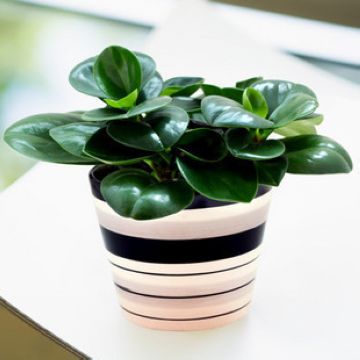
Peperomia obtusifolia is native to Venezuela and likes a warm, humid, semi-shaded environment. It is not tolerant of cold, strong light, or drought.
1. Substrate: It likes to grow in loose, fertile, well-drained sandy soil rich in humus, and grows poorly in clay. A general substrate mix can be made by combining leaf mold + river sand + a small amount of decomposed organic fertilizer. If conditions allow, a mix of peat soil and perlite can be chosen for cultivation.
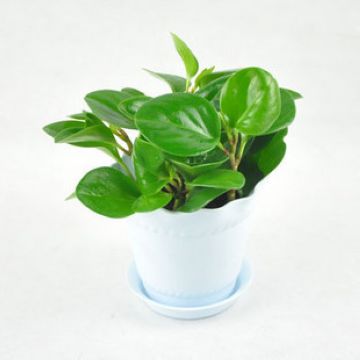
3. Temperature: It likes a warm environment. The suitable growing temperature is between 20-30°C. The overwintering temperature is best kept above 10°C. Below 10°C growth stops, and below 5°C it is prone to cold damage.
4. Humidity: It likes a humid growing environment. Under high-humidity conditions it grows luxuriantly and the leaf color is vivid. When the temperature is high or the air is dry, increase misting of the leaf surface or sprinkle water in the growing environment to maintain relatively high air humidity, which is extremely beneficial to the plant's growth. It can also adapt to a short period of dry conditions, but not for long; generally it should be kept at around 70%.
5. Watering: It relatively likes water and is not tolerant of drought. During the growing period, water frequently. When the temperature is above 25°C or the air is dry, water a bit more, but also prevent waterlogging. When the temperature is below 25°C, water thoroughly again only when the surface of the potting soil is dry. When the temperature is below 10°C, it can tolerate several days of dryness without watering.
6. Fertilizing: When the temperature is above 18°C, a small amount of fertilizer is needed. When the temperature is below 18°C or above 30°C, it is best to apply little or no fertilizer. Fertilizing is best done in small amounts and multiple times, and irrigating with diluted fertilizer solution instead of clear water is optimal. It is not tolerant of raw fertilizer or concentrated fertilizer, and fertilizer damage is very easily caused. Foliar spraying with fertilizer solution can also be used for fertilizing, with good results. The main fertilizers are nitrogen fertilizer and potassium fertilizer, with phosphorus fertilizer secondary.