How to Grow a Bromeliad? Detailed Guide to Care Methods
Many people enjoy the beauty of bromeliads but do not know how to care for them. Today, the editor brings you the care methods for bromeliads. Let's take a look at how to grow a bromeliad.
[Bromeliad Overview]
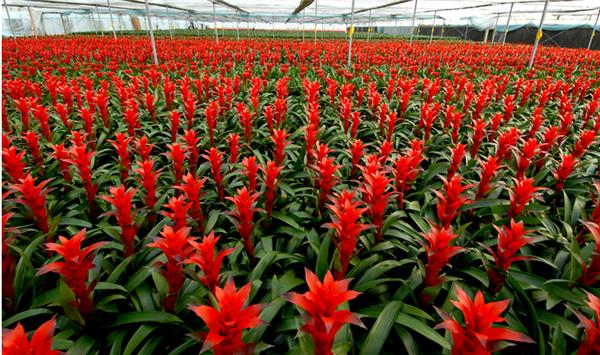
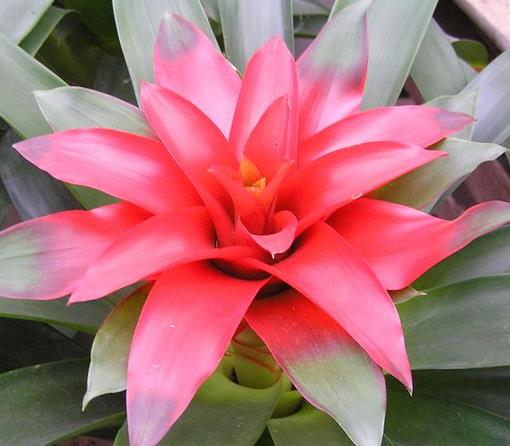
The bromeliad is a perennial evergreen herbaceous plant native to the tropical rainforest regions of the Americas. Its common characteristics are: the root system is extremely underdeveloped, and water and nutrient absorption mainly relies on the leaves; it prefers a warm and humid climate. The base leaves of the bromeliad are closely arranged in a lotus-like leaf tube, and some have a cup-shaped center that can hold water without leaking. Therefore, during cultivation and management, water should be poured regularly to keep the center and the spaces between the leaves moist. To keep it growing vigorously, a small amount of foliar fertilizer, such as Pulshenbao, should be applied into the leaf tube every 1-2 weeks. The specific amount depends on the instructions on the foliar fertilizer and the growth condition of the plant.
[Bromeliad Care Methods]
1. Soil
River sand mixed with fine tree fern fiber or general commercially available potting soil will do. It is best to use leaf mold mixed with one quarter river sand as the growing medium. Moss and bark chunks can also be used to wrap and plant it. The soil should be loose and fertile.
2. Water
The bromeliad is an epiphytic ornamental plant with a weak root system that mainly serves to anchor the plant, while its absorption function is secondary. The water and nutrients needed for its growth and development are mainly stored in the leaf cup formed by the clasping leaf bases and absorbed by the absorption scales at the leaf bases. Even if the roots are damaged or absent, as long as there is some water and nutrients in the leaf cup, the plant can grow normally. Therefore, when watering, it is best to pour water directly into the leaf cup rather than into the potting soil. Summer and autumn are the peak growing seasons, requiring water to be poured into the leaf cup once every 1-3 days and the leaves to be misted 1-2 times a day to increase air humidity. Keep water in the leaf cup and the leaf surface moist; slightly dry soil is not a major issue. In winter, reduce misting, keep the potting soil moist, and the leaf surface dry.
3. Light
Generally, bromeliads prefer sunlight, but strong light exposure should be avoided, otherwise the leaves will be damaged. They can grow well indoors. When the temperature is below 10°C, it is best to move them indoors.
4. Temperature
The optimum temperature for ornamental bromeliads is 15-20°C, and in winter it should not be lower than 10°C. Humidity should be maintained above 70-80%, and it is necessary to frequently spray water on the plant or sprinkle water in the surrounding environment to increase humidity.
5. Fertilizing
Under conditions of drought, muggy heat, and low humidity, the leaf margins and leaf tips of bromeliads are highly prone to scorching. Therefore, the potting soil should be kept moist, clean water can be sprayed on the leaf surface 1 to 2 times a day, and the cup-shaped part at the center of the leaf rosette can be filled with clean water. Bromeliads were originally epiphytic plants with underdeveloped root systems, having only small and short roots. Therefore, be sure to avoid applying too much fertilizer, to prevent root rot and yellowing leaves. Apply diluted liquid fertilizer instead.
The above are the bromeliad care methods from Zhuangxiu Network.