Is the Rubber Plant Toxic? With Care Methods and Pictures
[Rubber Plant Pictures] Is the Rubber Plant Toxic? Rubber Plant Care Methods
The rubber plant (Ficus elastica) is an evergreen tree of the Moraceae family. It likes a hot, humid environment with plenty of sunlight, and it can also tolerate shade but not cold. The rubber plant is very suitable as an ornamental plant to grow at home, but many people worry that the rubber plant is toxic and will harm their family's health. Today we will tell you whether the rubber plant is toxic and how to care for it.
Although the leaves of the rubber plant are toxic, the toxicity is mainly in its sap. It does not release toxic gas on its own, so it generally does no harm to the body. Moreover, it has high ornamental value and is a famous potted foliage plant. Although the rubber plant likes sunlight, it also tolerates shade, and it adapts strongly to light, so it is extremely suitable for indoor beautification and arrangement; as long as you do not eat it by mistake, there is no problem.
If there are children at home, pay attention and do not let them tear open the leaves of the rubber plant, because the white milky sap that flows from the leaf veins is toxic and can harm the eyes.
1. Temperature
In rubber plant care methods, the first key point is the temperature issue. The best temperature for the rubber plant is 20-25 degrees; even above 30 degrees it can still grow well, but in winter, if the temperature is too low, the rubber plant will produce a large amount of fallen leaves. Its cold resistance is very poor.
2. Sunlight
It is often said that sunlight is the food of plants, and that is indeed true. In rubber plant care methods, sunlight is also a treasure; giving it sufficient sunlight will let it grow vigorously. From May to September, provide appropriate shade.
3. Fertilizing
Fertilizer is like calcium supplementation; it can strengthen its "physical health." In rubber plant care methods, fertilizing is also one of the key points. It can reduce the occurrence of markings and make the leaves become bright and beautiful. Simply using nitrogen fertilizer is enough, and remember to stop fertilizing in winter.
4. Pruning and Repotting
When spring arrives, it is time to prune the rubber plant. Cut off the forked branches inside the crown, the inward-growing branches, and the thin, weak branches, to maintain ventilation inside it as well as good light penetration and the overall shape. Usually, in rubber plant care methods, it must be repotted once every 2 years, adding materials such as leaf mold and mixing them anew; it prefers loose loam soil with good drainage.
When the plant needs to be propagated, cuttage propagation is usually used, and doing it in summer is best. Choose a one-year-old branch on the rubber plant, about 20cm long; after cuttage it will take root within one month, and after 50 days it can be potted.
The above is the content about [Rubber Plant Pictures] Is the Rubber Plant Toxic? Rubber Plant Care Methods. Although the leaves of the rubber plant are toxic, it will not release toxic gas, so it generally does no harm to the body. Moreover, it has high ornamental value and is a famous potted foliage plant. Although the rubber plant likes sunlight, it also tolerates shade, and it adapts strongly to light, so it is extremely suitable for indoor beautification and arrangement after renovation.
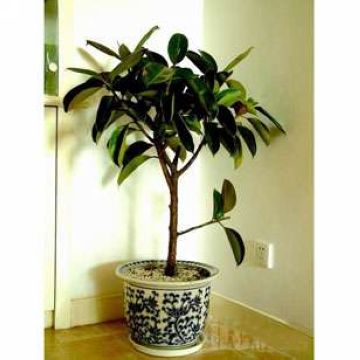
Although the leaves of the rubber plant are toxic, the toxicity is mainly in its sap. It does not release toxic gas on its own, so it generally does no harm to the body. Moreover, it has high ornamental value and is a famous potted foliage plant. Although the rubber plant likes sunlight, it also tolerates shade, and it adapts strongly to light, so it is extremely suitable for indoor beautification and arrangement; as long as you do not eat it by mistake, there is no problem.
If there are children at home, pay attention and do not let them tear open the leaves of the rubber plant, because the white milky sap that flows from the leaf veins is toxic and can harm the eyes.
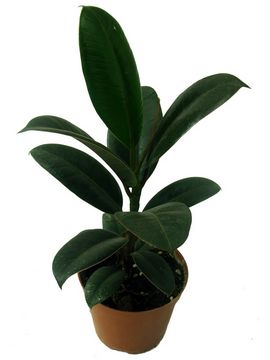
1. Temperature
In rubber plant care methods, the first key point is the temperature issue. The best temperature for the rubber plant is 20-25 degrees; even above 30 degrees it can still grow well, but in winter, if the temperature is too low, the rubber plant will produce a large amount of fallen leaves. Its cold resistance is very poor.
2. Sunlight
It is often said that sunlight is the food of plants, and that is indeed true. In rubber plant care methods, sunlight is also a treasure; giving it sufficient sunlight will let it grow vigorously. From May to September, provide appropriate shade.
3. Fertilizing
Fertilizer is like calcium supplementation; it can strengthen its "physical health." In rubber plant care methods, fertilizing is also one of the key points. It can reduce the occurrence of markings and make the leaves become bright and beautiful. Simply using nitrogen fertilizer is enough, and remember to stop fertilizing in winter.
4. Pruning and Repotting
When spring arrives, it is time to prune the rubber plant. Cut off the forked branches inside the crown, the inward-growing branches, and the thin, weak branches, to maintain ventilation inside it as well as good light penetration and the overall shape. Usually, in rubber plant care methods, it must be repotted once every 2 years, adding materials such as leaf mold and mixing them anew; it prefers loose loam soil with good drainage.
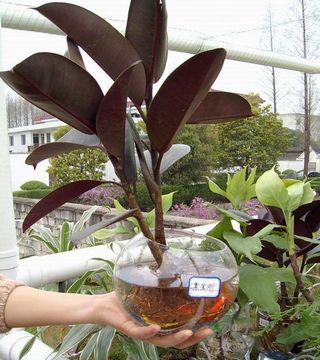
When the plant needs to be propagated, cuttage propagation is usually used, and doing it in summer is best. Choose a one-year-old branch on the rubber plant, about 20cm long; after cuttage it will take root within one month, and after 50 days it can be potted.
The above is the content about [Rubber Plant Pictures] Is the Rubber Plant Toxic? Rubber Plant Care Methods. Although the leaves of the rubber plant are toxic, it will not release toxic gas, so it generally does no harm to the body. Moreover, it has high ornamental value and is a famous potted foliage plant. Although the rubber plant likes sunlight, it also tolerates shade, and it adapts strongly to light, so it is extremely suitable for indoor beautification and arrangement after renovation.