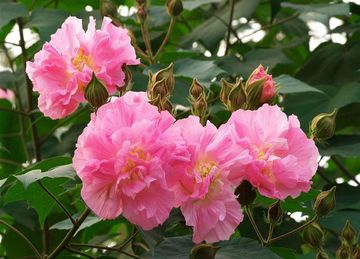
How to grow Hibiscus mutabilis? Cultivation methods and picture gallery
Hibiscus mutabilis pictures How to grow Hibiscus mutabilis Cultivation methods for Hibiscus mutabilis
Hibiscus mutabilis is also called mutabilis hibiscus and frost-defying flower; besides these, Huamu, ground hibiscus and wood lotus are all alternative names for it. This flower can often be seen in green belts and parks; the blooms are very large and beautiful, and the seeds are easy to collect, so we can also grow it easily at home. Today we will talk about how to grow Hibiscus mutabilis, and along the way enjoy some pictures of it.
Hibiscus mutabilis likes a warm, humid and sunny environment, tolerates semi-shade slightly, and has a certain degree of cold resistance. It is not strict about soil, but grows best in fertile, moist, well-drained sandy soil. It can be planted in a sunny spot in the courtyard or beside a pond; usually management is fairly extensive, and during drought pay attention to watering. Each winter or spring, dig a trench around the plant and apply some decomposed organic fertilizer; after fertilizing, water promptly and cover the soil.
The vitality that Hibiscus mutabilis likes is very tenacious, and it grows very quickly. So usually pay more attention to pruning the branches and leaves of Hibiscus mutabilis, so that this flower can be grown better. When pruning, you can prune freely according to the shape you want, so the Hibiscus mutabilis you grow will have a more personalized effect. I believe you will like it even more.
Hibiscus mutabilis is generally planted beside a pond or in a sunny spot in the courtyard, and extensive management is also fine. In the dry season, water more; in winter, pay attention to fertilizing, watering and covering the soil. During the growing season, sufficient moisture must be maintained to meet its growth needs. Because its cold resistance is rather poor, it should be moved indoors in winter, ensuring the temperature is kept at 0°C to 10°C, letting it go into natural dormancy.
Pest and disease control for Hibiscus mutabilis
The common red spider mite is the most common pest, harming the leaves; in the early stage of damage, promptly spray 73% propargite 3000-fold solution or 20% amitraz emulsifiable concentrate 1000-fold solution. Cotton leafhoppers and small green leafhoppers harm the leaves; they can be sprayed with 5% carbaryl powder in the morning dew. The four-striped Japanese beetle and the spotless arcuate blister beetle bite and eat the leaves; during the peak emergence period of the adults, spray 5% carbaryl powder to kill them. For the cotton leaf roller, spray 90% trichlorfon 800-fold solution during the larval hatching period.
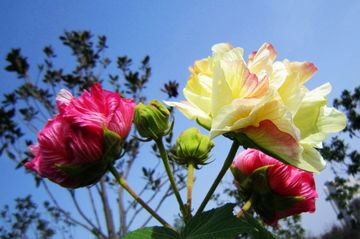
Hibiscus mutabilis likes a warm, humid and sunny environment, tolerates semi-shade slightly, and has a certain degree of cold resistance. It is not strict about soil, but grows best in fertile, moist, well-drained sandy soil. It can be planted in a sunny spot in the courtyard or beside a pond; usually management is fairly extensive, and during drought pay attention to watering. Each winter or spring, dig a trench around the plant and apply some decomposed organic fertilizer; after fertilizing, water promptly and cover the soil.
The vitality that Hibiscus mutabilis likes is very tenacious, and it grows very quickly. So usually pay more attention to pruning the branches and leaves of Hibiscus mutabilis, so that this flower can be grown better. When pruning, you can prune freely according to the shape you want, so the Hibiscus mutabilis you grow will have a more personalized effect. I believe you will like it even more.
Hibiscus mutabilis is generally planted beside a pond or in a sunny spot in the courtyard, and extensive management is also fine. In the dry season, water more; in winter, pay attention to fertilizing, watering and covering the soil. During the growing season, sufficient moisture must be maintained to meet its growth needs. Because its cold resistance is rather poor, it should be moved indoors in winter, ensuring the temperature is kept at 0°C to 10°C, letting it go into natural dormancy.
Pest and disease control for Hibiscus mutabilis
The common red spider mite is the most common pest, harming the leaves; in the early stage of damage, promptly spray 73% propargite 3000-fold solution or 20% amitraz emulsifiable concentrate 1000-fold solution. Cotton leafhoppers and small green leafhoppers harm the leaves; they can be sprayed with 5% carbaryl powder in the morning dew. The four-striped Japanese beetle and the spotless arcuate blister beetle bite and eat the leaves; during the peak emergence period of the adults, spray 5% carbaryl powder to kill them. For the cotton leaf roller, spray 90% trichlorfon 800-fold solution during the larval hatching period.