How to grow orchids? Detailed guide to cultivation methods and precautions
Orchids, also known as lan cao, are a particularly delicate type of flower, so they require careful attention when cultivated. Below is an introduction to the cultivation methods and precautions for orchids.
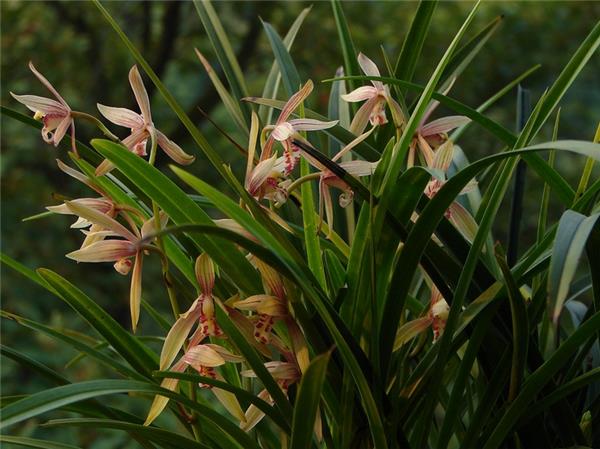
Cultivation methods for orchids
1. Potting soil: Orchids do best in slightly acidic humus soil. You can use peat soil, leaf mold, black mountain soil, garden soil, bark chunks, perlite, vermiculite, etc. to make a soil that allows the roots to breathe and drains well. Usually, leaf mold and potting soil can be mixed at a ratio of 8:2, or peat soil, compost soil and river sand can be mixed at a ratio of 6:3:1.
2. Light: Orchids prefer a shaded, well-ventilated environment and cannot tolerate direct sunlight. Except in winter, they all need shading and should be grown under diffused light, so that prolonged stays in dark, cool places do not weaken the plants or even cause pests and diseases. When growing them at home, gardeners can set up a simple screen to adjust the light. In addition, different orchid varieties tolerate different levels of light. Cymbidium sinense (Chinese cymbidium) is the most shade-tolerant, followed by Cymbidium ensifolium (fertile cymbidium), while Cymbidium faberi (Faber's cymbidium) and Cymbidium goeringii (spring orchid) are not very shade-tolerant.
3. Temperature: The optimal growing temperature for orchids is generally 16-24°C. In winter, the temperature should be around 10°C, with daytime and nighttime temperatures of 10-12°C and 5-10°C respectively. In northern regions, when the temperature is 5°C, they should be moved indoors. In summer, the temperature should be below 30°C; otherwise, measures such as shading, cooling and humidifying are needed.
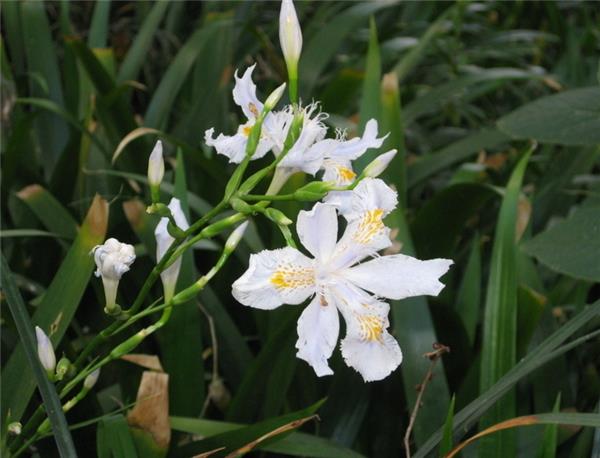
4. Water: The humidity for orchids should be kept at 75%-90%, and adjusted according to the different types and environment. In spring and autumn, water generally once every 2-3 days; during the summer growing season, water once every 1-2 days; in winter, reduce watering to about once a week, and for Cymbidium sinense, which blooms in this season, water can be appropriately increased. When watering, avoid splashing water onto the leaves, and rainwater or snow water is best.
5. Fertilizer: Orchids prefer mild feeding, so apply dilute fertilizer. The fertilizer needs to be fully decomposed and is mainly applied in the potting soil or during later growth. Generally, fertilizer is applied to the leaves, or a thin fertilizer can be applied to the roots. During the seedling stage, apply nitrogen fertilizer first; when the seedlings reach 5-6 cm, phosphorus and potassium fertilizers can be applied; for large seedlings, apply nitrogen fertilizer once a week. During the plant's growth period, apply 15% decomposed dilute cake fertilizer every 15-20 days. From before flowering to during flowering, spray 0.2% potassium dihydrogen phosphate or plant ash water onto the leaves 2-3 times.
6. Pests and diseases: Orchids are susceptible to damage from scale insects, whiteflies and ants. The first two can be eliminated with 1000 times dilution of dichlorvos emulsifiable concentrate and 2000 times dilution of fenvalerate; ants can be lured and eliminated in groups with meat bones. As for diseases, the plants are prone to black spot fungus, anthracnose fungus, southern blight, etc. Promptly remove and burn diseased leaves, improve ventilation and light, control humidity well, and combine this with relevant pesticide control.
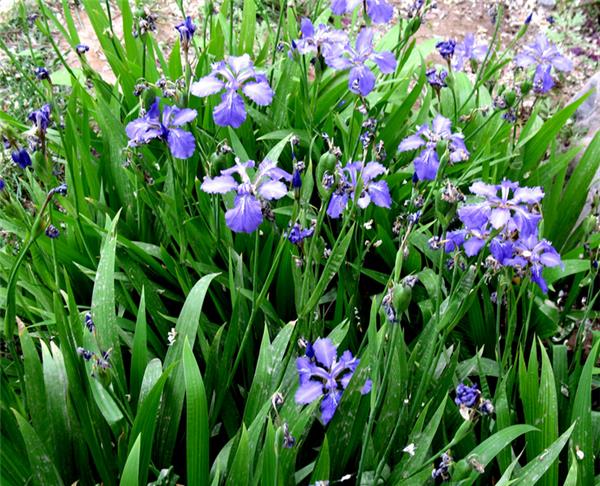
Precautions for orchid cultivation
1. Orchids are mainly distributed in the southeast and southwest regions. They mostly grow wild in shaded spots under sparse forests in moist valleys and beside rocks, so they naturally prefer a warm, humid climate, are fond of shade and moisture, require 70%-90% shading, and are averse to high temperatures, dryness and strong light.
2. During orchid cultivation, withered yellow old leaves and diseased or pest-damaged leaves should be continually cut off to improve ventilation. After the flower buds emerge, keep one strong flower bud per plant and cut off the rest, so as to avoid consuming too many nutrients and affecting flowering the following year. After the flowers fade, the flower stalks should be cut off.
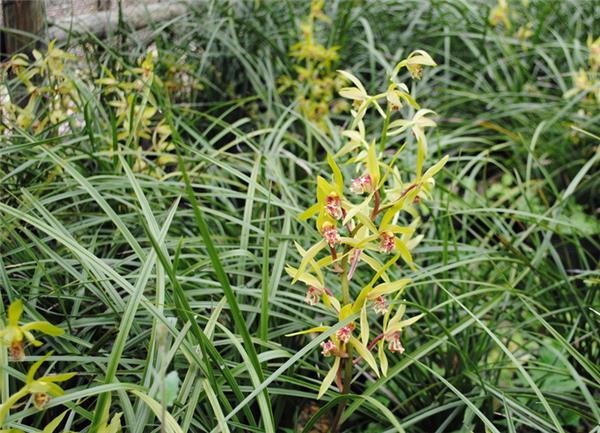
3. In winter, pay attention to cold protection. Terrestrial orchids are strongly cold-resistant, while tropical orchid types require higher overwintering temperatures and should be moved indoors early or protected with plastic sheeting to avoid frost damage; the room temperature is best kept at 10-15°C, and ventilation should be noted during indoor care. As the weather gradually warms in spring, gradually move the orchids to the courtyard or balcony.
4. For home orchid cultivation, natural rainwater, stream water, well water and river water are best. If using tap water, first store it in a vat and expose it to the sun to remove the bleaching powder before use. If tap water is used to water flowers for a long time, the growing medium will gradually become alkaline. You can apply ferrous sulfate once every so often to increase soil acidity. In addition, watering orchids with fermented rice-washing water can also keep the soil in a slightly acidic state.