A detailed guide to lily planting methods, teaching you how to grow lilies well
Lilies come in many varieties, with diverse and beautiful flower colors, and they carry excellent symbolism. Many people grow them at home as a partial accent. So do you know how to plant lilies? Below we look at the planting methods for lilies.
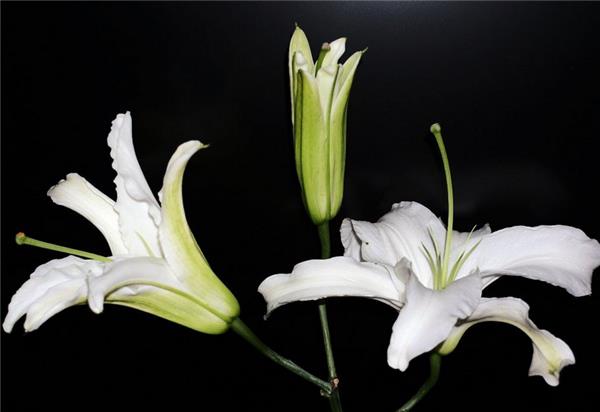
Lily planting methods
1. Soil: For potted lilies, the growing medium should ideally be prepared by mixing leaf mold, sandy soil, and garden soil in a 1:1:1 ratio. At the bottom of the pot, apply plenty of fully decomposed compost and a small amount of bone meal as a base fertilizer.
2. Sunlight: Lilies like light. If they lack sunlight and are shaded for a long time, normal flowering will be affected. In addition, during the growing period, the flower pot should be turned once a week. Otherwise, the plant tends to grow lopsided, affecting its appearance.
3. Temperature: The growth and flowering temperature for lilies is 16-24°C. Below 5°C or above 30°C, growth almost stops. Only above 10°C do plants grow normally. Above 25°C, growth stalls again. If the winter nighttime temperature is below 5°C for 5-7 consecutive days, flower bud differentiation and flower bud development will be severely affected, delaying flowering or even causing blind flowers and split flowers.
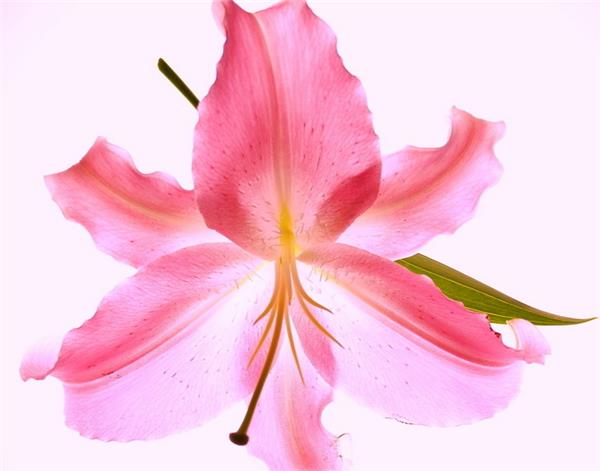
4. Watering: Watering only needs to keep the potting soil moist, but during the peak growing season and in dry weather, water appropriately and more frequently, and often sprinkle water around the flower pot to increase air humidity. The potting soil should not be too wet, otherwise the bulbs rot easily.
5. Fertilizing: Lilies do not have very high fertilizer requirements. Usually, applying fertilizer moderately when spring growth begins and at the early flowering stage is enough. Some growers abroad believe that lilies need relatively more nitrogen and potassium fertilizer, and should be fertilized once every 10-15 days during the growing period, while phosphorus fertilizer should be limited because too much phosphorus fertilizer can cause leaves to turn yellow. During the flowering period, phosphorus fertilizer can be added for 1-2 days.
6. Pests and diseases: Common lily diseases include lily mosaic virus, bulb rot, leaf spot, and leaf blight. When leaf spot appears, remove the diseased leaves and spray once with a 500-fold dilution of 65% zineb wettable powder to prevent it from spreading.
7. Pruning: To make the bulbs plump, remove the spent flowers promptly after blooming to reduce nutrient consumption and avoid affecting the blooming of other flowers.
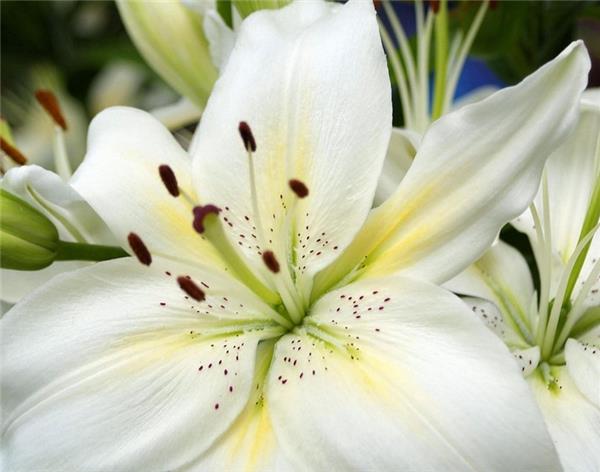
Gardeners encounter quite a few problems when growing potted lilies. The 10 common questions below were compiled from feedback from gardeners, and the first two are the problems gardeners encounter most often.
1. Bulb rot: Control watering well; better dry than wet. It is caused by fungi, with waterlogging as the main trigger. By the time it is discovered, it is often too late. If the basal plate of the bulb is intact, peel off the rotten scales, disinfect, and store. Symptoms vary: leaf edges turn yellow, lower leaves drop, the plant wilts and does not recover after watering, flower buds of OT, LO, LA, etc. turn black, growth clearly stalls, and so on. All of these are very likely to be bulb rot.
2. Bud blasting: Common in Asiatic lilies, caused by insufficient light (continuous rain, placed indoors). The phenomenon is that small flower buds turn from green to brown, then wither and scorch, and they will not bloom that year. Continue to grow the bulb well. For lilies without Asiatic lily lineage, bud blasting is mainly caused by bulb rot.
3. Leaf scorch: Strong fertilizer or undecomposed fertilizer may damage the root system, causing severe scorching of leaf tips and withering of flower buds. At this time, flush the potting soil heavily with water, and if necessary, repot and replace the soil. Oriental lilies are relatively prone to leaf scorch. When watering and fertilizing, chloride ions and fluoride ions should be low (phosphorus fertilizers such as superphosphate contain more of them, so use with caution).
4. Breakage: Handle the same as bud blasting; continue to grow the bulb. Lilies do not produce side branches, so a broken terminal bud means they will not bloom that year.
5. Lower leaves turning yellow and dropping: A common problem in lilies, especially severe in Oriental lilies and some Asiatic lilies. In LA, LO, and OT, this phenomenon is not obvious. If it is not severe, it basically does not affect ornamental value and can serve as a reflection of the plant's health condition.
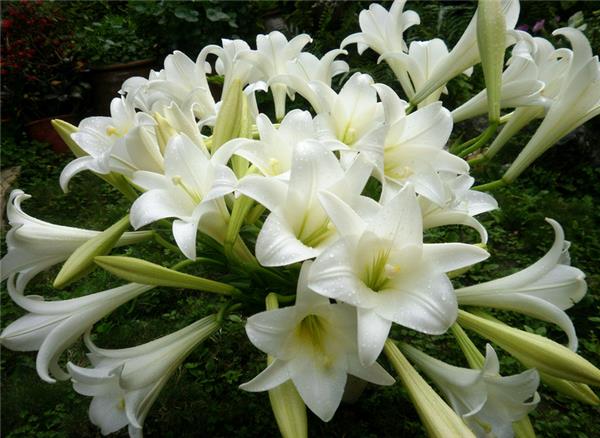
6. Pests: Not common. Occasionally there are infestations by scale insects, Japanese beetles, aphids, etc. Snails may gnaw on flower buds, so protection should be noted for ground planting.
7. Gray mold: Common in greenhouses with especially high humidity and during periods of high temperature and frequent rain. Mold-like diseased spots appear on the leaves; spray with a fungicide to eliminate it.
8. Out-of-season sprouting: For especially robust varieties such as Lilium longiflorum, new shoots may emerge in winter as dormancy approaches. Let them grow
9. No sprouting: This is the situation new growers fear most. Fortunately, unless it is due to bulb rot or bud rot, this situation is rare. It is often because the bulb has not experienced enough cold to break dormancy. In this case, it can be placed in the refrigerator for treatment, and planted once there are signs of sprouting.
10. Deformed buds, double flowers: Often appear in cold-treated autumn bulbs and are related to excessively long cold treatment time. Generally, they do not affect planting.