A detailed guide to rose cultivation techniques, teaching you how to grow roses well
Known as the queen of flowers, the rose blooms in all four seasons with a long flowering period, and its fragrance and vivid colors give it excellent landscaping and beautifying effects. Below, we introduce rose cultivation techniques.
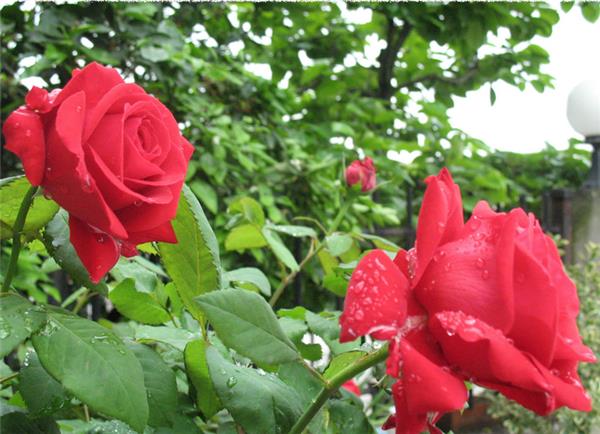
Rose cultivation techniques
Propagation: Most often done by cuttings, but division and layering can also be used. Cuttings can be taken in all four seasons, but hardwood cuttings in winter or autumn are preferable; for softwood cuttings in summer, attention must be paid to water management and temperature control. Otherwise, rooting is difficult. Winter cuttings are generally taken in a greenhouse or plastic tunnel; if taken in the open field, measures to increase moisture retention must be taken. Propagation by sowing is used for sexual hybrid breeding. For a few rare varieties that are difficult to root, grafting is used, and the rootstock is preferably wild rose. Grafting is one of the most widely used methods for propagating roses. Grafting belongs to the category of asexual propagation; it joins two plant parts into a single whole that continues to grow as one plant. In a graft combination, the upper part is called the scion, and the part bearing the scion is called the rootstock. Some rose varieties are few in number and have striking flower colors, yet their own-root seedlings have weak root systems and grow extremely slowly; grafting onto vigorous rootstocks makes these rose varieties grow strongly and enhances disease resistance. Grafting can also faithfully reflect the various traits of the original variety, with extremely strong heredity and stability. Through practical observation, for plants formed by grafting, from the date of grafting to the opening of the first flower, the fastest takes only 23 days, and individual plants can bloom 1 to 2 days earlier; most grafted plants usually take about 40 to 45 days to bloom. It can thus be seen that compared with cuttings, grafting can advance the flowering time.
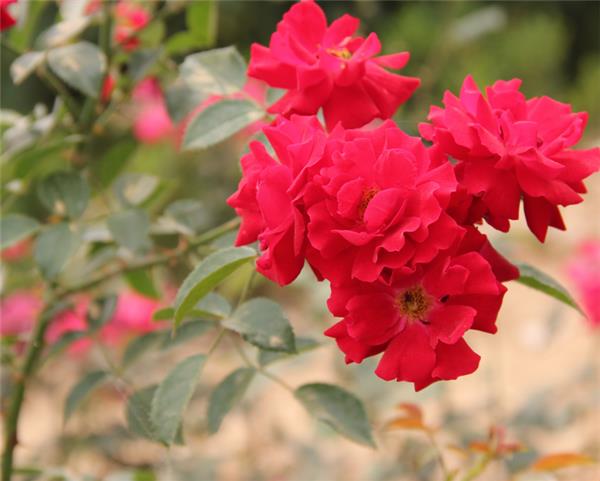
Management: Rose transplanting is carried out between November and March of the following year. Pruning can be done at the same time as transplanting: first cut out crowded and dead branches, then cut out old and weak branches, leaving 2--3 outward-growing buds so the plant spreads in all directions; appropriately shorten particularly strong branches to strengthen the growth of weak branches. In summer, when new branches grow too densely, thin them out. After each batch of flowers fades, promptly cut off the upper part of the branch connected to the spent flower so it does not set seed and consume nutrients, and retain the plump middle and lower parts of the branch to promote early new growth and another round of blooming. Roses like heavy application of base fertilizer before flowering and quick-acting nitrogen fertilizer as a top dressing afterward to strengthen the seedlings and force flowers. Roses have strict water requirements and must not be too wet or too dry; too dry and they wither, too wet and the roots are damaged and leaves drop.
The main pests of roses include aphids, leaf-roller moths, and slug moths. Control mainly uses 1000--1200 times diluted dimethoate or isocarbophos and other pesticides.
Propagation is mainly by grafting and cuttings, supplemented by sowing and tissue culture. Commonly used grafting rootstocks include: wild rose, pink cluster rose, 'Baiyutang' (rose), etc.
For open-field planting of roses, choose a wind-sheltered, sunny location with good drainage. In addition to heavy application of base fertilizer, top dressing should also be applied during the growing season. Pruning is an important task; besides pruning during the dormant period, attention should also be paid during the growing season to bud removal and cutting out spent flower branches and rootstock suckers. Greenhouse cultivation is mainly aimed at supplying cut flowers, usually planted at a spacing of 30cm×30cm, maintaining 15-17°C at night and 21-25°C during the day. Potted roses can be used for indoor viewing. The key points of their cultivation and management are: loose potting soil, appropriate pot diameter, moderate moisture, light fertilizer applied frequently, flower removal and branch pruning, pest and disease control, and repotting every year.
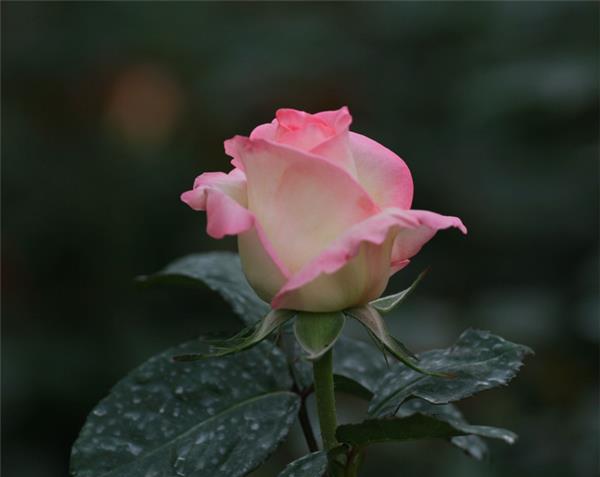
Flowering period control of roses
Scientific pruning: Reasonable pruning is the key to controlling the flowering period of roses. In practice, pruning should be carried out according to the overall growth vigor of the rose plant. There are two types of buds on rose flowering branches. At the 1st to 5th leaf below the flower, the upper buds on the branch are pointed; the flowering branches they produce are short, with about 6 to 9 leaves, and they set buds early, usually in 15 to 18 days, with small flowers. The middle buds on the branch (at the 6th to 9th leaf below the flower) are round; round buds produce long flowering branches, with about 13 to 16 leaves, and take longer to set buds, usually around 25 days, with large flowers. The buds at the base of the branch are flat, with low bud activity and slow branching, prone to producing vigorous water sprouts, and the flowering branches take even longer to set buds, usually more than 30 days. It can thus be seen that the heterogeneity of rose buds determines the time of flowering branch sprouting, the time of bud setting, and the time of blooming. Only by understanding the habits of flower buds can the flowering period be controlled accurately. Under normal circumstances, a rose takes about 45 days from new bud sprouting to flowering. In practice, analyze specific situations individually. For field-planted roses, according to the geographical location, while ensuring continuous flowering, let them bloom more and bloom well from August 8 to 24. The following methods are for reference: around June 20, prune all spent flowers and part of the already fully bloomed flowering branches of field-planted roses at a 50% ratio, cutting to the round bud position at the mature middle part of the flowering branch; the ornamental flowering period is about August 1 to 15; around June 30, prune all spent flowers and all flowering branches after full bloom by the above method; the ornamental flowering period is about August 10 to 25; after June 30, prune spent flowers at any time to let them bloom naturally. For potted roses and cut-flower roses, calculate the date of flower use well, and about 45 days before flower use, carry out overall branch pruning.
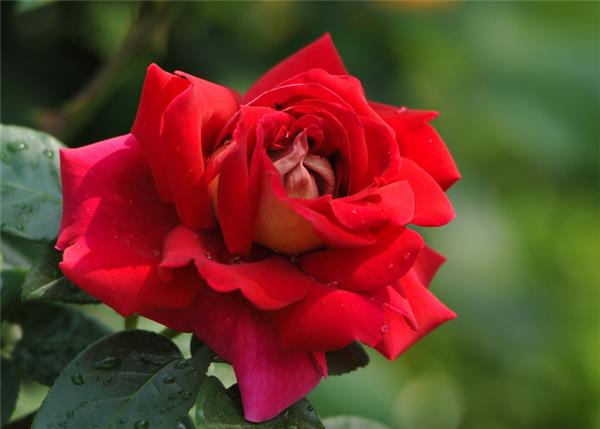
Fertilizer and water management: In the pruning under the various situations above, scientific fertilizer and water management should be carried out in combination with plant growth vigor. After the plant is pruned, when the new generation of buds does not sprout, spray 0.2% urea on the leaves once every 5 or 6 days to promote new bud sprouting; if the plant grows fast and new branches grow rapidly, exceeding the planned range, controlling water supply can delay growth. During water control, the critical point is that after the branches and leaves wilt, water should be sprayed promptly and recovery within 1 hour. Water is the carrier of various enzymes in the plant body; when water supply is insufficient, enzyme activity decreases, metabolism slows, and thus plant growth slows. If new branches set buds later than planned, at this time spray 0.2% potassium dihydrogen phosphate on the leaves once every 5 or 6 days, and the flower buds will grow rapidly. The flowering period of roses consumes a large amount of water and internal nutrients, so the water supply must be sufficient.
Let them bloom naturally. For potted roses and cut-flower roses, calculate the date of flower use well, and about 45 days before flower use, carry out overall branch pruning.
Fertilizer and water management: In the pruning under the various situations above, scientific fertilizer and water management should be carried out in combination with plant growth vigor. After the plant is pruned, when the new generation of buds does not sprout, spray 0.2% urea on the leaves once every 5 or 6 days to promote new bud sprouting; if the plant grows fast and new branches grow rapidly, exceeding the planned range, controlling water supply can delay growth. During water control, the critical point is that after the branches and leaves wilt, water should be sprayed promptly and recovery within 1 hour. Water is the carrier of various enzymes in the plant body; when water supply is insufficient, enzyme activity decreases, metabolism slows, and thus plant growth slows. If new branches set buds later than planned, at this time spray 0.2% potassium dihydrogen phosphate on the leaves once every 5 or 6 days, and the flower buds will grow rapidly. The flowering period of roses consumes a large amount of water and internal nutrients, so the water supply must be sufficient.