What are the effects of Mimosa pudica? A comprehensive guide in one article
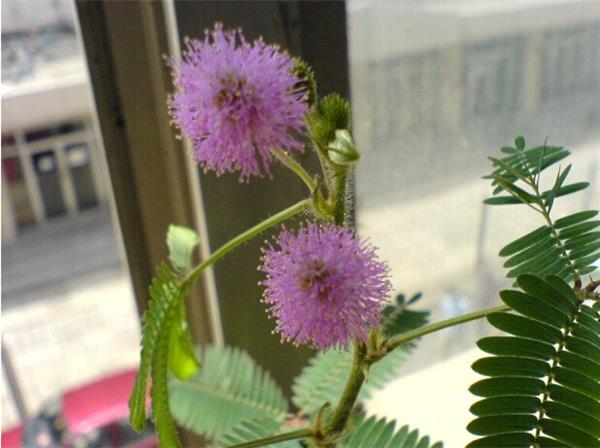
What are the effects of Mimosa pudica? Mimosa pudica is native to the tropical regions of South America, prefers warmth and humidity, and is not demanding about soil. The flowers, leaves and pods of Mimosa pudica all have good ornamental value, and it is relatively easy to keep alive, making it suitable as a potted flower for balconies and indoors. So what are the effects of Mimosa pudica? Below, the editor gives you a brief explanation.

The effects of Mimosa pudica
1. Mimosa pudica can forecast the weather.
Mimosa pudica is a wonderful plant that can foretell changes between sunny and rainy weather. If you touch it with your hand, its leaves close quickly and open very slowly, this indicates that the weather will turn sunny; if when you touch Mimosa pudica its leaves contract slowly, droop slowly, or even close slightly and then open again, this indicates that the weather will turn from sunny to overcast or that it is about to rain.
The reason the speed of the opening and closing of Mimosa pudica leaves can foretell whether the weather will be overcast or clear is mainly that at the leaf neck of Mimosa pudica there is a small drum-shaped thin-walled cell tissue - the pulvinus - and the pulvinus is filled with water. When you touch a Mimosa pudica leaf with your hand, the leaf vibrates, and the water in the cells of the lower part of the pulvinus immediately flows upward and to both sides, so the lower part of the pulvinus deflates while the upper part bulges, the petiole then droops, and the leaf closes. Therefore, the closing and opening of the leaf is caused by the turgor pressure effect of the pulvinus. And the turgor pressure effect of the pulvinus is closely related to the humidity in the air. When the air humidity is very low, the turgor pressure effect of the pulvinus is obvious, and the leaf closes and opens quickly; when the air humidity is very high, the leaf opens and closes slowly. Therefore, the speed of the opening and closing of Mimosa pudica leaves indirectly reflects the level of humidity in the air and can serve as a reference for weather forecasting.
2. It can also predict earthquakes.
Mimosa pudica can predict earthquakes. According to Turkish seismologist Ercan, several hours before a strong earthquake occurs, the leaves of Mimosa pudica, which are sensitive to external touch, will suddenly shrivel and then wither. In Japan, where earthquakes are frequent, scientists have found through research that under normal conditions, the leaves of Mimosa pudica open during the day and close at night. If the leaves of Mimosa pudica show the abnormal phenomenon of closing during the day and opening at night, it is a precursor to an earthquake. For example: at 7 a.m. on January 11, 1938, Mimosa pudica began to open, but by 10 o'clock the leaves suddenly all closed, and indeed a strong earthquake occurred on the 13th. In 1976, members of the Japan Earthquake Club observed the abnormal closing phenomenon of Mimosa pudica leaves many times, and earthquakes occurred afterward each time.
3. It has a special ornamental effect.
Mimosa pudica has a scattered plant form, and its feathery leaves are slender and elegant, and its leaves close as soon as they are touched; Mimosa pudica has many flowers and is delicate and lovely, charming and moving, giving people an impression of delicate elegance. It can be planted in the ground at the corner of a courtyard, or potted on a windowsill or desk. When giving it as a flower gift, gently cover the potted plant with pink gauze and tie on a pink decorative ribbon bow. If pink mohair pom-poms can be added as decoration, it will be even more interesting.
The pharmacological effects of Mimosa pudica root
1) Antitussive and expectorant effects: root decoction administered by gavage to mice has an obvious antitussive effect (ammonia spray method), but the expectorant effect is not significant (phenol red method).
2) Effects on smooth muscle: isolated guinea pig bronchial lung perfusion tests proved that the root decoction has no relaxing effect, but it has an obvious anti-acetylcholine effect on isolated rabbit ileum; extract No. 1 (alkaloids) also has a very significant effect, while extract No. 3 (flavonoid glycosides) and No. 4 (lactone substances) both have relatively weak anti-acetylcholine effects.
3) Antibacterial effects: in test tubes, the root has a relatively strong inhibitory effect on Staphylococcus aureus and Staphylococcus albus and Diplococcus catarrhalis, and also has an effect on Escherichia coli, but has weak effects on Diplococcus pneumoniae, alpha- and beta-hemolytic streptococci and Haemophilus influenzae.
Total alkaloids and root decoction have an obvious inhibitory effect on Asian influenza A virus, have an inhibitory effect on rhinovirus type 17, and are not sensitive to adenovirus type 7 (human embryonic kidney primary monolayer cell culture method).
That is all the editor has to introduce about the effects of Mimosa pudica. I believe you now have a certain understanding of the related knowledge of Mimosa pudica. Thank you for your attention.