What are the characteristics of the sensitive plant (Mimosa pudica)? Learn about its unique traits in one article
What are the characteristics of the sensitive plant (Mimosa pudica)? The sensitive plant, native to the tropical regions of the Americas, is a perennial herbaceous plant of the genus Mimosa in the Fabaceae family. Because of its own unique physiological habits, it has many aliases and nicknames, such as see-smile grass, sensing grass, he-hu grass, know-shame grass, shy-of-ugliness grass, shy grass and husband-and-wife grass. But why does the sensitive plant have so many alternative names? It is because of its characteristics.
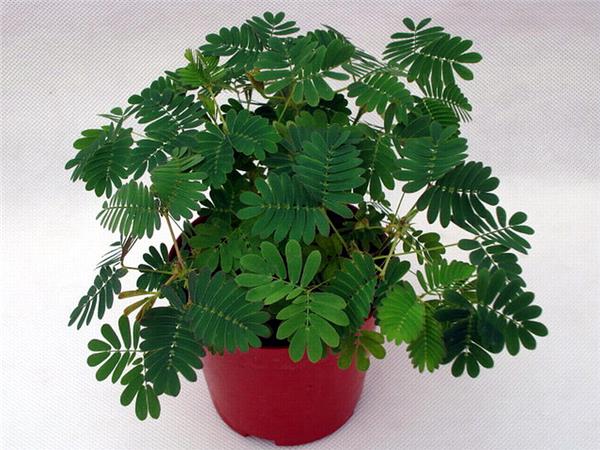
1. The biggest characteristic of the sensitive plant is that when it is stimulated (such as by touch), the leaf surface of the sensitive plant contracts and folds together. If the stimulus is strong, this stimulus will quickly pass in sequence to the adjacent leaflets, and even to the leaflets of the entire compound leaf, making the petiole droop. If the stimulus is stronger, it can even make the leaflets of the whole plant fold up and the compound leaves droop. But after a period of time, it can return to its original state. The sensitive plant also responds very quickly to vibration; it begins to react 0.1 s after being stimulated, and completes the response within a few seconds.
2. At night, the sensitive plant also folds its leaflets and droops its petioles. During the day, when some leaflets are shaken, they also fold in pairs. It is more sensitive when the light is weak. Normally, the water in the pulvinus supports the leaf blade; but when it is stimulated by an external force, the water in the pulvinus immediately flows elsewhere, causing the leaves of the sensitive plant to close. In addition, it automatically contracts at night (that is, sleep movement). This unique trait is exactly the source of the name and nicknames of the sensitive plant.
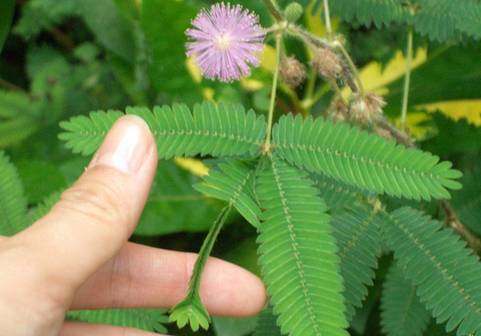
3. Because the sensitive plant has strong vitality and grows rather untidily, many places classify it as a type of grass, but in fact it also blooms. The flowering period of the sensitive plant is from July to October each year, but its flowering period is very short; the flower withers in less than two days after blooming. The flowers are pink, and the capitulum is spherical, shaped like a pom-pom. After flowering, it also produces pods, and the fruit is oblate.
4. The flower language of the sensitive plant is sensitivity, shyness and politeness. Gently touching the leaves of this plant makes them immediately close and droop, and even a gust of wind can cause this to happen, just like a shy young girl, so its flower language is - shyness. People born under the blessing of this flower have very shy and timid personalities, and are very afraid of strangers. They are especially keen in feeling and also have strong self-esteem. These special abilities of the sensitive plant make people involuntarily like it. If you plant such a sensitive plant at home, when you are upset, touch it and it will close its leaves. Isn't that fun?
The above is the related content about the characteristics of the sensitive plant (Mimosa pudica) introduced to you by the editor.