Is night-blooming jasmine toxic? Learn about its toxicity before deciding whether to grow it
Is night-blooming jasmine toxic? On hot summer days, placing some green plants in the bedroom can add a cool and comfortable atmosphere. Night-blooming jasmine is much loved among household green plants, not only for its abundant flowers and lush leaves, but also for its very fresh fragrance. So, is night-blooming jasmine toxic? What are the effects and benefits of night-blooming jasmine? These have also become questions for flower lovers. Next, please see the editor answer them one by one for you.
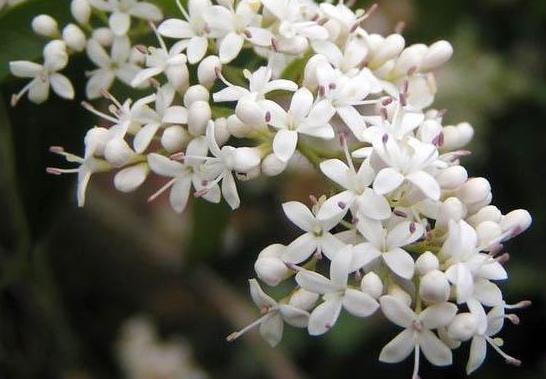
Is night-blooming jasmine toxic?
1. Night-blooming jasmine is toxic and can repel mosquitoes
The reason night-blooming jasmine blooms at night is that it relies on night-flying moths and insects for pollination, attracting countless insects to pollinate it through its strong nighttime fragrance. Even on rainy days it can still give off an enticing scent. Night-blooming jasmine is toxic, so it can drive away mosquitoes, which is also a convenience in daily life. Usually a screen window is put over the window, and the plant is grown outdoors.
2. Do not place night-blooming jasmine in the bedroom
Most floral fragrances are beneficial to health, but night-blooming jasmine is an exception. When people remain surrounded by this strong scent for a long time, it is inevitably harmful to health; even for famous fragrant flowers such as narcissus and roses, after a long time, especially when breathing these scents during sleep, they can also make people uncomfortable. If too many fragrant flowers are placed indoors and the scent is too strong, it will make people's nerves excited, and especially in the bedroom, smelling it for a long time can cause insomnia.
So do not place night-blooming jasmine in the bedroom, especially at night. When night-blooming jasmine stops photosynthesis at night, it will release a large amount of waste gas, which is extremely harmful to people's health and can cause dizziness, coughing, and even insomnia, and is even more unfavorable for patients with high blood pressure and heart disease. Therefore, at night one should not linger for long in front of night-blooming jasmine flowers.
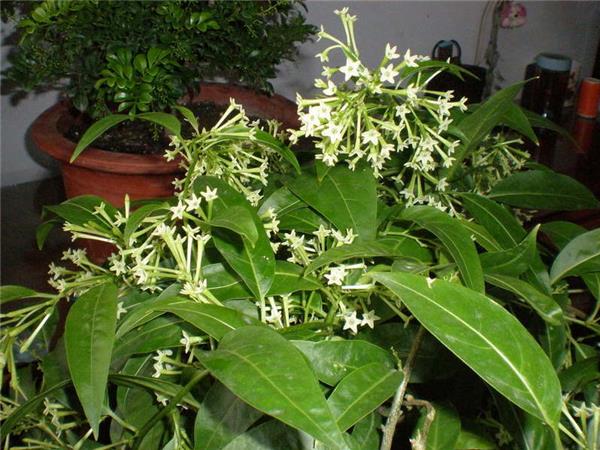
The effects and benefits of night-blooming jasmine
Clears the liver, improves eyesight, removes eye films, draws out toxins and promotes tissue regeneration.
Flowers, leaves, fruit: used for acute and chronic conjunctivitis, keratitis, corneal opacities; conjunctivitis caused by measles.
Fresh leaves: for external use to treat ulcerated boils and abscesses, and traumatic erosion of the lower leg.
Usage and dosage of night-blooming jasmine
Flowers, leaves 1 to 2 qian, decocted in water; or 1 fruit (cut open) decocted in water. Fresh leaves for external use in an appropriate amount, scalded with boiling water and then applied. (For traumatic erosion of the lower leg, pound fresh leaves with pork fat and apply to the affected area.)
The above is the editor's related introduction on whether night-blooming jasmine is toxic and the effects and benefits of night-blooming jasmine. I hope it is helpful to you.