How to Grow a Queen of the Night Cactus? With Care Methods and Photo Appreciation
We all know the idiom "a fleeting glimpse of the queen of the night," which actually refers to the very short blooming period of the queen of the night cactus (Epiphyllum oxypetalum) and how quickly its flowers fade. But the beauty of the queen of the night is truly there for all to see, so many flower lovers are willing to grow a pot of it. Below is a guide to growing the queen of the night cactus, along with photo appreciation.
[Introduction to the Queen of the Night Cactus]
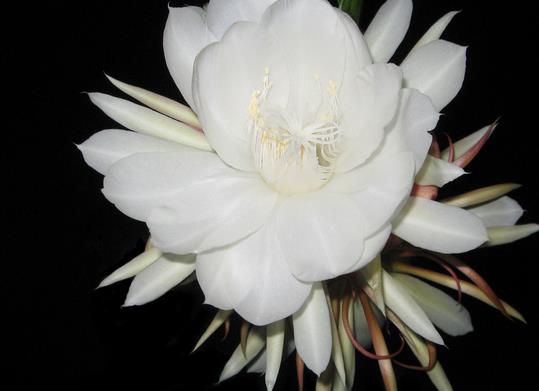
The queen of the night cactus is an epiphytic plant in the Cactaceae family, genus Epiphyllum. It has a shrub-like, cylindrical, woody main stem. It originated in Mexico, and its flowers are funnel-shaped and fragrant. It usually blooms at night in summer. The queen of the night cactus likes to grow in warm, humid, semi-shady environments. The soil it grows in is very rich in humus. It should not be exposed to strong sun and is not cold-tolerant; it also requires soil with good drainage. The suitable growing temperature for the queen of the night cactus is 20-25°C, and the winter growing temperature must not be lower than 0°C. Its flowers fade about 5 hours after opening, which is why there is the saying "a fleeting glimpse of the queen of the night."
[Care Methods for the Queen of the Night Cactus]
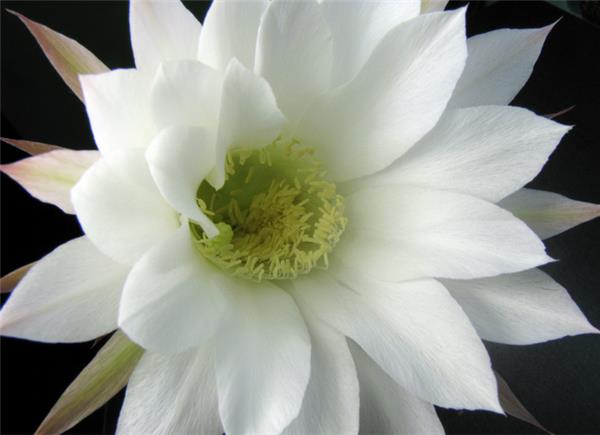
1. Soil: The queen of the night cactus does not have high soil requirements. For potted soil, you can use a mix of 2 parts peat soil, 1 part coarse sand, and 1 part cinder. The potting soil should not be too wet.
2. Sunlight: The queen of the night cactus likes semi-shade. In spring and autumn, keep it outdoors in a semi-shady spot to prevent direct sunlight. In summer, it is best to keep it indoors in a bright, well-ventilated place, or on a north-facing balcony or under the shade of a large tree, but avoid strong sunlight exposure, otherwise the modified stems are very likely to turn yellow and wilt, reducing its ornamental value.
3. Temperature: The queen of the night cactus likes warm, humid, and semi-shady environments, so attention must be paid to temperature. From March to September, it should be kept at 13-19°C; from September to December, keep it at 12-18°C; from December to March of the following year, keep the queen of the night cactus at 10-16°C, and especially note that in winter it must not go below 0°C. For potted plants in northern regions, they can generally be moved indoors for the winter in early to mid-October. During winter, place them in a sunny spot, keep the room temperature at around 10°C, and control watering so that the potting soil is kept from becoming excessively dry.
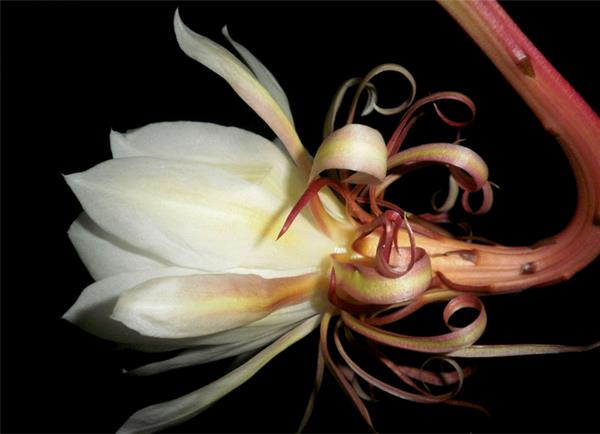
4. Watering: In spring and autumn, water the queen of the night cactus according to the principle of watering when dry and letting it dry between waterings. In summer, water a little more appropriately, but there must be no water accumulation in the pot, otherwise the roots are prone to rot. In dry and hot weather, spray the plant with clean water once in the morning and once in the evening each day to increase air humidity and promote growth and flowering.
5. Fertilizing: The queen of the night cactus prefers fertilizer and also has relatively high fertilizer requirements. Well-rotted organic fertilizer is best, with a small amount of bone meal or superphosphate added. During the growing period, apply a dilute cake fertilizer solution about once every half month. If a small amount of rice vinegar or ferrous sulfate is added to the liquid fertilizer, growth will be even better. After buds appear, apply 1-2 additional applications of 0.2% potassium dihydrogen phosphate, and the flowers will be larger and more brightly colored. After the flowers fade, apply 1-2 more applications of liquid fertilizer, which is beneficial for flowering the following year.
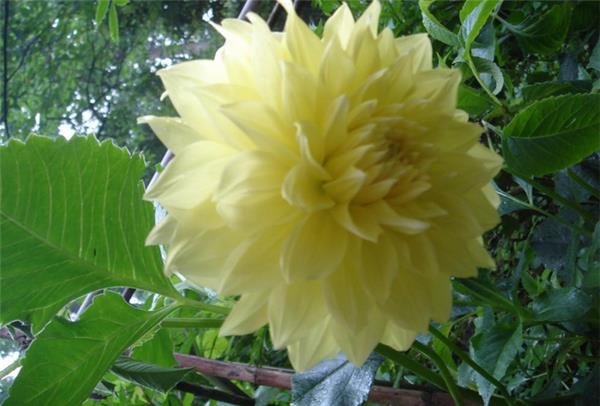
The queen of the night cactus is so beautiful, so those who like it should quickly learn how to grow it and go home to raise a pot of their own.