How to Grow and Care for Anthurium: Methods and Precautions
How do you grow anthurium? Anthurium is also known as flamingo flower, tailflower, and laceleaf. It originates from the tropical rainforest regions of South America. Its characteristics are that it likes warmth and fears cold, likes moisture and fears drought, and likes shade and avoids direct sun. Many people are asking how to grow anthurium. Today, the editor will introduce the cultivation methods for anthurium.
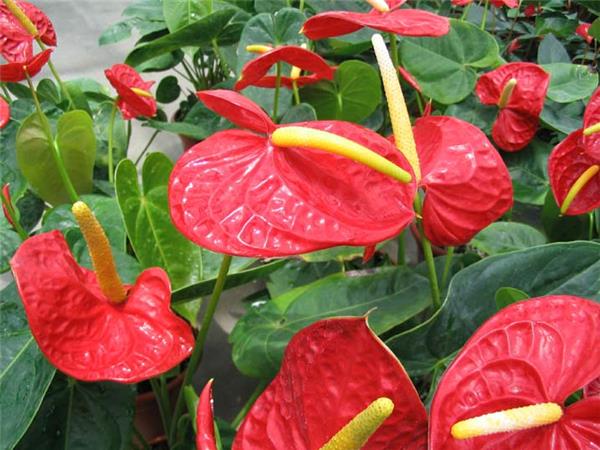
How to Grow Anthurium
1. Choosing a Flower Pot
Anthurium has fleshy roots and is relatively sensitive to light, so generally choose a flower pot with low light transmittance and many drainage holes at the bottom. Therefore, peat pots, black plastic pots, and the like are better.
2. Growing Medium
Anthurium relatively prefers moist and humid environments, so the growing medium must have strong water retention and fertilizer retention, good permeability, and a pH between 5.5 and 6.5 is suitable. If the pH value is too high, it will reduce the absorption of iron, manganese, zinc, etc. by anthurium and cause the leaves to turn yellow; while if the pH value is too low, the supply of calcium and magnesium decreases, which will increase the solubility of some trace elements, causing the concentration of some trace elements to increase and trigger mold disease.
3. Humidity
The temperature for anthurium growth is 18°C to 30°C. During the flower bud differentiation stage, in order to ensure normal flower bud differentiation, the average temperature needs to be lowered and the day-night temperature difference reduced. In winter, the temperature should not be lower than 15°C.
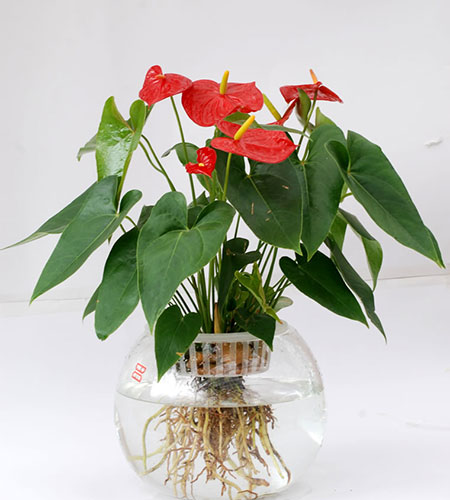
4. Light Regulation
Anthurium is a shade-loving plant, but it cannot be without light either, so when placing potted anthurium, pay attention to placing it in a spot with indirect light. If it enters the flowering stage, to prevent the buds from changing color or being scorched, shading is needed, while in the evening or on cloudy and rainy days, no shading is needed.
5. Fertilization Management
The normal growth of anthurium requires many nutrient elements, including the major elements nitrogen, phosphorus, and potassium, as well as the trace elements iron, copper, manganese, zinc, etc. Because the surface of anthurium leaves has a waxy layer that does not absorb nutrients, root fertilization should be carried out, following the principle of "light fertilizer applied frequently." During the vigorous growth period in spring and summer, increase the amount of nitrogen fertilizer; in autumn, increase the amount of phosphorus fertilizer and potassium fertilizer. The fertilizer solution must not touch the leaves. In winter, fertilizer and water should be controlled for a safe winter.
6. Pest and Disease Management
Common pests of anthurium include red spider mites and aphids. The main prevention method is control through regulation of temperature and moisture, applying pesticides for prevention when appropriate, and usually paying more attention to observation to achieve the purpose of pest prevention.
That is all the editor has to introduce about how to grow anthurium. I believe you now have a general understanding of the cultivation methods for anthurium, and I hope the above article can help you.