What are the cultivation methods and precautions for gladiolus?
What are the cultivation methods for gladiolus? Today the editor will introduce them to you, hoping to help you.
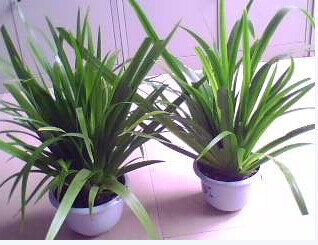
(1) Site selection and fertilization. The cultivation site should be chosen as sandy loam soil with deep soil layers, rich organic matter content, and good soil structure. Apply sufficient base fertilizer, supplement nitrogen, phosphorus, and potassium fertilizers appropriately, restrain the application of nitrogen fertilizer, and avoid excessive nitrogen fertilizer increasing the disease rate of the plants. Deeply plow the land and clear the drainage ditches.
(2) Corm disinfection. Corm disinfection should be carried out before planting. The method is to remove the skin membrane from the stored seed corms, soak them in clean water for 15 minutes, then soak them in a 500-fold solution of 50% carbendazim for 30 minutes, and in a 500-fold solution of 50% thiram powder for 10 minutes, take them out, pile them up and cover them with plastic film for 1 hour, then spread them out to dry.
(3) Timely planting. For summer flowering, they can be planted in the open field in spring; for winter and spring flowering, they are cultivated in a greenhouse, and the growth period is 20~30 days longer than in summer. When planting, to prevent lodging and daughter corm growth, they should be planted appropriately deep, and poles should be inserted around the planting beds with ropes tied around them. The planting bed surface should be 5~10 cm high and 1 m wide; in dry areas, flat beds can be made. The plant density should be appropriate, generally 13,000~27,000 plants per mu.
(4) Post-planting management. If the soil is dry after planting, irrigation should be carried out to promote rapid rooting of the corms. During the growth period from the 3rd leaf to the 7th leaf, which is the stage of floret primordium formation (three-leaf stage), and also the key period when the mother corm roots begin to die and the new corm grows new roots, special attention should be paid to the supply of water, while combining loosening the soil, weeding, and topdressing. The optimal temperature for the growth and development of gladiolus generally does not exceed 27°C, so during high summer temperatures, attention should be paid to ventilation and shading to avoid excessive temperature causing aging and degeneration of plant growth.
(5) Harvesting and storage. After flowering in summer, the faded flowers should be cut off in time, and water and fertilizer management should be strengthened so that the nutrients of the aboveground part are transferred underground, promoting the expansion of the underground corms. After the corms mature in autumn, they should be harvested and stored in time; dig up the corms, remove soil clods and debris, cut off the dried stems and leaves, dry the corms, and store them in a cool and ventilated indoor place. If the flowering period needs to be adjusted, cold and dry storage is required to avoid sprouting and rotting. Generally, fully dried corms can be stored for 1 year at 1~3°C and can still germinate normally.
That is all the editor has introduced about the related content of what the cultivation methods for gladiolus are, hoping it is helpful to everyone.