What are the characteristics and uses of Chinese roses?
Every plant has its own unique characteristics, and Chinese roses are no exception. Below, let us take a detailed look at the characteristics of Chinese roses and what Chinese roses are good for.
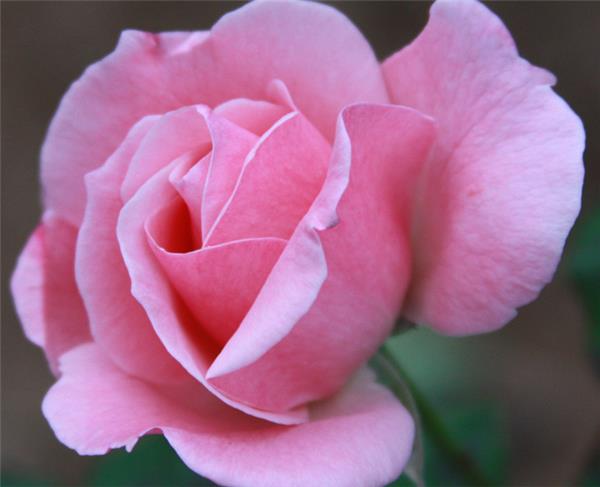
Characteristics of Chinese roses
1. They have fairly strong cold resistance and can tolerate low temperatures of -15 degrees;
2. The flowers are mostly rather small and delicate, and the petals are generally 5 in number;
3. The fragrance is sweet, and the thorns on the branches are few and large, easy to see;
4. They like light, but too much direct strong light is unfavorable to flower bud development, and the petals are prone to scorching;
5. They like warmth, and a general temperature of 22--25°C is most suitable; high summer temperatures are unfavorable to flowering;
6. The biggest characteristic of Chinese roses is their long flowering period. As the saying goes, "The flowers run through all four seasons, blooming in beauty every month, unchanging through cold and heat, as if steadfastly keeping their watch," hence the name "monthly flower" (yueji), also called "four-season flower."
What are Chinese roses good for?
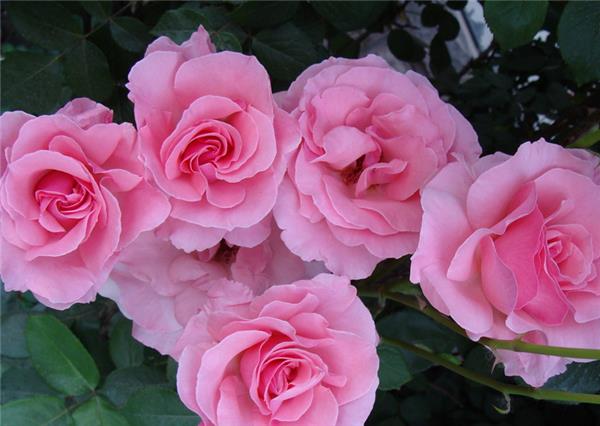
1. The Chinese rose is an ornamental flower with a long flowering period and fragrant, brightly colored blooms, and it has indispensable value in landscaping. It can be used in garden arrangements for flower beds, flower borders, and courtyard floral materials, and can be made into Chinese rose bonsai, used as cut flowers, flower baskets, bouquets, and so on. The Chinese rose is a major ornamental flower of spring, with a long flowering period, high ornamental value, and an affordable price, making it quite popular in gardens everywhere. Chinese roses can also be used to extract fragrance.
2. Chinese roses play a unique role in garden streetscapes and environmental beautification. They can be made into continuous flower hedges, flower screens, flower walls, and so on, used in government offices, schools, residential communities, urban squares, and other places. They can not only purify the air and beautify the environment, but also greatly reduce noise pollution in the surrounding areas and alleviate the greenhouse effect of the city in the hot summer.
3. Chinese roses have relatively high medicinal value. Their roots, leaves, and flowers can all be used as medicine, with effects such as promoting blood circulation and reducing swelling, and reducing inflammation and detoxifying. Traditional Chinese medicine holds that the Chinese rose is sweet in taste and warm in nature, with obvious effects in removing blood stasis, promoting the flow of qi, and relieving pain, so it is often used to treat conditions such as liver qi stagnation with blood stasis, irregular menstruation, dysmenorrhea, amenorrhea, distending pain in the chest and hypochondrium, traumatic injuries, and pain from blood stasis and swelling.
4. Chinese roses can be brewed as tea. Women often steep Chinese rose petals in water as a tea beverage, or add them to other beauty teas for infusion, which can promote blood circulation and beautify the skin, helping people retain their youth. Chinese roses can also be made into whitening face masks, with beauty benefits such as whitening and moisturizing the skin, suitable for all skin types.
Finally, let us also look at the feng shui role of Chinese roses.
First, planting Chinese roses in one's own garden can make family members feel refreshed and energized. The Chinese rose is an evergreen or deciduous shrub, with green branchlets and scattered prickles, and some are almost thornless; the leaf margins are serrated, both sides hairless and smooth, and the stipules are fused with the petioles. The flowers grow at the tips of the branches, usually clustered, rarely solitary, and the flower colors are very numerous. There are countless varieties, mostly double-flowered but also single-flowered; the flowers have a slight fragrance. The fleshy rose hip turns red-yellow when mature, splitting open at the top, and the "seed" is an achene, chestnut brown. Its bright red appearance lifts people's spirits. At the same time, it should be noted that the Chinese rose is a plant with relatively strong toxicity, so we cannot plant it in places close to us, such as the living room and bedroom, and when planting it in the garden we also cannot plant too many, because its fragrance is toxic.
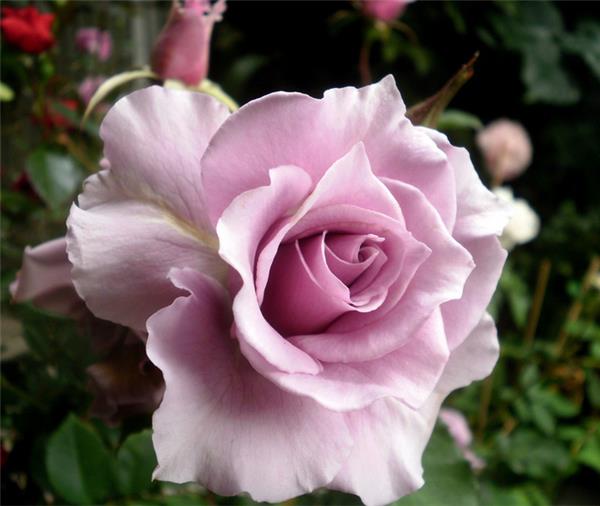
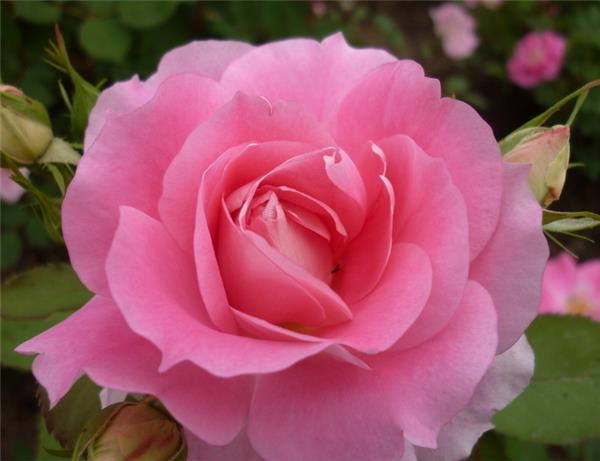
Then, plant a few Chinese roses in the backyard of the home, and the family's life becomes happier and happier. The flower language and symbolic meaning of pink Chinese roses: first love, elegance, nobility, gratitude; the flower language and symbolic meaning of red Chinese roses: pure love, passionate love, chastity, courage; the flower language and symbolic meaning of white Chinese roses: respect, loftiness, purity; the flower language and symbolic meaning of orange-yellow Chinese roses: full of youthful spirit, beauty; the flower language and symbolic meaning of green-white Chinese roses: innocence, frugality, or a pure heart; the flower language and symbolic meaning of black Chinese roses: individuality and creativity; the flower language and symbolic meaning of blue-purple Chinese roses: preciousness, cherishing. The symbolic meaning of Chinese roses is very clear. If a family lives together every day and looks at the Chinese roses from afar, associating them with the meanings they represent, and thereby cherishing every day of life together with family, happiness begins right there, and the home they live in together also becomes a home of good feng shui.