How to Grow Chinese Peonies? Detailed Guide to Cultivation Methods and Precautions
The Chinese peony is hailed by people as the "Flower Fairy" and the "Flower Minister," and is listed as one of the "Six Famous Flowers." It is also known as the "May Flower God." Because it has served as the flower of love since ancient times, it is now honored as the representative flower of Qixi Festival. Today we will introduce the cultivation methods and precautions for Chinese peonies.
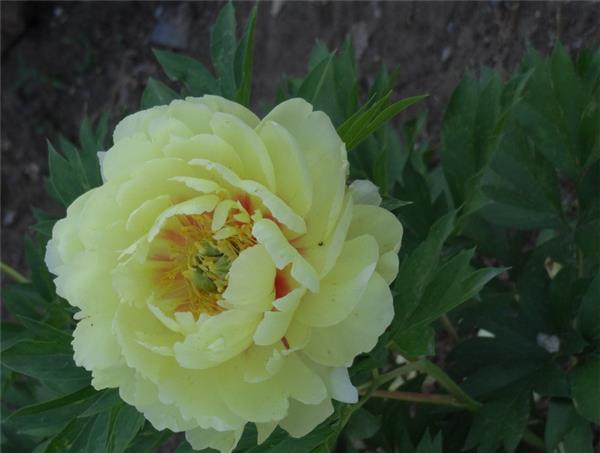
Cultivation Methods for Chinese Peonies
1. Planting time for Chinese peonies: Chinese peonies prefer sunlight and are cold-tolerant. Their temperature requirements favor cool conditions and they fear heat, growing poorly during high summer temperatures. Autumn is the best time to plant Chinese peonies.
2. Soil: For ground planting, choose a sunny spot on high ground with good drainage. Never plant them in low-lying areas prone to water accumulation. Chinese peonies have fleshy roots, so choose loose, fertile, slightly acidic sandy soil when planting. They should not be grown in alkaline soil. If the soil is too alkaline, it will cause leaf yellowing and even shrinkage and death.
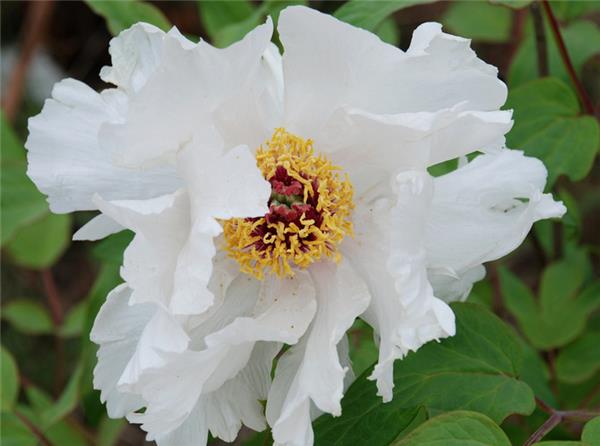
3. Cultivation essentials: For open-field cultivation, apply barnyard manure, deep plow, break up the soil finely, and form raised beds. Generally, the bed height is 10-15 cm, the bed width is 70 cm, and the length is unlimited. The planting spacing is 80 cm. When planting, dig holes according to the length and size of the root system. Make sure the roots are spread out and not planted too deep. Cover with soil to a depth of 4-5 cm above the top buds. After planting, water thoroughly once, then mound soil over the plants for wintering.
4. Fertilizer and water management: Apart from natural rainfall, ground-planted Chinese peonies do not need frequent watering. Usually, water only a few times when water demand is highest, around flowering time, and during spring droughts, to supplement insufficient soil moisture. Do not water too much each time. Fertilizer application should be controlled. Apply fertilizer three times a year. The first time is when new shoots are rapidly emerging and leaves and flower buds are expanding; focus on quick-acting fertilizer, which is called flower-promoting fertilizer.
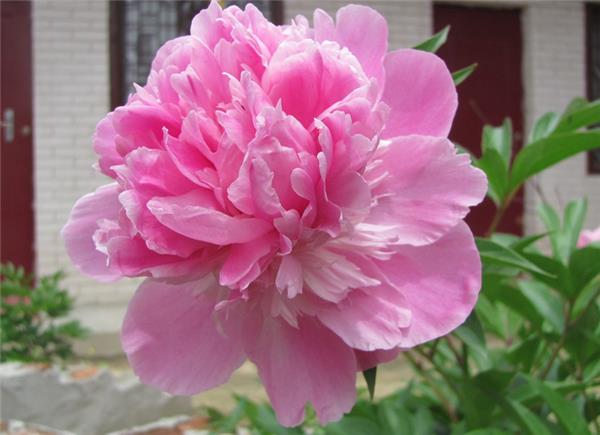
5. Shaping and pruning: To make Chinese peony flowers abundant and colorful and the plants grow vigorously, shaping and pruning are very important. Shaping mainly includes establishing the main stem, pruning branches, removing buds, thinning flower buds, and cutting off spent flowers. Chinese peonies can be shaped for main stems after 2-3 years of planting. For varieties with very strong and vigorous growth, they can be pruned into single-stem Chinese peonies. For varieties with weak growth and few branches, generally cut off thin and weak branches and keep strong branches.
6. Pest and disease control: Common pests and diseases of Chinese peonies include brown spot disease, anthracnose, rust disease, root rot, root-knot nematode disease, longhorn beetles, red spiders, scarab beetles, mole crickets, etc. Among these, brown spot disease, anthracnose, and rust disease are fungal diseases. Pest and disease control should focus on early prevention. Once pests or diseases occur, according to the degree of occurrence, use the above-mentioned dosage, appropriately shorten the spray interval, and increase the number of applications.
Precautions for Growing Chinese Peonies
After planting, Chinese peonies should not be frequently transplanted, otherwise the roots will be damaged, affecting growth and flowering. To ensure good growth, reasonable fertilization is needed every year. After each fertilization, water thoroughly and immediately loosen the soil to reduce water evaporation. During the rainy season, cultivate and weed frequently.
For potted Chinese peonies, cut off withered branches and leaves after Frost's Descent to prevent pests and diseases. During overwintering, there is no need to move them indoors. Place them on a balcony or under the eaves in a sunny spot, and just make sure the potting soil does not become too dry.
Before Chinese peonies bloom, once side buds appear, remove them promptly so that nutrients are concentrated and the terminal buds produce larger and more beautiful flowers. After the flowers fade, if you do not plan to propagate by seed, cut off the flower stalks at any time to prevent seed formation and nutrient consumption.
That is all for today about the cultivation methods and precautions for Chinese peonies. We hope the above content can help everyone!