Athena Melon Characteristics, Seedling Disease Resistance, and Maturity Time Introduction
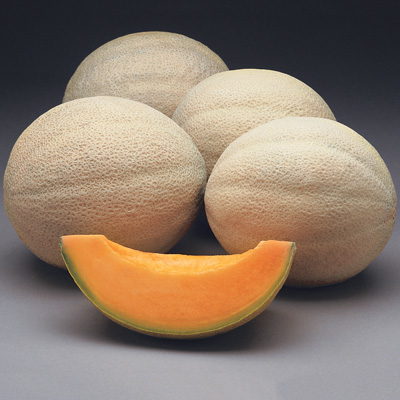
The Athena melon is a medium-sized cantaloupe type, averaging 5-6 pounds. The exterior has a tough rind with coarse netting covering a pale orange skin. The interior of the Athena has a classic cantaloupe appearance, with a thin bright green ring at the rind that turns into a dense orange flesh surrounding a small central seed cavity. Athena melons are known for their ability to maintain a firm texture and juicy consistency, even on the vine and at the peak of ripeness. Its flavor is consistently exceptionally sweet and offers floral and honey aromatics. When ripe and at room temperature, the Athena melon will have a melon aroma, especially at its stem end.
Seasons/Availability
Athena Melon is available in summer.
Current Facts
The Athena melon is a hybrid variety of cantaloupe, botanically classified as part of Cucumis melo reticulatus, a member of the Cucurbitaceae family. Botanically speaking, it is a melon, although commercially in the United States we call Athena and most other melon types muskmelons. The Athena melon is a commercial variety of cantaloupe that can be successfully grown in the eastern United States. It is specifically bred to remain firm when ripe and has excellent holding ability in terms of shelf life and shipping. It is currently one of the most popular cantaloupe (muskmelon) varieties in the southeastern United States.
Nutritional Value
Orange-fleshed melons such as Athena are rich in β-carotene, which the body converts into vitamin A. Athena melons also provide folate, potassium, fiber, and vitamin C.
Athena melons can be used in most preparations that call for melon or cantaloupe. They are best fresh and uncooked, and their flavor will complement both sweet and savory preparations. Sliced melon can be wrapped in prosciutto as a classic Italian aperitivo. Cubed melon is suitable for fruit salads, especially when paired with complimentary ingredients such as honeydew, berries, grapes, fresh mint, and lime. Pureed Athena melon can be used to make sorbet, cocktails, or chilled summer soups. The sweetness of Athena melon pairs with arugula, basil, tomato, cucumber, citrus, yogurt, cheese, goat cheese, cured meats, and balsamic vinegar. To extend shelf life, Athena melons should be kept refrigerated until ready to use. For best quality, they should be used within 2 to 3 weeks after harvest. If preferred, uncut melons can be kept at room temperature as long as they are used within a few days.
The Athena melon is a hybrid cantaloupe developed and commercially released by Syngenta Seed Company in 1993. In the United States, there are eastern and western cantaloupes (muskmelons). Western types tend to rot more easily than eastern types. Athena was created to break this pattern and provide commercial production in the eastern United States with a high-quality, disease-resistant, exceptionally flavorful cantaloupe. Athena melons mature in about 75 days, and the fruit remains fresh even when harvested at the full-slip or fully ripe stage.