Analysis of the Seven Major Reasons for Yellowing Leaves on Peony Flowers
Gardeners who grow peonies will easily notice that peony leaves sometimes turn yellow. What exactly causes this? Below, let us look at the seven major reasons for yellowing peony leaves and their solutions.
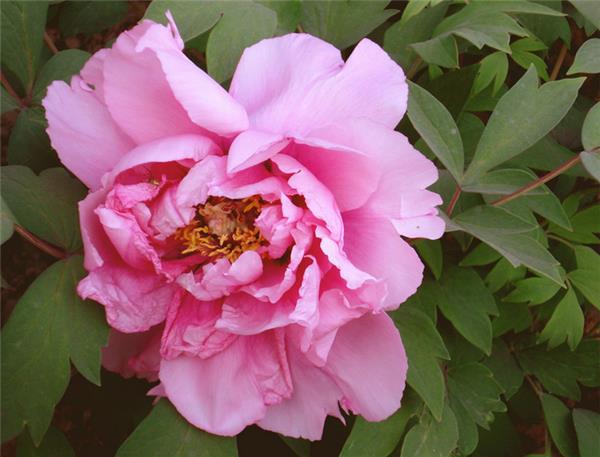
The Seven Major Reasons for Yellowing Leaves on Peony Flowers
1. Overwatering: Caused by watering too frequently. Its characteristic is that old leaves show no obvious change, while young leaves turn yellow.
Solution: Watering should be stopped immediately, and water should be added appropriately.
2. Long-term water shortage: Caused by lack of water and drought. Its characteristic is that old leaves at the bottom turn yellow first, and if the water shortage lasts a little longer, the entire plant's leaves will turn yellow, or it may even die.
Solution: Water in a timely manner.
3. Soil on the alkaline side: If peonies grow in soil with relatively high alkalinity, the leaves will also lose their green color and turn yellow. The symptoms begin between the veins of new leaves, while the veins, especially the main veins, remain green, making the alternating yellow and green pattern very obvious. As the degree of yellowing worsens, the veins gradually lose their green color, and then the entire leaf turns white, the leaf margins scorch, and the leaves fall off. In severe cases, the branch tips die back, leading to the death of the entire plant.
Solution: For this kind of "yellowing" phenomenon, a 0.2% to 0.3% ferrous sulfate solution can be sprayed on the leaves 3 to 5 times. The concentration should not be too high, and it should be used immediately after mixing.
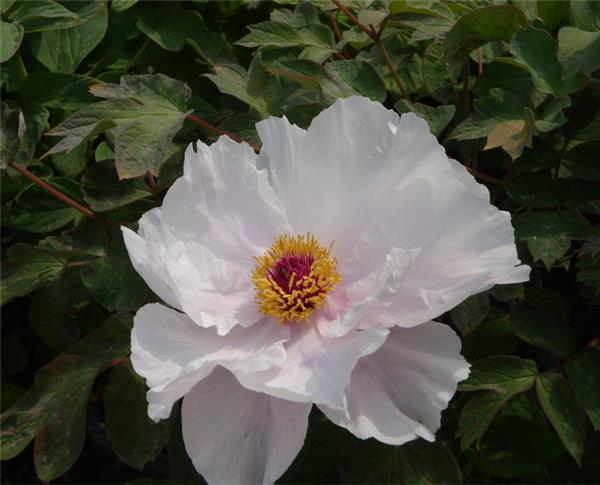
4. Overfertilizing peony flowers: Caused by fertilizing too frequently or at too high a concentration; its characteristic is that young leaves are thick, glossy, and uneven.
Solution: Fertilizer should be controlled, and the soil should be cultivated and watered.
5. Long-term fertilizer deficiency in peony flowers: Caused by insufficient fertilizer, low fertilizer concentration, and overly long intervals between fertilizations; its characteristic is that yellowing starts at young leaves and tender stems. If fertilization is not carried out promptly after seeing this phenomenon, it can also cause the entire plant's leaves to turn yellow or even die.
Solution: For flowers lacking fertilizer, absolutely do not apply a large amount of concentrated fertilizer at one time, so as to avoid burning the roots.
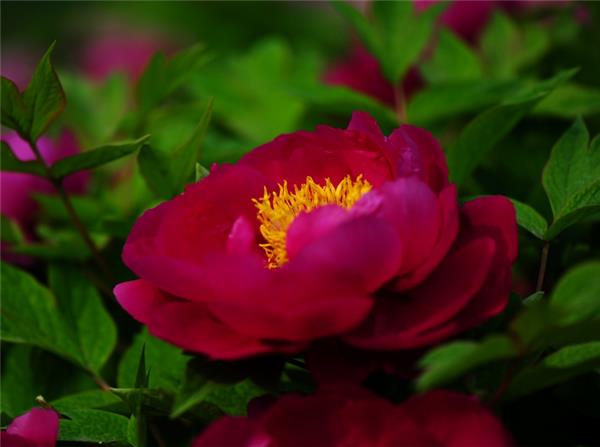
6. Root rot: Peony cultivation sites are mostly fields with many years of continuous cropping or successive cropping, which contain many pathogens, especially the fungus Fusarium, causing the roots and stem bases of peonies to rot. As a result, their ability to absorb water and fertilizer weakens, causing the lower leaves to gradually turn yellow, fall off, or scorch from the bottom upward, while the color of the new shoot tips and new leaves of the peony remains normal. This is the yellow-leaf symptom shown by root rot when peonies are dry.
Solution: Maintain soil permeability and take good drainage measures.
7. Pests and diseases: Peonies are often harmed by underground pests such as white grubs and mole crickets, as well as nematodes, causing the leaves to lose their green color and turn earth-yellow, or even scorch. The main characteristic of this symptom is that the leaves of a single plant or several plants in a certain area turn yellow and scorch.
Solution: When this symptom is found, inspect promptly and quickly apply pesticide to control the underground pests.
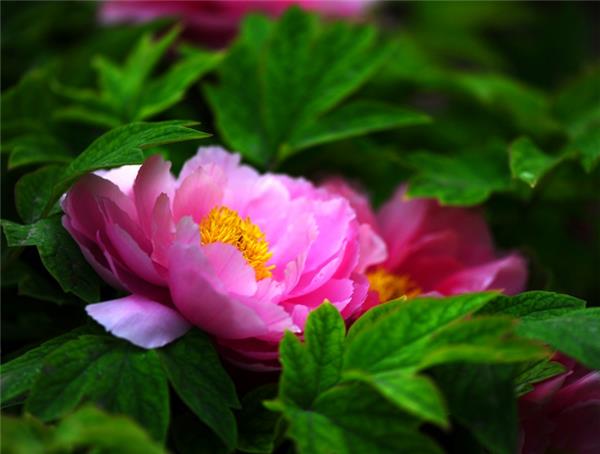
Notes on Growing Peonies
1. Management is extensive and care is simple. Throughout the year, except for the strong light at midday in midsummer, which should be properly shaded, sufficient light should be given at other times, especially in winter.
2. From March to September, during the peak growth period, the water requirement is relatively high, so it is necessary to water and spray frequently to increase humidity; after autumn, gradually reduce the amount of watering to improve the plant's cold resistance.
3. It likes a semi-shaded environment. If the placement site has too much or too little light, the leaves easily turn light green or yellow-green, lose their vitality, and lose their proper ornamental value, or may even dry up and die; if exposed to direct sunlight and dry air, scorching is most likely to occur, so it should be placed in a cool, ventilated place, and attention should be paid to maintaining environmental humidity.
4. Pests and diseases are not likely to occur, but if the potted soil is waterlogged and ventilation is poor, in addition to causing root rot, root rot disease may also occur, so attention should be paid to spraying pesticide for prevention and control.
5. Place it in a ventilated position with sufficient scattered light. Since winter is not the growth period of the peony hanging orchid, in order to prevent root rot, water only when the soil looks dry, and when watering, water thoroughly, depending on the situation.