What are the characteristics of the peony flower? A comprehensive understanding of peony traits
What are the characteristics of the peony flower? Below we will answer this for you one by one from three aspects. Friends who are interested, take a look!
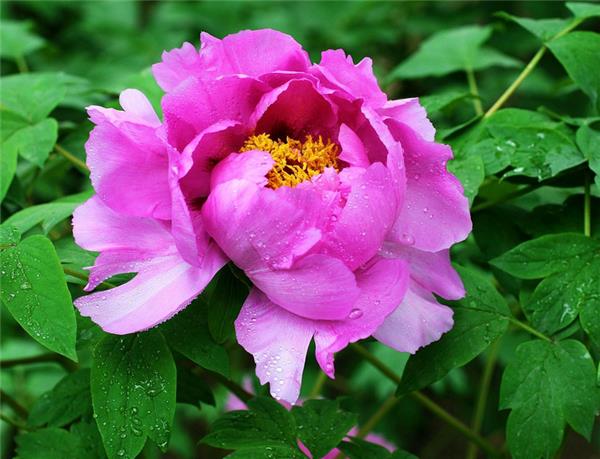
Characteristics of the peony flower's morphological features
The peony is a deciduous small shrub plant, so its plant form is small. This plant grows slowly, with a plant height mostly between 0.5 and 2 m; the roots are fleshy, thick and long, with a woody center, generally 0.5 to 0.8 m in length, and in very few cases the roots can reach 2 m in length; the color of the root bark and root flesh varies by cultivar; the branches are upright and brittle, round, and form a shrub shape from several branches clustered at the rhizome. Current-year branches are smooth, herbaceous, yellowish brown, and often split and peel off; the leaves are alternate, and the leaf blades are usually bipinnately trifoliolate compound leaves, while those on the upper part of the branches are often simple leaves. The leaflets have shapes such as lanceolate, ovate, and elliptical, and the terminal leaflet is often 2- to 3-lobed. The upper surface of the leaves is dark green or yellow-green, and the lower surface is grayish green, smooth or hairy; the common petiole is 8 to 20 cm long, with grooves on the surface.
The peony flower is borne singly at the top of the current-year branch. It is a bisexual flower, large and brightly colored, beautiful and varied in form, with a flower diameter of 10 to 30 cm. The colors of the peony flower include white, yellow, pink, red, purplish red, purple, dark purple, snow blue, green, and multicolor, ten major colors; the stamens and pistils often show petalody. The so-called petalody is the phenomenon in which, under the influence of some special environmental factor, complex changes occur, causing the stigma and filaments to become longer and wider and take on a petal-like form. The natural increase in petals and the degree of petalody of the stamens and pistils are related to the cultivar, cultivation environmental conditions, growth years, and so on.
A normal peony flower has many stamens, strong seed-setting ability, and a relatively high degree of seed maturity. In flowers with severe pistil petalody, few seeds are set and they are not viable, or no seeds are set. In a complete flower, the stamens are free, and the carpels are generally 5, rarely 8, each with a bottle-shaped ovary of one locule, marginal placentation, and many ovules, with a five-angled follicle, each fruit angle setting 7 to 13 seeds. The seeds are roundish, yellow when mature, and turn dark brown when old. Mature seeds are 0.6 to 0.9 cm in diameter, with a 1000-seed weight of about 400 g.
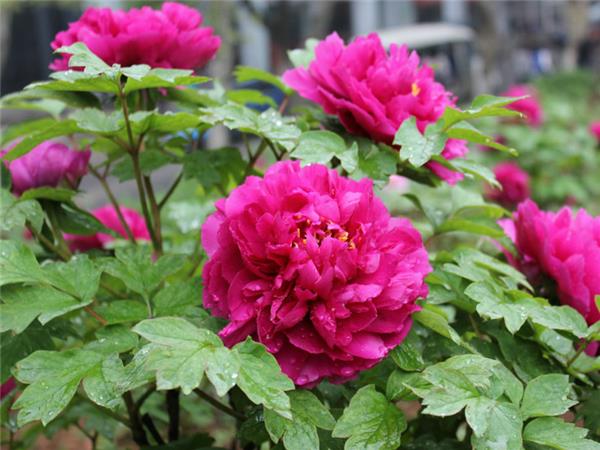
Characteristics of the peony flower's growth habits
The peony flower is a plant that greatly prefers a warm, dry environment with relatively sufficient sunlight. However, as a national flower, the peony is also very strong in cold resistance and drought resistance, but what I am talking about here is only drought resistance. Strong direct sunlight is very bad for the peony flower. Another point is that during its growth process, the soil for the peony flower must not hold too much water. For it, a loose, deep, and fertile soil is the best environment for its growth. Relatively speaking, the high temperature and highly humid weather of the south are not very good for the growth of the peony flower, and beautiful peony flowers can only be enjoyed under specific conditions.
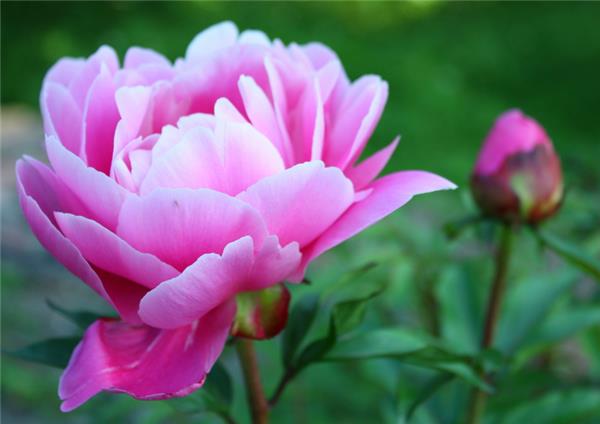
Characteristics of the peony flower's uses
Everyone is surely very familiar with its ornamental uses, so here we will focus on introducing its characteristics in terms of food and medicinal use. In many places there is the custom of using peony petals as various color-matching dishes, and peony flowers can also be used to steam wine, which has a very fragrant taste. Not only that, using peony bark as medicine can also achieve effects such as clearing heat, cooling the blood, and relieving pain in medicine, but pregnant women still need to use it with caution.