How to Grow Cyclamen? A Detailed Guide to Cyclamen Cultivation Methods
How to grow cyclamen? Cyclamen (Cyclamen persicum) is native to Greece, Syria, and the Mediterranean coastal regions. It likes full sunlight and a warm, humid environment; it dislikes intense heat and is afraid of waterlogging. So how do you grow cyclamen?

Introduction to Cyclamen
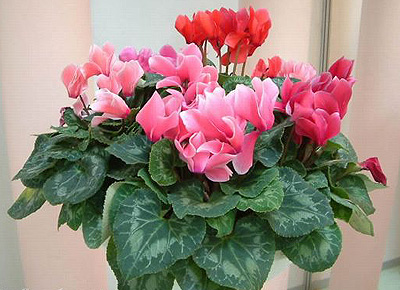
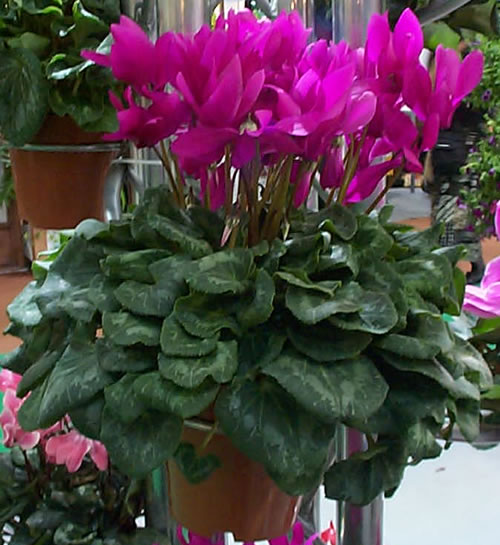
Cyclamen is a perennial bulbous flower of the primrose family (Primulaceae), with a flattened round fleshy corm; the old corm is purplish dark brown, covered externally with a corky texture. The top of the corm is an extremely shortened stem, which is where the leaves are borne. The leaves are clustered, heart-shaped ovate, with white reticulate veining on the surface and toothed margins. The leaf stalks and flower stalks are reddish brown. The flowers are large, solitary and nodding, with petals reflexed and shaped like rabbit ears, hence it is also called the rabbit-ear flower. Flower colors include white, pink, crimson, red, purple, and so on. The flowering period is winter and spring, with the best ornamental period from February to April. The capsule splits into 5 valves and is dark red.
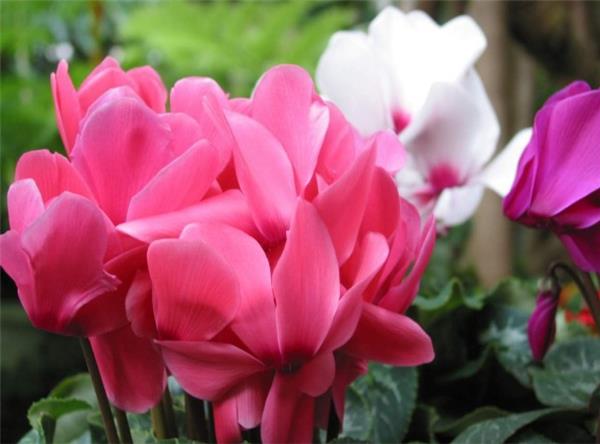
How to Grow Cyclamen: Cyclamen Cultivation Methods
1. Planting
To cultivate cyclamen, you can use a growing medium mixed from 2 parts peat and 1 part perlite, with a small amount of bone meal added as a base fertilizer. Do not repot during the dormant period. Generally, in mid-September the dormant corm begins to sprout, and it should be repotted immediately.
2. Fertilizing
During the growing period, apply decomposed cake fertilizer once every ten days. Before flowering, apply liquid fertilizer 1-2 times in a concentrated manner. When the flower stalks emerge to the point of being about to bloom, apply an additional dose of bone meal or superphosphate. Stop applying nitrogen fertilizer during the flowering period to avoid bud drop. Avoid applying concentrated fertilizer, so as not to damage the roots. It is best to loosen the soil before fertilizing. It is not advisable to fertilize from the top of the plant downward; fertilize from the side instead.
3. Watering
Cyclamen dislikes excessive moisture. Water once every morning, pouring slowly around the edge of the pot. Do not sprinkle water directly onto the leaves or the center of the plant. After the flowering period, reduce the amount of watering, and water once every 2-3 days. Stop watering at the end of July, letting the leaves wither so the plant enters the dormant period. Begin watering again the following spring, and increase the amount of water after new leaves grow.
4. Temperature and Light
A room temperature of 18°C is most suitable. When it exceeds 30°C, the plant begins to go dormant; above 35°C, the plant is prone to rotting and dying. In winter it can tolerate low temperatures, and it is best to maintain around 10-12°C, but below 5°C growth becomes slow, the leaves curl, the flowers do not open properly, the flower color becomes dull, and there are fewer blooms.
During the growing period it likes abundant sunlight, but shading is still needed around midday when the temperature is higher. In summer it should be placed in a shaded spot. During the seedling stage, shading is needed. From after October until before the flowering period, enhancing light and ventilation can make the flowers last longer.
5. Pest and Disease Control
(1) Soft rot: It occurs readily during high temperatures and high humidity in summer, harming the leaf stalks and flower stalks, which become water-soaked and softened. In dry weather the lesions dry up, while on rainy days they rot and give off a foul odor. The pathogen overwinters in the soil.
Control methods: ① The potting soil must be thoroughly sterilized; ② During high summer temperatures, control moisture, do not apply nitrogen fertilizer, do not let the plant be injured, maintain air circulation, and provide appropriate shading; ③ Promptly remove diseased leaves and burn them, and spray with Bordeaux mixture.
(2) Anthracnose: The lesions are tea-brown, round and sunken, and later the lesions expand and bear black conidia; the spores disperse and infect via water.
Control methods: ① Remove the affected leaves and leaf stalks and burn them; ② Avoid wetting the leaves when watering; ③ In the early stage of the disease, spray with a 50% carbendazim 500-600 times dilution.
(3) Nematode disease: When the soil temperature is 25-30°C and soil moisture is 40%, nematode damage is likely to occur, invading the roots and forming root galls. Affected plants grow weakly, the lower leaves turn yellow, and the whole plant may even die.
Control methods: ① Sterilize the soil and burn the affected plants; ② Soak in 50°C hot water for 10 minutes to kill the nematodes.
6. Propagation
Cyclamen is mostly propagated by sowing seeds. In northern regions, sowing is best done around the Beginning of Autumn (Liqiu). Before sowing, first soak the soil in boiling water to sterilize it, and at the same time soak the seeds in warm water for 24 hours to encourage earlier germination. Sow in a shallow pot or wooden box; first fill it with wet sand or a growing medium mixed from half leaf mold and half garden soil. Level the soil, water it thoroughly, and sow the seeds in spots at a spacing of 1 cm between plants and rows. Then cover with about 5 mm of soil, cover the top with plastic film, and place it in a cool spot indoors. Water by the bottom-soaking method to keep the potting soil moist. When sowing in a wooden box, you can water with a fine-nozzle watering can. At a temperature of 18-20°C, all the seedlings will emerge in about 1 month. After the seedlings emerge, remove the covering and gradually expose them to sunlight. When the seedlings have grown 2-3 true leaves, they can be transplanted separately into small pots.
That is all from the editor on how to grow cyclamen and cyclamen cultivation methods. I hope the above content has been of some help to you.