Analysis of the four major functions and main uses of Chaenomeles speciosa
What are the uses of Chaenomeles speciosa? Below we answer this question through an introduction to the four major functions of Chaenomeles speciosa.
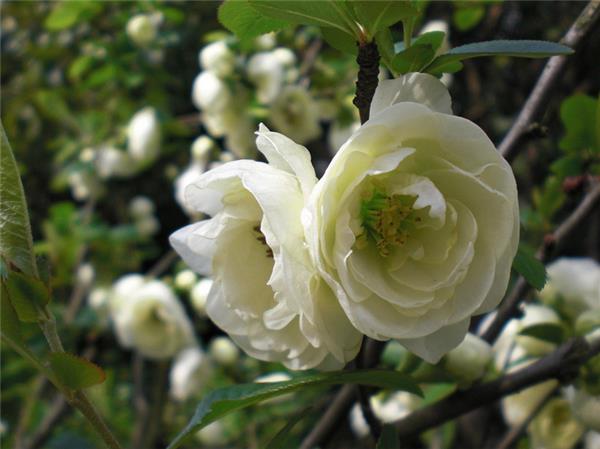
The four major functions of Chaenomeles speciosa
1. Ornamental
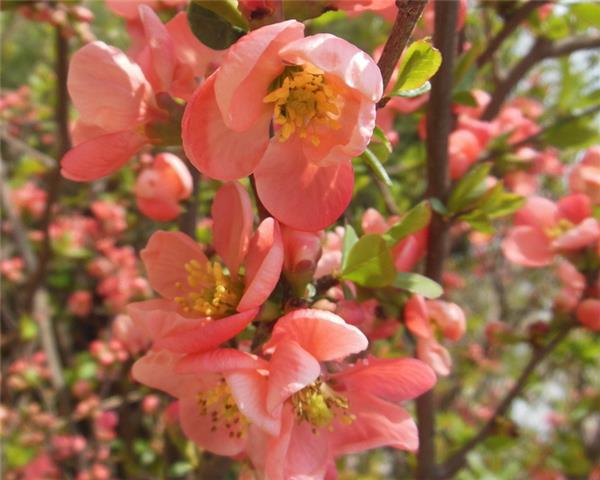
Chaenomeles speciosa comes in a variety of flower colors, including vermilion, peach red, green, and mixed-color moon white, and some cultivars have petals mottled pink and white; combined with its smooth, translucent petals, it is truly very beautiful. It is an excellent flowering and fruiting ornamental shrub with very high ornamental value.
2. Home decoration
Chaenomeles speciosa has many flower colors, is rich and gorgeous, and has a long flowering period. Its blossoms are fresh, plump, and dazzlingly brilliant. It is an excellent flowering shrub for making bonsai, and when placed indoors in the home it has a special charm, making the home appear noble and refined. It is one of the most suitable potted flowering shrub varieties for decorating and accenting the home.
3. Medicinal
The fruit of Chaenomeles speciosa, the Chinese quince, has high medicinal value, with functions of relaxing muscles and activating collaterals, and harmonizing and transforming dampness. Traditional Chinese medicine holds that the wrinkled-skinned Chinese quince can dredge meridians and collaterals, dispel wind and invigorate blood, and has the effects of strengthening, stimulating, relieving pain, calming the liver, harmonizing the spleen, and transforming dampness and relaxing the sinews. It mainly treats heatstroke, cholera with cramps, beriberi with edema, damp impediment, and other conditions; soaked in liquor (Chinese quince wine) and taken, it treats rheumatic joint pain.
4. Edible
The fruit of Chaenomeles speciosa, the Chinese quince, is extremely rich in nutrients. Every 100 grams of fresh fruit contains 2741 mg of vitamin, 3237 No/g of anti-aging substances, and is also rich in protein, tartaric acid, phosphorus, iron, calcium, and others. It is a superior raw material for processed fruit products and medicinal products, and can be used to make candied fruit. The candied fruit made from it has a unique taste, is purely sweet and sour and palatable, and has a special fresh fruity fragrance. The flesh has few fibers, contains no stone cells, is relatively firm in texture, and stores and transports well.
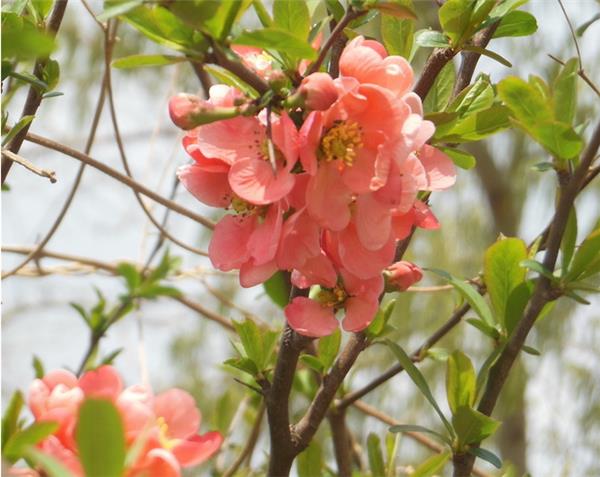
At the end of the article, let us look at the cultivars of Chaenomeles speciosa.
Cultivars of Chaenomeles speciosa:
1. Dwarf Chaenomeles speciosa: a cultivated cultivar of Chaenomeles speciosa, a dwarf-type plant.
2. Dahonghua: a cultivated cultivar of Chaenomeles speciosa, with large red flowers.
3. Red Chaenomeles speciosa: a cultivated cultivar of Chaenomeles speciosa, with red flowers.
4. Double-flowered Chaenomeles speciosa: a cultivated cultivar of Chaenomeles speciosa, with double red flowers.
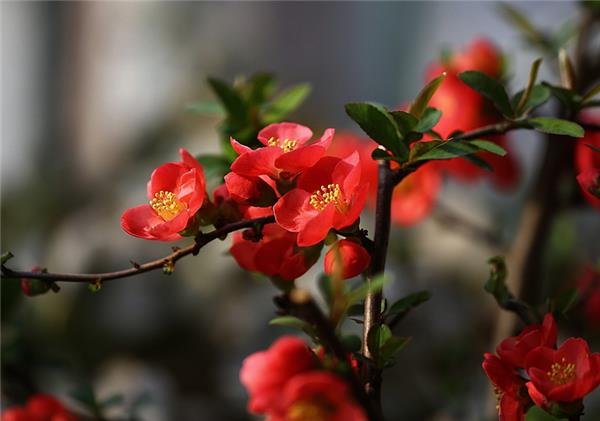
5. Japanese Chaenomeles speciosa: a new cultivar, with short or nearly absent pedicels, a bell-shaped calyx tube, and brick-red color, red enough to make people tremble; a new and superior flowering shrub.
6. Chongban Neihong Kaimiou: a cultivated cultivar of Chaenomeles speciosa, with double flesh-pink flowers.
7. Japanese Pink: a cultivated cultivar of Chaenomeles speciosa, with pink flowers.
8. Thornless Dwarf White: a cultivated cultivar of Chaenomeles speciosa, a dwarf-type plant with thornless branches and white flowers.
9. White Chaenomeles speciosa: a cultivated cultivar of Chaenomeles speciosa, with white flowers.
10. Chaenomeles cathayensis: a variety of Chaenomeles speciosa, with flesh-pink flowers and golden-yellow or red fruit.
11. Dragon-claw Chaenomeles: a variety of Chaenomeles speciosa, with branches and thorns both curved in the shape of dragon claws.
Chaenomeles speciosa can be used for ornament and beautifying the home, and its fruit can also be used as medicine and food. This is indeed a relatively good flowering shrub variety. If you like Chaenomeles speciosa, you might as well try growing it: you can enjoy the flowers and also eat the fruit, so why not do it?