How to grow potted Chaenomeles speciosa (flowering quince)? Cultivation methods and precautions
Chaenomeles speciosa flowers are fresh, plump and dazzlingly brilliant, and it is one of the main spring flowering trees and shrubs in gardens. So do you know how to grow potted Chaenomeles speciosa?
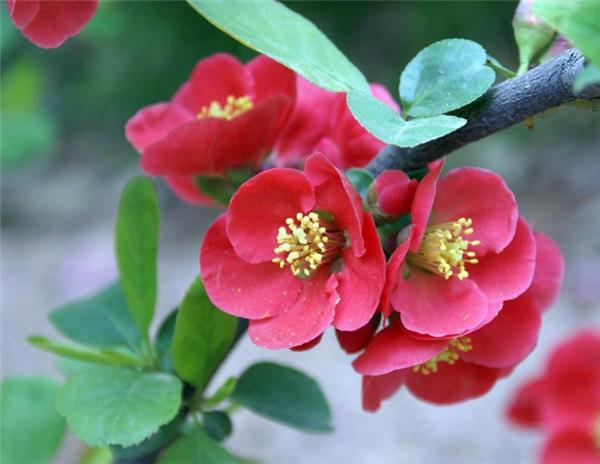
How to grow potted Chaenomeles speciosa
Placement: Chaenomeles speciosa bonsai is best placed in a location with ample light and good air circulation. During the high temperatures of midsummer, appropriate shading is needed to prevent sunscald and scorched leaves. In winter it is relatively cold-tolerant; the pot can be buried in the soil, or it can be placed indoors near a window.
Watering: Normally, just keep the pot soil moist, but be careful to prevent water accumulation in the pot, otherwise root rot easily occurs. During the spring and summer growing period, the pot soil should not be too dry either, especially during the flowering period, when the pot soil must be kept adequately moist.
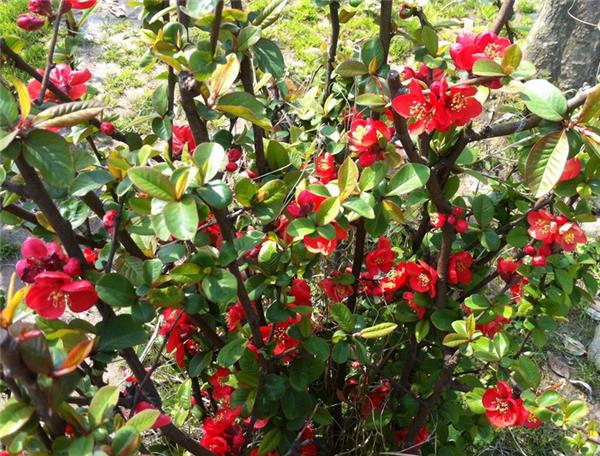
Fertilizing: In winter, apply sufficient base fertilizer, preferably dry cake fertilizer, decomposed manure, or bone meal. During the growing period, except for the plum rain season, frequently apply additional dilute fertilizer water.
Pruning: This is mostly done after flowering. Generally, the branches that have flowered are cut short to encourage branching and the formation of flower buds, increasing the number of flowers the following year. At the same time, water sprouts, crossing branches, overlapping branches, and other branches that affect the plant's appearance should also be cut off promptly. After leaf fall, during the dormant period, shaping and pruning can be carried out, removing diseased, dead, and aged branches to maintain a certain tree shape.
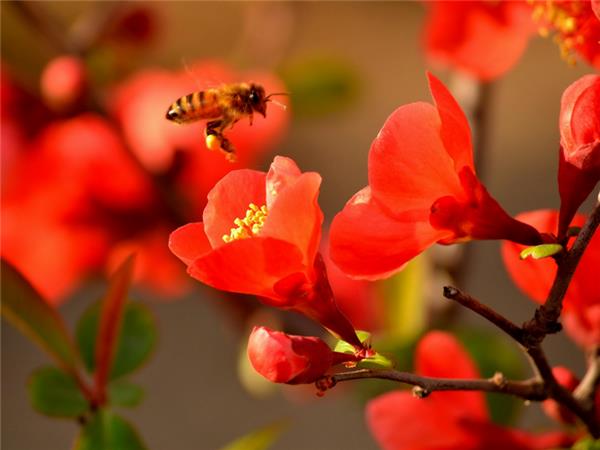
Repotting: This should be done once every 2-3 years, preferably after flowering in spring, though autumn is also acceptable. When repotting, combine it with root pruning and place base fertilizer at the bottom of the pot.
Pest and disease control: Chaenomeles speciosa often suffers from rust disease attacking the leaves, which can be controlled by spraying 0.5 degree Baume lime sulfur mixture. The main insect pests include aphids, nettle caterpillars, and red spiders. The control methods are the same as for Malus halliana (Hall crabapple).
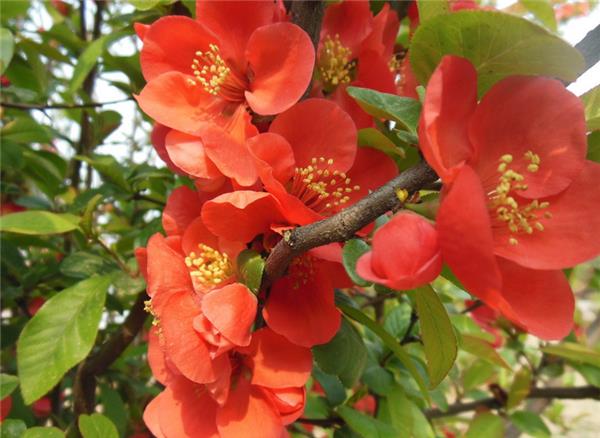
Finally, let us look at the morphological characteristics of Chaenomeles speciosa.
Deciduous shrub, up to 2 m tall, with branch thorns; branchlets cylindrical, spreading, stout, purple-brown when young, hairless, dark brown when old. Leaf blades ovate to elliptic, rarely oblong, 3-10 cm long, 1.5-5 cm wide, apex acute, rarely rounded-obtuse, base cuneate to broadly cuneate, margin with sharp fine serrations, teeth spreading, surface slightly glossy, dark green, hairless, abaxially pale green, hairless; petiole 1-1.5 cm long, hairless; stipules large, leaf-like, ovate or kidney-shaped, margin with sharp double serrations, hairless. Flowers 2-6 in clusters on second-year branches, 3.5-5 cm in diameter, opening before or at the same time as the leaves; pedicel thick and short, 3 mm long or nearly absent, hairless; hypanthium exterior hairless; calyx lobes upright, nearly semicircular, apex rounded-obtuse, entire or with wavy teeth, margin with yellow-brown cilia, outer surface hairless, inner surface sparsely pubescent, half the length of the hypanthium; petals nearly circular or obovate, with a short claw, 1-1.5 cm long, scarlet or pale red; stamens 35-50, upright, 1-1.3 cm long, filaments slightly reddish; styles connate below the middle, hairless, nearly as long as the stamens, stigma capitate. Pome spherical to ovoid, 3-5 cm in diameter, yellow or yellow-green, with indistinct sparse spots, fragrant, fruit stalk short or nearly absent. Flowering period April, fruiting period October. Plant height about 2 m, branches upright or spreading, thorny. Leaves ovate or elliptic, stipules large and obvious. Flowers rice-red, opening before the leaves or at the same time as the leaves. Flowers borne on 2-year-old branches, stems clustered, branches thorny, pedicels extremely short, flowers closely attached to the branches. Chaenomeles speciosa has a graceful, dancing tree posture and beautiful flowers, with double-flowered and semi-double-flowered cultivars; the fruit is spherical or pear-shaped, yellow when ripe in autumn, and fragrant.