How to Propagate Rieger Begonia: Propagation Methods for Rieger Begonia
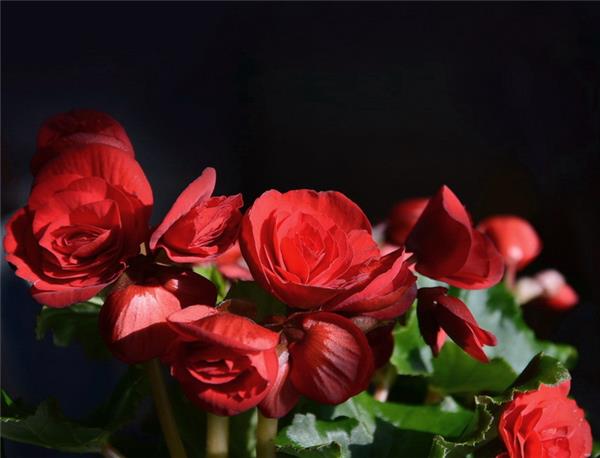
In late autumn and early winter, when pruning and shaping Rieger begonia, the cut new shoots can be used as cuttings. Do you know how to propagate Rieger begonia? Below we introduce the propagation methods for Rieger begonia.
How to Propagate Rieger Begonia
Rieger begonia is mainly propagated by three methods: sowing, cuttings and tissue culture, and the cutting method is generally the most commonly used. In late autumn and early winter, when pruning and shaping Rieger begonia, the cut new shoots can be used as cuttings.
1. Rieger Begonia Cutting Method
Rieger begonia can be propagated not only by stem cuttings but also by leaf cuttings. For stem cuttings, the length of the shoot should be moderate, and the lower part of the shoot should be cut into a horseshoe shape with a blade. For leaf cuttings of Rieger begonia, choose vigorous leaves that are six-tenths mature, and cut the lower end of the leaf stalk at a slant with a blade.
The cutting medium for Rieger begonia is vermiculite powder or plain sand; contaminated medium must be disinfected before use. After inserting the cuttings, water them thoroughly, but no water should accumulate on the leaf surface. Then cover them with plastic film, place them in diffused light, ventilate properly, and avoid high temperatures. In about 3 weeks the cuttings can root.
When new leaves grow on the Rieger begonia shoots, it means they have rooted. Rieger begonia obtained by stem cuttings have no underground tubers. After 3 weeks, leaf cuttings can also grow fibrous roots from the lower part of the leaf stalk, but it takes another one and a half months for adventitious buds to grow from below the leaf stalk and gradually emerge from the soil.
2. Sowing Method
Because Rieger begonia seeds are very small, the small-seed sowing method must be used. At present, Rieger begonia seeds are basically all imported, divided into two types: coated pellets and uncoated pellets. It is best to mail-order seeds in original packaging and without damage from a large flower and plant company, as this can ensure germination and seedling formation; loose seeds are very difficult to germinate.
Sowing container: Because coated Rieger begonia seeds can be sorted, a plug tray can be used, while uncoated seeds can only use a seedling tray. The sowing medium is 1 part peat soil and 1 part vermiculite powder; crush and disinfect them, then mix and stir, and leave in a semi-moist state for use.
Because peat soil is water-repellent in a dry state and water cannot soak in, it cannot be used in a dry state. When sowing, first put the medium into the seedling tray, then water thoroughly with a watering can. Coated seeds can be sorted with tweezers, one pellet per cell; uncoated seeds can be mixed with an appropriate amount of fine vermiculite powder and broadcast in the seedling tray.
After sowing Rieger begonia, there is no need to cover with soil; just spray with a fine watering can, then wrap the seedling tray with transparent plastic film. At an ambient temperature of about 20°C, seedlings begin to emerge in about 12 days. When the Rieger begonia seedlings grow true leaves, ventilate them appropriately to encourage rooting.
Rieger begonia seedlings grow very slowly in the first 3 months. For seedlings sown in early summer, the plastic film need not be removed throughout the summer; the seedlings tolerate high humidity and high temperatures. After the Start of Autumn, when the weather becomes cool, the plastic film can be gradually removed to harden the seedlings, and by early winter they can be potted up.
For potting up, use a smaller flower pot with many holes in the bottom. The growing medium can be made by mixing 2 parts peat soil and 1 part vermiculite powder (or 1 part plain sand). Before potting up, control watering so that the growing medium in the seedling tray is in a semi-dry state, so that when the seedlings are lifted out the root ball does not break apart and damage the roots.
Newly potted Rieger begonia seedlings must be protected from excessively high temperatures caused by weather changes, and at the same time covered with plastic film, but not too tightly; ventilate properly to prevent seedling rot. Under home conditions, Rieger begonia cannot grow into a large plant in the first year, but flowers can be seen; only in the second year can it be grown into a large plant, and in the second year a larger flower pot can be used.
3. Tissue Culture
This is an effective method for quickly obtaining large numbers of Rieger begonia seedlings, and it can also succeed under home conditions. In the season when Rieger begonia grows vigorously, use well-developed leaves as explants; through culture of virus-free explants, subculture and rooting culture in a certain medium, large numbers of virus-free seedlings can be obtained. This method requires a relatively large investment and is only used in large-scale production.