How to grow a Chaenomeles (flowering quince) bonsai? Master these care methods
How do you grow a Chaenomeles bonsai? If you want to know the answer to this question, take a look at the explanation below!
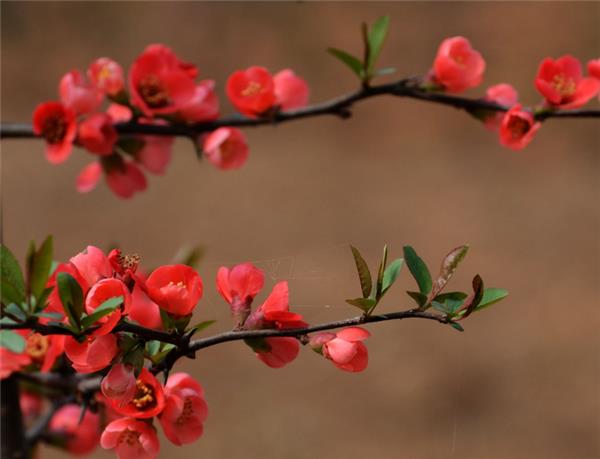
How to grow a Chaenomeles bonsai
The Chaenomeles used for making bonsai can be grown from small seedlings, commonly propagated by sowing, cuttings, air layering and grafting; old trees discarded by landscaping departments can also be used, cut with a saw so that the trunk reaches a certain height, then planted in clay pots or in the ground to "nurse the stock", and new structural branches are cultivated, then shaped by pruning, wiring and pulling. Take care to properly touch up larger wounds so they blend in naturally, achieving the artistic effect of "though man-made, it looks as if made by nature", and finally move it into a fine pot for display.
Transplanting and repotting of Chaenomeles are best done in early spring, keeping a soil ball and cutting the main root short while retaining more lateral roots. Plant it in neutral to slightly acidic, loose, fertile sandy soil, and apply decomposed cake fertilizer powder as a base fertilizer. After it establishes, keep it outdoors in a sunny spot, and during the growing season keep the potting soil moist but not waterlogged. In early April, spray the leaves once with a 0.2% potassium dihydrogen phosphate solution to promote robust flower buds and provide sufficient nutrients for later flowering and fruiting.
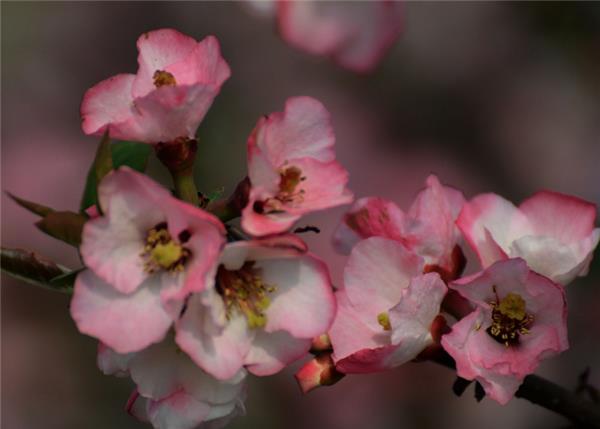
Because there is little soil in a pot and nutrients are limited, the plant should not bear too much fruit; generally leave 3 to 5 fruits per pot, and remove the rest early so they do not consume too many nutrients and affect normal growth. Apply "alum fertilizer water" once a month to prevent the soil from becoming alkaline and to make the fruit large and fragrant. During care, pinch and top the shoots regularly to keep the plant's shape graceful.
After the leaves fall in winter, prune and reshape the plant once, cutting out dead branches, weak branches and other branches that spoil the shape, and keeping more strong branches so that flowers are abundant and fruit plentiful the next year. Chaenomeles is cold hardy and can overwinter outdoors in a wind-sheltered, sunny spot in winter; it is best to bury the pot in the ground, or it can be kept indoors above 0°C. If the temperature is too high the plant will sprout early, which is instead unfavorable for the next year's growth, so the maximum temperature should not exceed 10°C, so that the plant can rest fully. Repot once every 1 to 2 years in early spring.
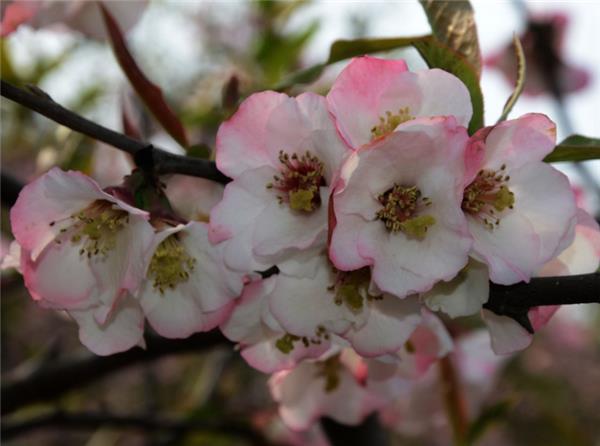
Finally, let's look at the pruning method for a Chaenomeles bonsai.
First, when pruning, thin out overly dense branches, diseased and pest-infested branches, and crossing branches. Second, pay attention to renewing the flowering branches. In practice there are some wrong tendencies. One is to believe that Chaenomeles speciosa (a plant of the same family and genus) flowers on old wood, so all new shoots should be thinned out. It is true that Chaenomeles speciosa flowers on old wood, but the practice of always thinning out new shoots is wrong, because every plant has a lifespan, and the flowering branches of Chaenomeles speciosa are not better the older they are; rather, 3- to 5-year-old branches bear the most flowers. Therefore, you should not simply keep old branches and remove new ones. The correct method is to renew the flowering branches year by year so the plant always stays in full bloom; generally renew 2 to 3 flowering branches a year, and excess new shoots can be thinned out. Another practice is to ignore new shoots and let them grow freely; this easily ruins the tree's shape and makes the branches thin and dense, not only preventing ventilation and light penetration but also often causing outbreaks of pests and diseases, with a huge impact on flowering quality.
That is all for today on how to grow a Chaenomeles bonsai; I hope the above content has been helpful to everyone!