Is the Chaenomeles cathayensis easy to grow? Teaching you the correct care methods
Chaenomeles cathayensis is a widely used plant in gardens, so is the Chaenomeles cathayensis easy to grow? You will have the answer after reading the introduction below.
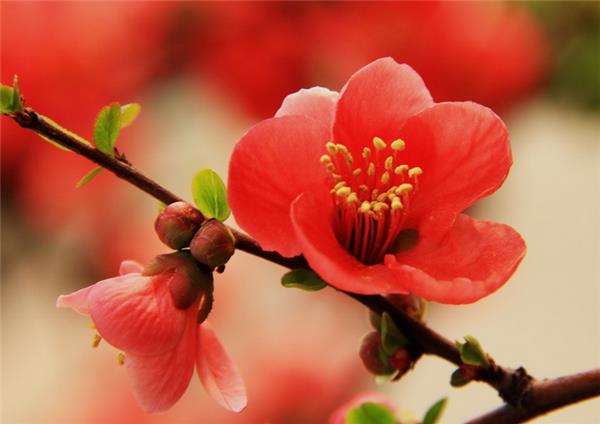
Fertilizer application: In autumn, after the leaves fall, a heavy fertilizing must be applied to replenish the nutrients it has lost, so that it can stay healthy. When the spring buds sprout, an organic fertilizer should be applied, along with one thorough watering. Depending on the age of the tree, fertilizing should also differ.
Watering key points: Crabapple is also famously drought-tolerant, so do not water too much at ordinary times, and by no means let the soil become waterlogged, otherwise excessive moisture will cause root rot and the leaves will turn yellow.
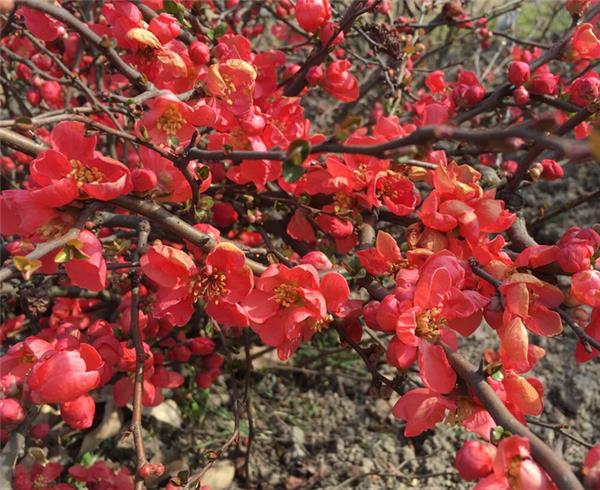
Pruning essentials: Crabapple can be pruned once after leaf fall and before early spring budding, cutting off dead and weak branches and diseased and pest-infested branches to keep the crown open and allow ventilation and light penetration. To promote vigorous flowering of the plant, long leggy branches should be cut back, so that all retained axillary buds can obtain more nutrients, reducing nutrient consumption and forming more flowering and fruiting branches. During the growing period, if the tips can be pinched in time to limit vegetative growth early, the effect will be even more pronounced.
Potting soil replacement: Chaenomeles cathayensis is also a commonly used bonsai tree species, suitable for making bonsai in different forms such as straight-trunk style, slanting-trunk style, double-trunk style, curved-trunk style, waterside style, exposed-root style, forest style, and multi-trunk-from-one-root style. For the shaping of young trees, wiring is the main method and pruning is supplementary, processing the trunk into an attractive zigzag form, but the artificial traces should not be too heavy, and the retained branches should not be too dense; sparse and airy is best, making it fresh and elegant, with just a few branches able to sketch the unique charm of crabapple, achieving the artistic effect of "coming from nature, yet higher than nature." Before flowering, spread green moss on the pot surface and place mountain stones, pavilions, figures and other accessories to give it a poetic and picturesque quality. For old stumps that have grown for many years, shaping should be based on the tree's vigor, making bonsai of different styles; the crown can be made into a regular round disc shape, or an unrestrained natural style can be adopted, using both pruning and wiring to make the branches and leaves luxuriant. Some people also process the trunk of the Taiwan quince into several bends, calling it "wandering dragon style"; this kind of bonsai has overly heavy artificial traces, lacks a natural feel, and its shaping is stereotyped, so it should not be overly promoted.
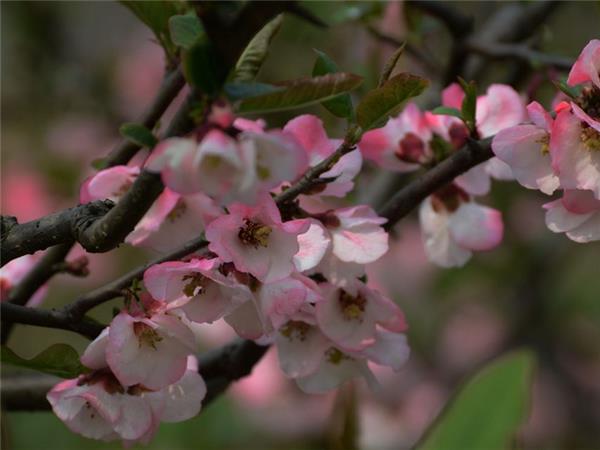
Propagation essentials: For Chaenomeles cathayensis, the suitable propagation methods include seed propagation, division propagation, and cutting propagation, three kinds.
Pest and disease control: The main disease of Chaenomeles cathayensis is rust; when the disease is severe, it can cause plant death. When it occurs, 50% Tuzet wettable powder can be sprayed at 800 times dilution, once every 10 days, and 3 to 4 consecutive sprays can control the condition. In addition, if the soil lacks iron and is too alkaline, it will also cause the leaves to turn yellow; black alum (ferrous sulfate) water can be poured to improve the soil and avoid yellowing leaves. The main pests of Chaenomeles cathayensis are aphids, red spiders, yellow slug moths, etc., which can be controlled by spraying 50% dichlorvos at 800 times dilution or 40% omethoate at 1000 to 1500 times dilution.
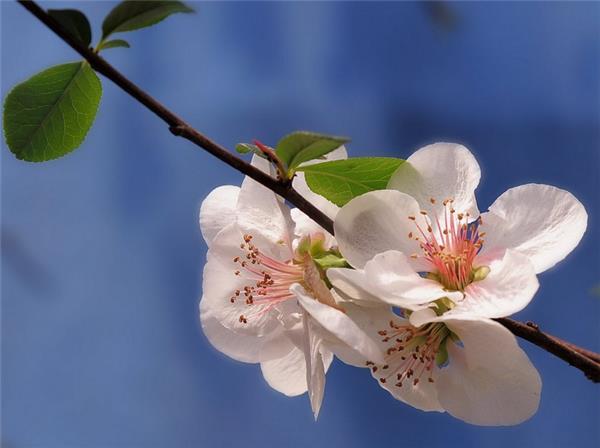
That is all for today's answer to the question of whether Chaenomeles cathayensis is easy to grow. I hope the above content can help everyone!