How to Grow Chaenomeles cathayensis (Papaya Flowering Quince): Cultivation Methods
How do you grow Chaenomeles cathayensis? Today our main task is to introduce the cultivation methods for Chaenomeles cathayensis. Let's take a look!
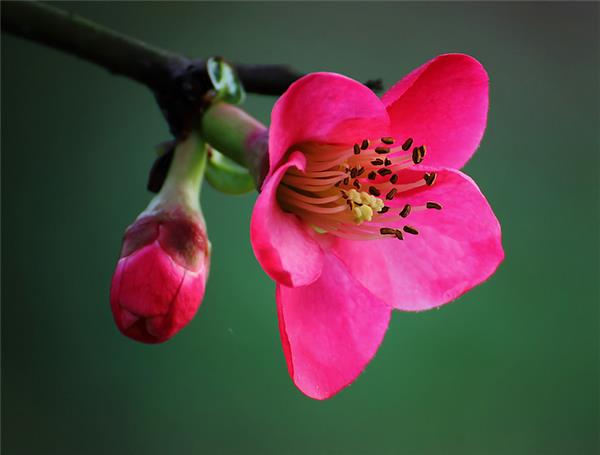
How to Grow Chaenomeles cathayensis
Chaenomeles cathayensis prefers warmth and has a certain degree of cold tolerance. It requires well-drained soil and is intolerant of waterlogging and saline-alkaline conditions. The optimal growing temperature is 25-32°C. When the temperature drops to 10°C, growth is inhibited; below 5°C, young tender organs are damaged; at 0°C, the plant will die; and when the temperature exceeds 35°C, it causes extensive flower and fruit drop. Chaenomeles cathayensis has high water requirements but dislikes waterlogging. It adapts to a wide range of soils but requires loose, well-aerated soil with a low water table. It is best planted in deep, fertile, loose, slightly acidic soil.
Chaenomeles cathayensis can grow on flat ground, hills and mountain slopes. It can be planted from February to October, mainly in spring and autumn, with a spacing of 1.33 m x 1.50-1.67 m. Fertilisation focuses on growth-promoting fertiliser, flower-forcing fertiliser and fruit-fattening fertiliser, combining soil application with foliar spraying. Chaenomeles cathayensis needs sufficient water, and soil moisture content should be maintained at around 70% of maximum water-holding capacity.
The best planting time for Chaenomeles cathayensis is before bud break in early spring or after leaf drop in early winter. When Chaenomeles cathayensis is removed from the nursery, keeping the root system intact is one of the keys to successful planting. Generally, large seedlings being planted should be kept with a soil ball, while small seedlings should retain some native soil depending on the situation. After planting Chaenomeles cathayensis, tending and management should be strengthened, and the soil should be kept loose and fertile at all times. Each autumn and winter, a batch of pond silt or fertile soil can be replaced and banked around the root zone.
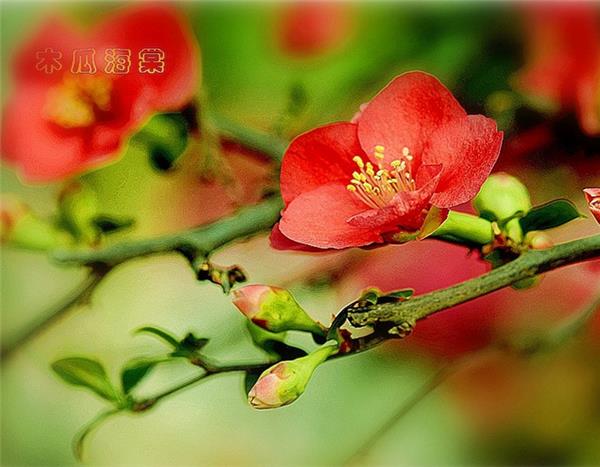
After leaf drop and before bud break in early spring, carry out one pruning session, cutting out dead, weak, diseased and pest-infested branches to keep the canopy open and well-ventilated with good light penetration. To promote vigorous flowering, water sprouts should be cut back to reduce nutrient consumption during sprouting, so that the remaining axillary buds can obtain more nutrients and form more flowering and fruiting branches. Fruiting branches and intermediate branches do not need pruning.
During the growing period of Chaenomeles cathayensis, if pinching out is carried out in time to limit vegetative growth at an early stage, the effect will be even more pronounced. This is especially true for potted bonsai specimens, which should be controlled in this way.
Transplanting and repotting of Chaenomeles cathayensis are best done in early spring. A soil ball should be retained, and the main root should be shortened while keeping more lateral roots. Plant it in a neutral to slightly acidic, loose and fertile sandy soil, and apply decomposed cake fertiliser as a base fertiliser. After it establishes, keep it outdoors in a sunny spot. During the growing season, keep the potting soil moist but not waterlogged. In early April, spray the leaves once with a 0.2% potassium dihydrogen phosphate solution to promote robust flower buds and provide sufficient nutrients for subsequent flowering and fruiting. During routine care, pinch out the growing tips frequently to keep the plant's shape attractive.
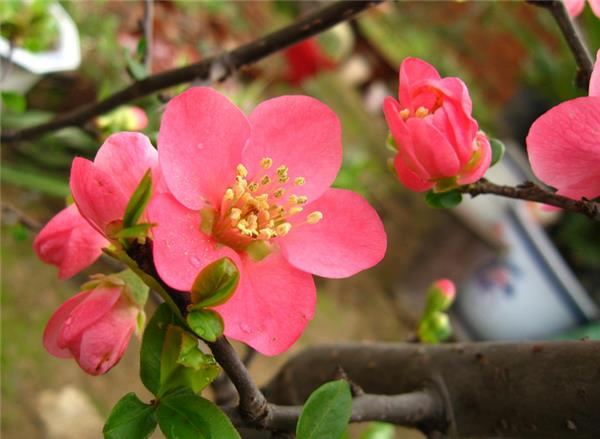
Below, let us learn about the various uses of Chaenomeles cathayensis.
1. Landscape Uses of Chaenomeles cathayensis
The Ming dynasty text "Qunfangpu" (Compendium of Flowers) records: There are four varieties of flowering crabapple, all woody. These four are: Malus micromalus, Malus halliana, Chaenomeles cathayensis and Chaenomeles speciosa. As one of the traditional flowering crabapples, Chaenomeles cathayensis has splendid flowers, a good tree form and few pests and diseases, making it an excellent tree species for garden landscaping. It can be planted in clusters at courtyard walls, forest edges and other locations. In spring you can enjoy its flowers, and in autumn its fruit; its branch form is unique, making it a superb tree for laying out garden landscapes.
Chaenomeles cathayensis has many cultivars. In spring, brilliant flowers cover the branches, giving a feeling of luxurious abundance. Lu You once described the delicate beauty of its flowers with the verse: "The azure fowl flowering crabapple is unmatched in the world; every branch seems dyed with orangutan blood. The Shu maiden's gaudy adornment would not yield to others, yet before these flowers she suddenly seems colourless." Some cultivars bear golden-yellow fruits hanging from the branches in autumn, giving off a rich fragrance. They are ornamental flowering trees excellent for both flowers and fruit, suitable for cultivation in courtyards, roadside green belts, lawns and other places. They can be planted in clusters, in rows, as single specimens or as flowering hedges; they can also be grown in pots for ornament or made into bonsai.
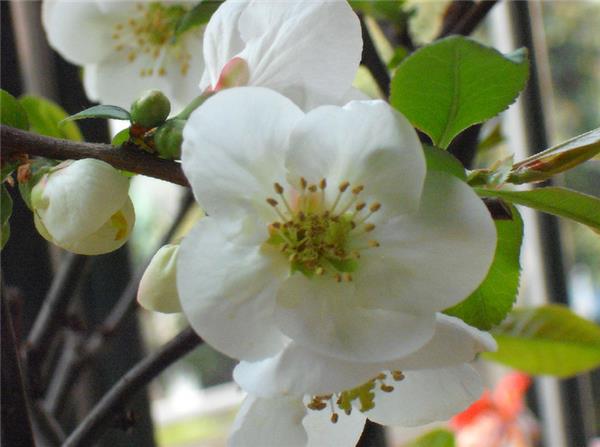
2. Economic Value of Chaenomeles cathayensis
The seed kernel has an oil content of 35.99% and an oil yield of 30%, with no off-odour; it is edible and can also be made into soap. The fruit, after steaming, is made into candied fruit; it is also used medicinally, with effects of dispelling wind, regulating qi, relaxing muscles and relieving pain, and can also sober one up, clear phlegm and, when simmered and eaten, stop diarrhoea. The flowers can be used as an ingredient for sugar-preserved jam, with a very fine flavour. The bark contains tannins and can be used to extract tannin gum. The wood is hard and can be used to make furniture and other utensils.
Besides being ornamental, the fruit of Chaenomeles cathayensis can be used medicinally, with effects of relaxing muscles and stimulating blood circulation, dispelling wind and relieving pain. Among them, Chaenomeles speciosa is relatively sensitive to ozone in the air and can also be planted as an environmental monitoring plant.