What to do if your Chaenomeles cathayensis (mugua crabapple) does not bear fruit? Learn the care methods to promote flowering and fruiting
Everyone knows that Chaenomeles cathayensis bears fruit, so how do you get it to bear fruit? Do you want to understand this question? Then why not take a look at the introduction below!
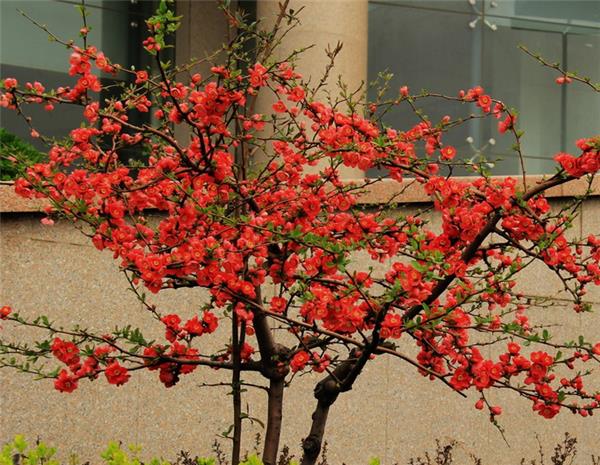
How to get Chaenomeles cathayensis to bear fruit
To make Chaenomeles cathayensis bear fruit, the following work should be done well:
① Water management. In management, grasp the principle of "do not water when dry, water thoroughly when watering."
② Reasonable fertilization. It is best to repot once every year in spring. Add some phosphorus and potassium fertilizer (hooves, pig bristles, etc.) to the potting soil to promote robust branch growth.
③ The relationship between the amount of flowering and the size of the fruit should be well regulated. Excessive flowering will lead to excessive consumption of nutrients, causing the young fruits that have already formed to drop due to insufficient nutrition.
Therefore, after flowering each year, flowers should be thinned in time, and the number of flowers should be controlled within a certain range, so that plump flowers can produce large fruits.
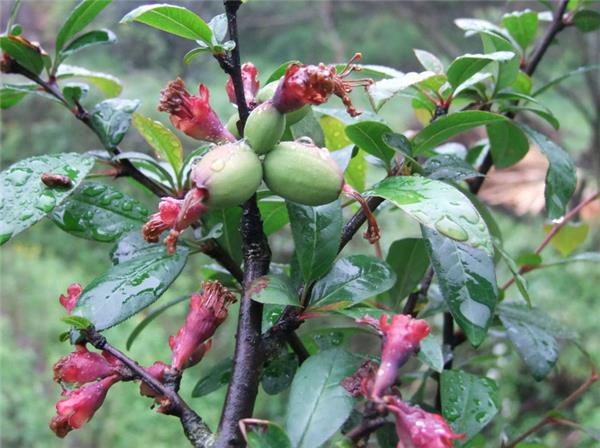
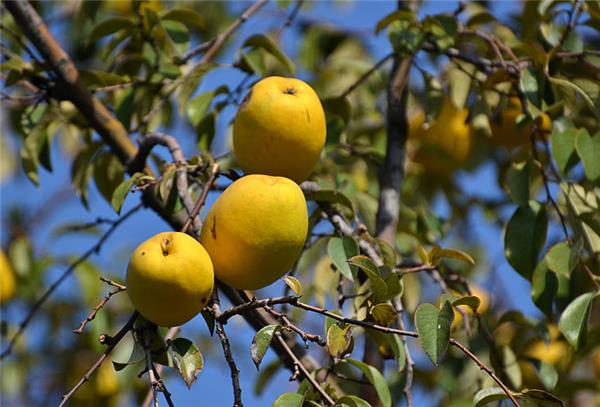
The performance of Chaenomeles cathayensis fruit at its best ripening stage
Chaenomeles cathayensis is a deciduous shrub to small tree, 2-4 m tall; branches erect, with short spur thorns; branchlets cylindrical, slightly curved, hairless, purplish brown, with sparsely scattered light brown lenticels. Leaves elliptical, lanceolate to obovate-lanceolate, 5-11 cm long, 2-4 cm wide. Flowering period March-May. Flowers open before the leaves, 2-3 clustered on two-year-old branches; flowers 2-4 cm in diameter; calyx tube bell-shaped, hairless outside or slightly pubescent; sepals erect, ovate to elliptical; petals obovate or nearly round, 10-15 mm long, 8-15 mm wide, pale red or white. The fruit ripens in September; the fruit is ovoid or nearly cylindrical, with a protrusion at the tip, 8-12 cm long, 6-7 cm wide, yellow with a red blush. After the Chaenomeles cathayensis fruit ripens, it begins to have a fragrance. Generally, if the Chaenomeles cathayensis fruit does not rot, the fragrance will last for about a month.
Finally, let's look at the cultivation of Chaenomeles cathayensis.
Most plants like Chaenomeles cathayensis that have both ornamental value and economic benefits have good cultivation techniques. The cultivation of Chaenomeles cathayensis is not very complicated. It is generally planted in the ground, but it can also be made into bonsai for pot cultivation. The planting period is preferably before budding in early spring or after leaf fall in early winter. When nursery stock leaves the nursery, keeping the root system of the nursery stock intact is one of the keys to successful planting. Generally, large seedlings to be planted should be kept with a soil ball, while small seedlings should retain some native soil depending on the situation. After the nursery stock is planted, care and management should be strengthened, and the soil should often be kept loose and fertile. Every year in autumn and winter, a batch of pond mud or fertile soil can be replaced and added around the root zone. After leaf fall and before budding in early spring, carry out one pruning, cutting off dead and weak branches and diseased and pest-damaged branches, so as to keep the crown open and allow ventilation and light penetration. As long as some conditions and factors favorable to the growth of Chaenomeles cathayensis can be ensured, the growth and development of Chaenomeles cathayensis can be well maintained, and the efficiency of cultivation can also be effectively improved.
That is all for today's introduction on the question of how to get Chaenomeles cathayensis to bear fruit. I hope the above content can help everyone!