What are the planting methods for Malus halliana?
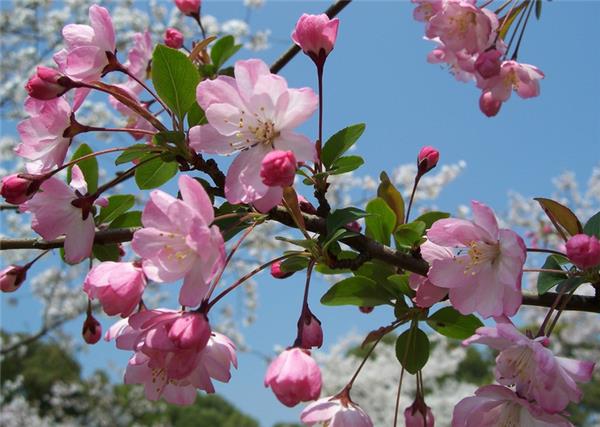
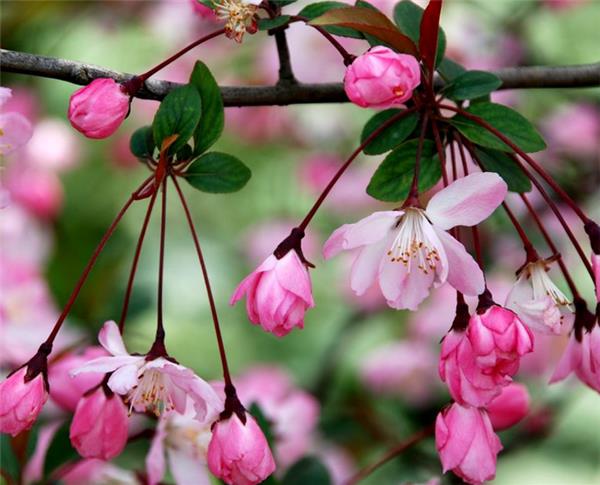
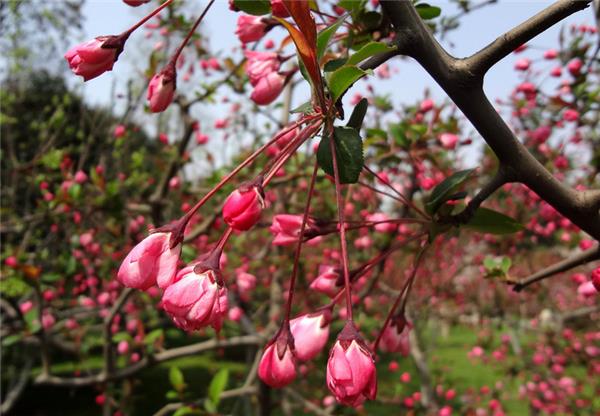
There are many kinds of crabapple flowers, and one of them is Malus halliana. Today we are going to introduce the planting methods for Malus halliana. Let's take a look!
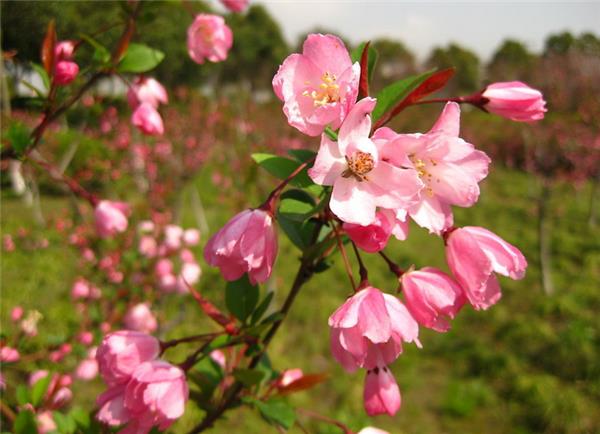
Planting methods for Malus halliana
1. Preparation
Wash the seeds with clean water and soak them to remove fuzz, impurities and shriveled floating seeds; in addition, select and keep only full, mature seeds. Mix the soaked seeds with moist sand; choose clean mixed sand, first wash it with clean water, and disinfect it with 0.5% carbendazim. Keep the humidity so that when squeezed in the hand it forms a loose clump; a sand-to-seed ratio of 1:3 is advisable, and mix thoroughly and evenly. In the new year, place the sand-mixed seeds in a ventilated container or box and keep them indoors over winter at 3-5°C. For sand-stored seeds, pay attention to temperature and humidity conditions and observe regularly; turn them over several times in spring to prevent sprouting or rotting. If any rotting seeds are found, they must be replaced promptly.
2. Preparation
For the seedling stage, choose flat terrain with thick, fertile soil and convenient drainage and irrigation, in sandy loam. Before winter cultivation of the soil, apply 3-4 cubic meters of farmyard manure per 667 sq m, 50 kg of potassium fertilizer or 30 kg of ferrous phosphate, 15 kg, 10 kg, and carbofuran; plow, level, and harrow finely, make it even, and irrigate.
3. Seed germination
At the beginning of the second year, take out the sand-stored seeds, remove the sand and any rootlets, soak them in clean water for 12 hours, scoop out the seeds, spread them in a leeward, sunny place, cover with transparent plastic film, seal all around, and leave for 6 to 8 days. They need to be turned 1-2 times per day, and the sticky mucus on the seed surface should be rinsed off with warm water to help the seeds breathe. When 70% of the seeds have split open, sow the seeds.
4. Sowing
Sowing can be done around Awakening of Insects. Choose wide and narrow rows along a north-south line, with a wide row spacing of 50 cm and a narrow row spacing of 30 cm; make furrows about 2 cm deep. Sow about 2 kg per 667 m. If there is moisture, sow directly; if the moisture is only slight, water in the furrows first, then sow, cover with 1.5 cm of soil, and then cover with agricultural plastic film.
5. Rootstock
(1) 7-10 days after sowing, when 90% of the Malus halliana seeds have germinated, and when the sprouts have 2 leaves, begin ventilating through the holes. The best time is at ten o'clock or after fifteen o'clock in the afternoon. Ventilate around the seedlings, and then cover the holes with moist soil.
(2) Thinning and transplanting in mid-April, when Rex seedlings have 3 leaves, thinning and transplanting are needed. Thinning generally follows the principle of keeping strong seedlings and maintaining neatness; plant spacing should be kept at about 16 cm, with 210,000 plants per 667 m. For thinning, transplant the seedlings from the thinned spots, trying to keep plenty of soil around the roots, and water them so they survive.
(3) Integrated management. When the seedlings are 15-20 cm tall, watering and fertilization can be used. For the irrigation method with watering and fertilization, apply about 10 kg of urea per 667 sq m. On July 6, use one dose each time, 15 kg each time, and irrigate immediately after each fertilization. During this period, buds need to be removed promptly to reduce nutrient consumption. Pay attention to preventing and controlling pests and diseases. For the main seedling-stage diseases, 0.1% thiophanate-methyl can be used as a liquid spray or root drench; for the main pest, spirea aphid, which causes serious damage, spray 0.033% imidacloprid solution to control the aphids.
6. Transplanting
(1) Before grafting, prepare the scion and rootstock as the main preparatory work. Choose vigorous-growing, full developed branches of Malus halliana as scions; after cutting the branches, remove the leaves and tender shoots, taking care to keep 1 cm of leaf stalk, and check the operation and survival of the grafts. Place the scion buds upright in a leeward, shaded place, with the lower part in moist sand, and spray frequently on top to keep them from drying out. For bench grafting, place them in a bucket with water 10 cm deep, cover with a wet cloth, and leave them. Before transplanting, the grafted seedlings should have the lower lovely branches cut off at the base, and after that, spray once for disinfection and insecticide to prevent diseases and pests. Then, 4 days before, it is best to water the garden once with a little water, so that the bark and rootstock heal and the graft survives.
(2) Grafting time and grafting method: from late June to early July, when the sprout stem is about 0.5 cm, grafting can be done. Use the "T"-shaped budding method, wrap and seal with plastic film, and open only the leaf stalk.