How to Grow a Snake Plant? A Detailed Photo Guide to Care Methods
Many people do not know enough about how to grow snake plants, which leads to many problems during the growing process. This is very likely because our understanding of snake plants is not yet comprehensive enough. So how do you grow a snake plant? Below is a detailed introduction to snake plants.
A Brief Introduction to the Snake Plant
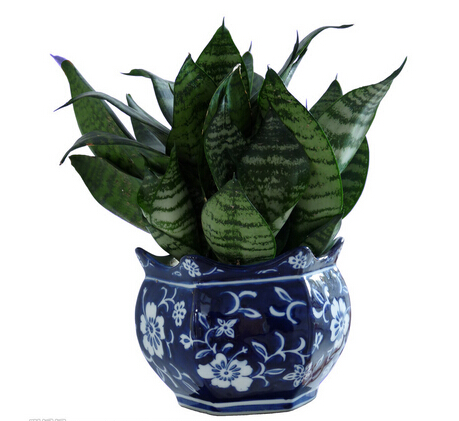
The snake plant, also known as mother-in-law's tongue or bowstring hemp, is a plant in the Asparagaceae family. It originated in tropical Africa and is a desert plant. It is now very commonly grown in homes.
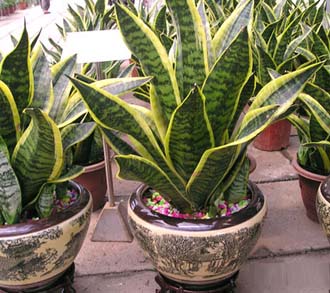
Its leaves are patterned. The snake plant is a perennial succulent herb, and its rhizome has a creeping habit. Funnel-shaped leaf clusters grow from the rhizome. The leaves are upright, leathery and thick, light green, with irregular dark green horizontal banded markings. These markings closely resemble the stripes on a tiger's body, which may be why it is called the snake plant (literally "tiger-skin orchid"). Generally, snake plants grow 50 cm to 70 cm tall, with leaves about 3 cm to 5 cm wide. In spring and summer, the snake plant's flowering period, it sends up a flower stalk singly from the rhizome, forming a raceme with 3-5 flowers per cluster, and has a sweet, delicate fragrance.
Types of Snake Plants
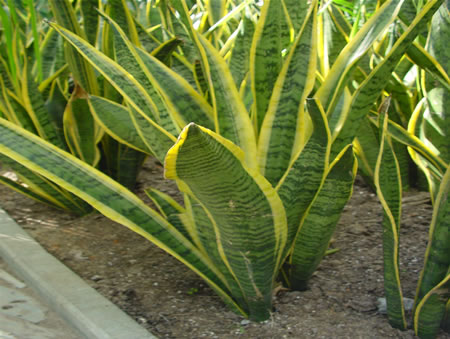
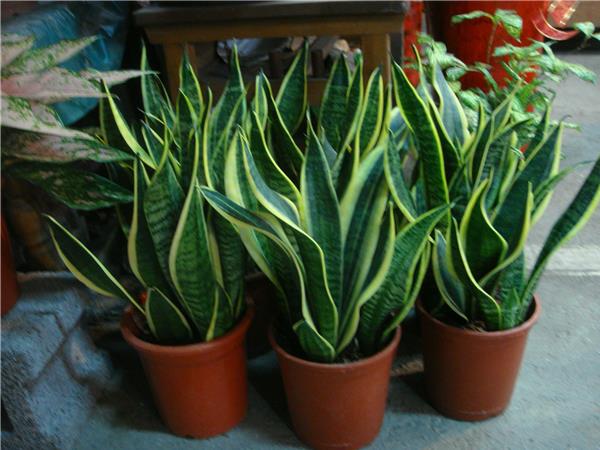
Common snake plant varieties include the golden-edged snake plant, the short-leaf snake plant, the silver short-leaf snake plant, the golden-edged short-leaf snake plant, and the cylindrical snake plant. It can be said that the golden-edged snake plant is the variety with the highest ornamental value, with thin yellow banded stripes along the leaf margins, a light green center, and dark green horizontal stripes. It looks very beautiful.
Golden-edged snake plant: similar in shape to the snake plant, but the leaf margins are bordered with broad golden-yellow bands.
Scallion-leaf snake plant: also called the cylindrical snake plant. The leaves are cylindrical, roughly the same thickness from top to bottom along the entire leaf, slightly tapering at the tip, with shallow longitudinal grooves on the leaf surface. Each leaf grows independently.
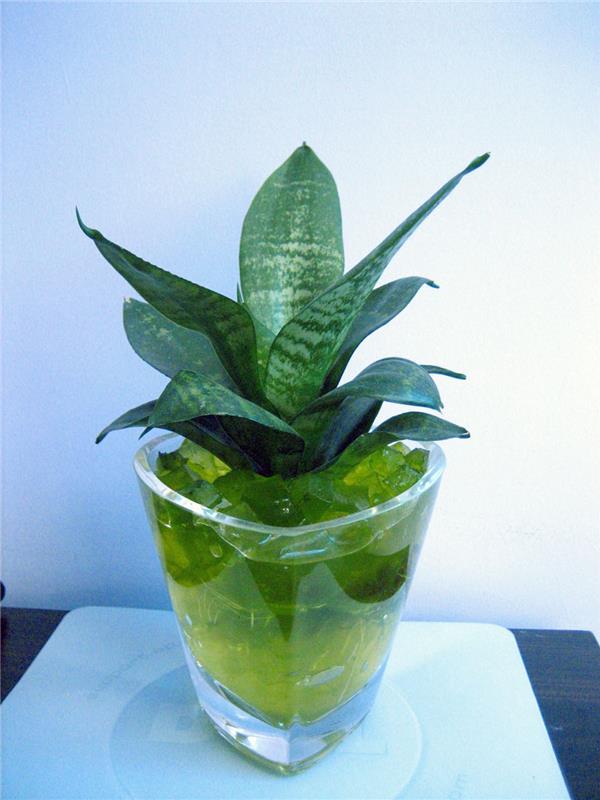
Short-spike snake plant: a dwarf variety, about 10-20 cm tall, a mutation of the golden-edged snake plant. The leaves are short and wide, growing in a spiraling, overlapping manner.
The Snake Plant's Growing Environment
Snake plants are drought-tolerant, moisture-tolerant, and shade-tolerant, and can adapt to all kinds of harsh environments. They are not demanding about fertilizer, and growing them in sandy soil with good drainage is best. In addition, snake plants should not be grown in dark places for long periods; they should receive indirect scattered light. However, be sure not to suddenly place a snake plant in direct sunlight. It grows best in environments of 20-30°C; in winter, be careful to maintain an indoor temperature of 10°C.
The Benefits and Uses of Snake Plants
1. Snake plants can increase the concentration of negative ions indoors
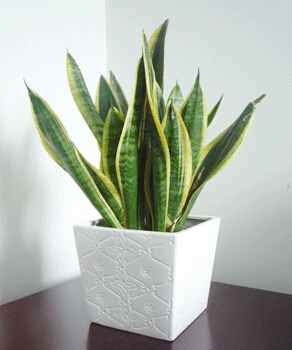
They can absorb carbon dioxide while releasing oxygen, increasing the concentration of negative ions in indoor air. Negative ions are gas ions in the air that carry a negative charge and have a very important influence on the life activities of humans and other living things. The stomata on the succulent stems of snake plants close during the day and open at night; while absorbing carbon dioxide, they happen to release a large number of negative ions, increasing the concentration of negative ions in indoor air. Moreover, snake plants have another important function: radiation protection, making them suitable for placing beside computers and televisions. Therefore, in homes, apartments, office buildings and other places, the golden-edged snake plant has gradually become people's preferred eco-friendly plant.
2. They can absorb many harmful gases
Like spider plants, snake plants can absorb more than 80% of harmful gases indoors, and their ability to absorb formaldehyde is especially strong. They are also known as the "natural scavenger." At the same time, they can absorb large amounts of radioactive nuclides such as uranium. Besides removing formaldehyde, they also have a clear absorption effect on harmful substances such as trichloroethylene, hydrogen sulfide, benzene, phenol, hydrogen fluoride, ether, and heavy metal particles. Their transpiration efficiency is relatively high, and they also have a certain ability to regulate indoor humidity. Therefore, in a 15 sq m room, growing 2-3 pots of snake plants can keep the air fresh. Snake plants have also become an indispensable eco-friendly indoor plant in modern life.
The Feng Shui Role of Snake Plants
Many people say snake plants have a feng shui role in attracting wealth. This role comes from the study of the Five Elements of plants. Placing a potted snake plant in the living room: if the front door faces south, and south belongs to Fire, then the snake plant, which belongs to Wood, is very suitable for growing in the living room. It is said that this can help regulate the family's digestive health.
Growing a snake plant on the balcony can increase the household's wealth energy. In feng shui, the balcony is the place where a residence draws in and breathes qi, so vigorous, thriving plants should be grown there, and the snake plant is a plant with tenacious vitality that can bring wealth energy to the home.
How to Grow a Snake Plant
1. Snake plant growing methods: temperature
Snake plants like warm temperatures. The suitable temperature is 18-27°C, and growth stops below 13°C. In winter, the temperature must not stay below 10°C for long periods, otherwise the base of the plant will rot, causing the whole plant to die.
2. Snake plant growing methods: sunlight
Snake plants grow well in bright environments. Apart from avoiding direct harsh sunlight in midsummer, they should receive plenty of sunlight in the other seasons. If placed in a too-dark spot indoors for too long, the leaves will become dull and lack vitality.
3. Snake plant growing methods: soil
They are not demanding about soil and can grow normally even in a very small volume of soil. They prefer loose sandy soil and humus soil, and are tolerant of drought and poor soil. They grow very vigorously, and even a crowded pot will not inhibit their growth. Generally, repot once every two years, in spring, and standard compost can be used when repotting.
The Feng Shui Role of Snake Plants
Many people say snake plants have a feng shui role in attracting wealth. This role comes from the study of the Five Elements of plants. Placing a potted snake plant in the living room: if the front door faces south, and south belongs to Fire, then the snake plant, which belongs to Wood, is very suitable for growing in the living room. It is said that this can help regulate the family's digestive health.
Growing a snake plant on the balcony can increase the household's wealth energy. In feng shui, the balcony is the place where a residence draws in and breathes qi, so vigorous, thriving plants should be grown there, and the snake plant is a plant with tenacious vitality that can bring wealth energy to the home.
How to Grow a Snake Plant
1. Snake plant growing methods: temperature
Snake plants like warm temperatures. The suitable temperature is 18-27°C, and growth stops below 13°C. In winter, the temperature must not stay below 10°C for long periods, otherwise the base of the plant will rot, causing the whole plant to die.
2. Snake plant growing methods: sunlight
Snake plants grow well in bright environments. Apart from avoiding direct harsh sunlight in midsummer, they should receive plenty of sunlight in the other seasons. If placed in a too-dark spot indoors for too long, the leaves will become dull and lack vitality.
3. Snake plant growing methods: soil
They are not demanding about soil and can grow normally even in a very small volume of soil. They prefer loose sandy soil and humus soil, and are tolerant of drought and poor soil. They grow very vigorously, and even a crowded pot will not inhibit their growth. Generally, repot once every two years, in spring, and standard compost can be used when repotting.