What are the common varieties of potted aquatic plants
In today's society, popular fashion elements are diverse, and aquatic plants can also be grown in pots. Seeing this, wouldn't you be very curious? Do potted aquatic plants really exist? Are they easy to keep alive? And what aquatic plants can be kept alive in pots? I believe these are questions everyone would be very curious about! So next, let me answer the above questions based on the information I have gathered!
Characteristics of potted aquatic plants
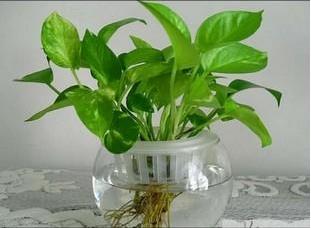
Compared with plants grown in the same soil, aquatic plants appear fresher. Their leaves are soft and transparent, and their color is fresher. Most importantly, aquatic plants are suited to living in water (culture solution), and they draw nutrients directly from the culture solution rather than obtaining nutrients from soil. At present, common aquatic plants can be divided by plant category into marsh plants, waterside plants, floating plants and deep-water plants. If divided by their lifestyle, they can also be divided into emergent herbaceous plants, floating plants, submerged plants, floating-leaf plants and emergent plants.
Purchasing products
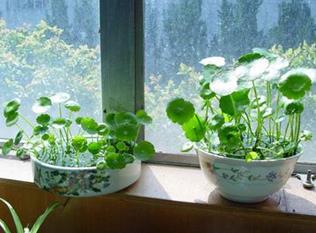
When purchasing potted aquatic plants, you must first make clear whether the plant is truly aquatic or hydroponic. If the plant is aquatic, it can rarely survive well on land, because the humidity on land is insufficient, and general aquatic plants are suitable for homes, offices and similar places. The other type is hydroponic, because the plant has already transformed into water roots, so there is no need to worry about whether the plant will die. If the user chooses a thorny plant when purchasing products, it will release oxygen at night.
Cultivation methods
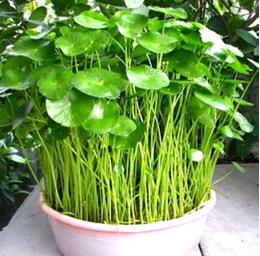
Aquatic plants are cultivated according to different species or the growth habits of the variety. In gardens, there are two methods for cultivating aquatic plants:
1 Build a planting trough at the bottom of the pond, spread at least 15CM of culture soil, and then plant the aquatic plants into the water bottom.
2 Place the aquatic plants in a container, then sink it to the bottom of the water.
Of course, of the above two methods, the second method is more commonly used, because it is convenient to move.
Precautions for cultivating aquatic plants
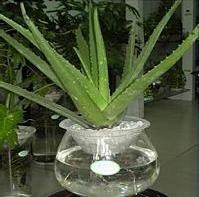
1 Frequently check whether there are pests
2 Check whether the plants are crowded. If they have grown too much, the way to handle it is to divide them.
3 Regularly add fertilizer so that the plant's nutrients are sufficient.
4 Frequently clean up the weeds in the water
5 Ensure the water source is clean. If the container holding the aquatic plants becomes dirty, it needs to be cleaned thoroughly, and it is also necessary to ensure the water source is not polluted.
Classification of aquatic plants
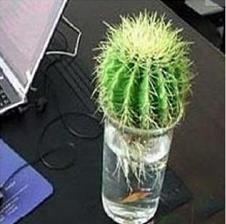
Aquatic plants are excellent swimmers or divers, because they live in water all year round, so they have developed a set of abilities suited to aquatic environments. According to their different planting conditions and growth methods, they are roughly divided into three types: emergent plants, floating plants and submerged plants. The specific representative plants of these three types are as follows:
Emergent plants: lotus, calamus, water scallion, Thalia dealbata, cattail, reed, etc.
Floating plants: water lily, Nymphoides peltata, water hyacinth, Marsilea quadrifolia, etc.
Submerged plants: Hydrilla verticillata, Potamogeton, Vallisneria, Ceratophyllum demersum, etc.
As for the varieties we want to grow in pots, we can decide which plants are suitable to cultivate according to their own functions, so that we can both please ourselves and achieve an artistic sense in the environment.
Based on the above summary, it can be seen that there are not many types suitable as indoor aquatic plants, but this does not affect people cultivating aquatic plants at home. For example, the most common indoor aquatic plants, such as spider plant, evergreen, and Reineckea carnea, can be seen in many households. In addition to the above summary, what are the common indoor aquatic plants? Naturally, there are also Dracaena of the Liliaceae family, cactus, Magnolia liliflora, edge-wrinkled grass, Peperomia glabella, Peperomia coffee, green willow, fine Bago, African daisy, and so on.
What are the common indoor aquatic plants? Naturally, there are also Dracaena of the Liliaceae family, cactus, Magnolia liliflora, edge-wrinkled grass, Peperomia glabella, Peperomia coffee, green willow, fine Bago, African daisy, and so on.