How to grow wax begonia well: care methods for wax begonia
How do you grow wax begonia well? How do you make wax begonia bloom more and better? Today we will answer these one by one for you.
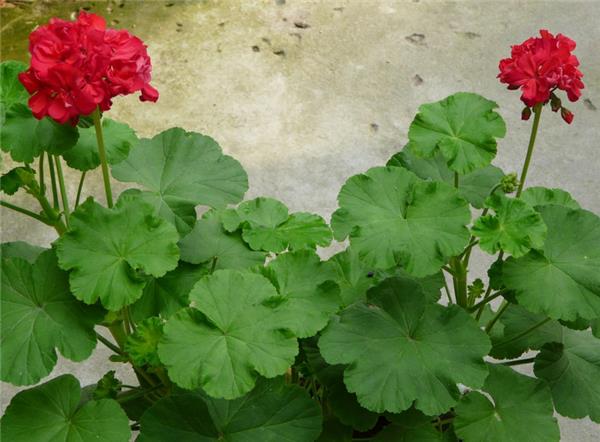
How to grow wax begonia well
Wax begonia is mostly grown as a potted plant. Its leaves are emerald green and its flowers are pink, making it a popular flower for decorating windowsills and tables.
The roots of wax begonia are mainly fibrous roots, so the growing medium should be loose, fertile, well-draining and airy. A commonly used potting mix can be made by mixing equal parts peat and fine sand, or equal parts leaf mold and fine sand.
With sufficient water, the plant looks fresh and grows well. But do not water too much; generally, water once every two days in summer and once every 4 days in winter.
Spring and autumn are the seasons of vigorous growth for wax begonia, so a sufficient fertilizer supply must be ensured. It is best to apply a dilute liquid fertilizer about every 10 days.
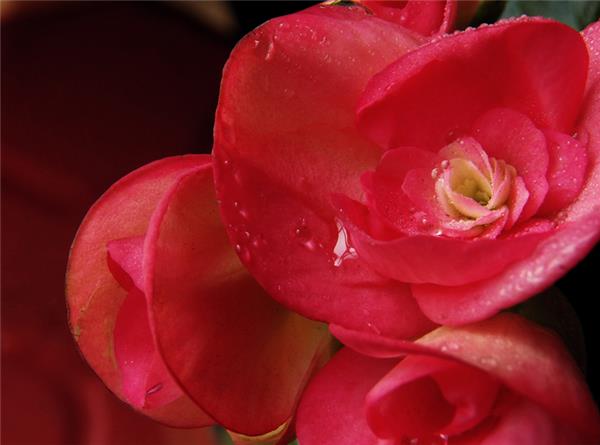
Excessive fertilizing throughout the year should be avoided, otherwise it easily causes plant death. Apart from the low-temperature periods in winter and spring, do not let sunlight shine on the plant for too long, especially at noon in the hot summer, wax begonia should be shaded to avoid leaf yellowing and scorched leaf edges.
The suitable growing temperature for wax begonia is 20-25°C. Throughout the year of cultivation, avoid low temperatures below 10°C and high temperatures above 30°C. This keeps the plant growing more robustly. When the plant is about 10 cm tall, pinch it once to encourage new branches, and when the side branches grow to about 6 cm tall, pinch the side branches once more. This operation is very important; wax begonia that has been pinched has a more beautiful plant shape and also blooms more.
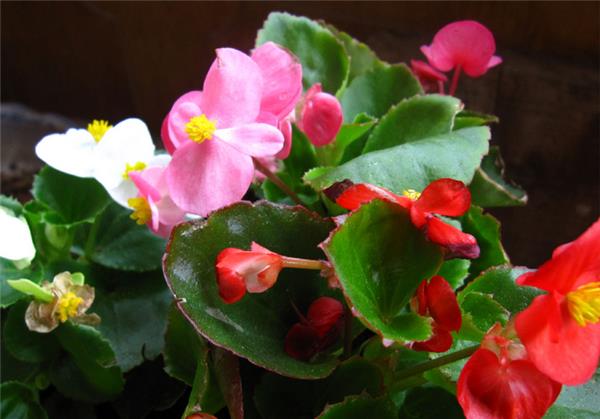
How to make wax begonia bloom more and better
To make wax begonia bloom more and better, besides timely and reasonable management of water and fertilizer, the key is to do the pinching work well.
Wax begonia has habits similar to flowers such as jasmine and Chinese rose: only after pinching can it be encouraged to produce more flowering branches and more flowers. If pinching and pruning are neglected, the plant grows thin and weak, with no branches or very few branches, the plant shape is unattractive, and naturally it blooms less. Therefore, whenever wax begonia enters its growth and flowering period, except when seeds need to be collected, pinching should be done after flowering. The method is to use your hands or small scissors to remove the top node of the flowering stem together with the spent flowers. After pinching, the lower axillary buds can be encouraged to sprout again and grow into young shoots. In the spring and autumn growing seasons, about 15 days after pinching, flower buds can form again at the tips of the young shoots and beautiful flowers can open. Repeated pinching not only lowers the plant shape and makes it more attractive, but also keeps wax begonia blooming continuously.
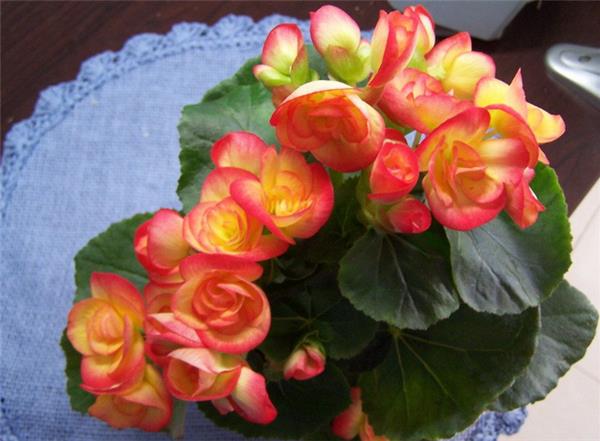
Pinching wax begonia during the growing period can encourage more flowering, while pinching at the seedling stage can accelerate its growth and make the plant shape increasingly complete. Generally, when the seedling grows to about 10 cm tall, the upper terminal bud needs to be removed to encourage young shoots to grow from the axillary buds. When the seedling grows larger, in order to make the plant crown neat and attractive, even more attention should be paid to the pinching method. There is no fixed limit on the number of pinchings. If the flower crown is not large enough, you can remove the flower buds as soon as you see them to encourage side branch growth. Some leggy branches and weak branches should also be removed together, which allows the sprouting young shoots to grow evenly. Such plants often have a large crown diameter, are neat, bloom abundantly, and have high ornamental value.
In addition, care work such as light, temperature, and pest removal should also be done well.