How to grow wax begonia? Growing methods and precautions
As a potted flower, wax begonia is one of the home decorations, and it can also serve as a preferred flower species for arranging gardens. It is very endearing, so how do you grow wax begonia flowers?
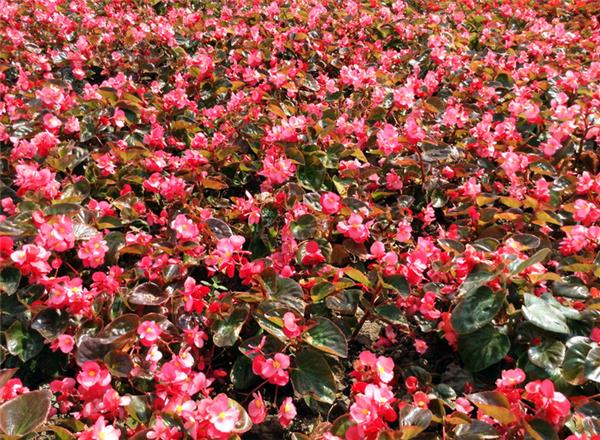
How to grow wax begonia flowers
1. Ecological habits: Wax begonia likes a warm and humid climate, and a semi-shaded environment with sandy loam soil rich in humus, loose, and with good permeability. It fears cold and high temperatures. The suitable temperature is 18-25°C.
2. Watering: Wax begonia watering requires "two more and two less", and the principle is not to water when dry, and when dry, water thoroughly. That is, during the growth and flowering period, which is spring and autumn, water should be appropriately more, and the potting soil should be slightly moist; while in summer and winter, wax begonia is usually in a semi-dormant state, so water can be less, and it is better for the potting soil to be slightly dry.
3. Fertilizing: Wax begonia fertilizing should follow the principle of "thin fertilizer applied frequently". Too much will cause fertilizer damage, resulting in phenomena such as scorched leaves and dead plants.
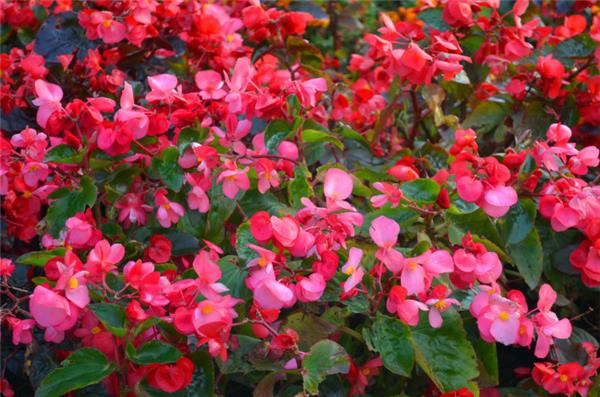
4. Pruning: Like Chinese roses and jasmine, wax begonia needs pruning of spent flowers and pinching after flowering, so as to promote more branching and more flowering. If this part is neglected, the wax begonia plant tends to grow thin and long, with fewer flowers and an unattractive plant shape.
5. Pests and diseases: Diseases mainly include leaf spot disease, as well as the harm of bacterial diseases, which should be controlled with thiophanate, chlorothalonil, jinggangmycin, etc. The main pests of wax begonia powdery mildew are various pests that harm leaves and stems, including slugs, thrips, leafminers, etc., and targeted pesticides should be used.
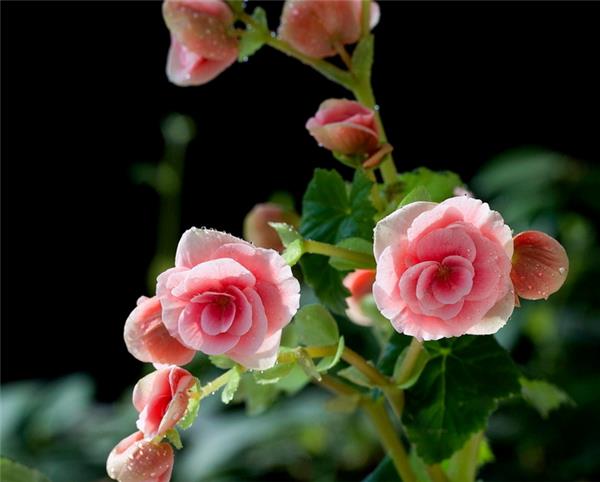
Propagation methods of wax begonia
Wax begonia mainly has three methods: sowing, cuttings, and division, and sowing and cuttings are commonly used for propagation.
For commercial cultivation, sowing propagation is used. Wax begonia seeds are tiny and short-lived. Seeds that naturally fall into the potting soil often sprout quickly and grow into seedlings, but if collected seeds are not sown in time, few seedlings emerge. Cuttings are mostly carried out from March to May or September to October, using plain sandy soil as the cutting substrate, or they can be directly inserted into plastic flower pots, and the node part needs to be inserted into the soil. Under shaded and warm conditions, they root in more than 20 days. Perennial old plants can be divided, and pruning can be carried out at the same time to promote new side branches and form a good plant shape.
Sowing method
In East China, spring from April to May and autumn from August to September are generally the most suitable. The seeds should be evenly scattered on the fine soil in the pot (no need to cover with soil). Then use the bottom-watering method for the sowing pot to absorb enough water, then cover it with a piece of glass and place it in a semi-shaded place, and it will germinate after 10 days. Seedlings from spring sowing can bloom in autumn of the same year.
Cutting method
It can be carried out all year round, but after becoming seedlings, there are fewer branches. Except for double-petaled varieties, this method is generally not used for propagation.
Division method
Perennial old plants can be divided, and pruning can be carried out at the same time to promote new side branches and form a good plant shape.
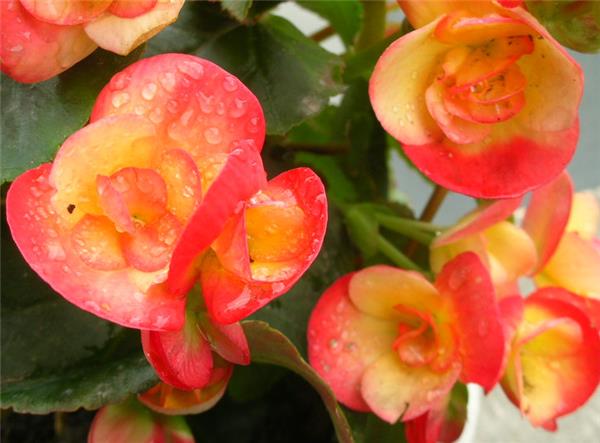
How to make home-grown wax begonia have bright flowers and green leaves
In order to make home-cultivated wax begonia have verdant, dripping-green branches and leaves and abundant, brightly colored flowers, attention should be paid during cultivation to:
① Selection of seedlings. When purchasing seedlings, choose seedlings with large and complete basal leaves and buds or branches in the leaf axils. Such seedlings have characteristics such as strong growth vigor, many branches, and abundant flowers.
② Cold protection and warmth in winter. Wax begonia is afraid of cold, so cold protection and warmth work should be done early. Before Frost's Descent, move the pot indoors to a sunny place facing south. When a cold wave comes, it can be covered with a plastic bag, and the next day after the sun comes out, remove it; it cannot be placed next to a heater, otherwise the leaves will be scorched; in rooms with air conditioning, attention should be paid to ventilation.
③ Cooling and ventilation in summer. In summer, the pot should be placed in a cool, ventilated place, with the temperature controlled below 30°C, and strong direct light must be avoided to prevent sunburn.
④ Fertilizer and water management. During the growing season, apply 1 time of dilute liquid fertilizer about every 10 days. When flower buds form, increase the application of quick-acting phosphorus and potassium fertilizer to make the flowers bright; watering should follow the principle of watering thoroughly when dry, and attention should be paid to maintaining humidity, often spraying water on the leaves, especially in hot summer and dry winter. The potting soil should be slightly drier in summer and winter, which is beneficial for increasing resistance, but it must not be too dry, and rain should be avoided.