A detailed guide to planting crabapple flowers, easy for beginners to learn too
Since ancient times, the crabapple flower has been a famous flower enjoyed by both refined and common tastes. Its blooms are elegant and free-spirited, and when it flowers it looks like brocade. It has long been known as the "national beauty." Today we are going to introduce the planting method for crabapple flowers, so let's take a look!
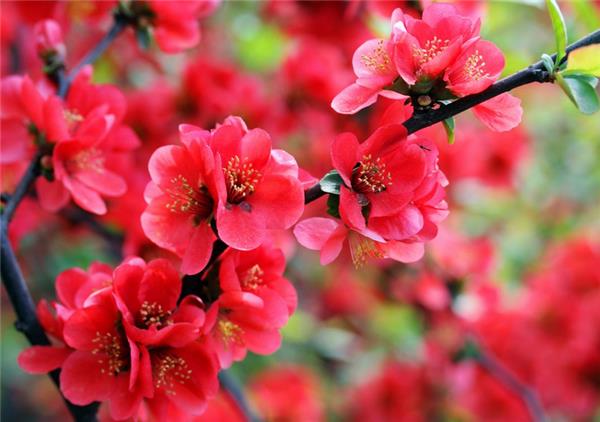
How to plant crabapple flowers
1. Requirements for temperature and light. Crabapple flowers like sunlight and are suited to growing in a sunny environment; in shady places they will grow poorly. Special attention should be paid to potted plants grown at home: during their growing period, place them in a spot with plenty of light for care. Because they are cold-resistant, even at minus 15 degrees in winter crabapple flowers can still grow very well and will not suffer frost damage, so they can be placed outdoors to overwinter. However, when it is unusually cold, protective measures should be taken.
2. Requirements for watering and fertilizing. Crabapple flowers should be watered and fertilized in combination. In autumn, after the leaves fall, a heavy fertilizing must be done once to replenish the nutrients it has lost, so that it can stay healthy. When the spring buds sprout, an organic fertilizer should be applied once, along with one thorough watering. Fertilizing should also differ depending on the age of the tree. However, crabapple flowers are also rather famous for being drought-tolerant, so do not water too much at ordinary times, and by no means let the soil become waterlogged; otherwise, excessive dampness will cause root rot and the leaves will turn yellow.
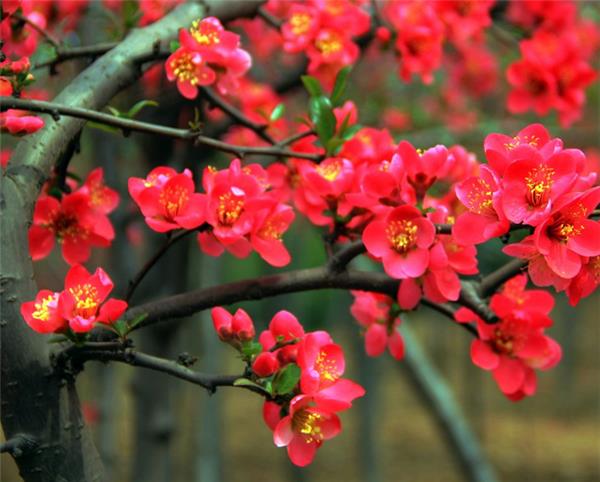
3. Pruning should be done in early spring. Crabapple flowers can be pruned once after the leaves fall and before the buds sprout in early spring. Cut out dead and weak branches and diseased or pest-infested branches to keep the crown open and allow ventilation and light through. To promote vigorous flowering of the plant, long leggy shoots should be cut back so that the remaining axillary buds can all obtain more nutrients, reducing nutrient consumption and forming more flowering and fruiting branches. During the growing period, if the tips can be pinched in time to limit vegetative growth early on, the effect will be even more noticeable.
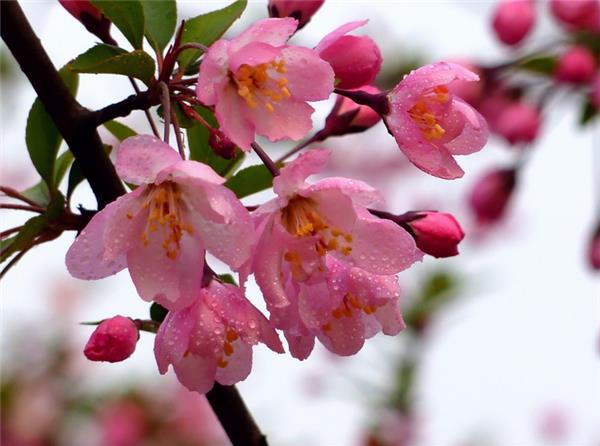
Crabapples like sunlight by nature and do not tolerate shade. They have strong adaptability to severe cold and dry climates, and dislike waterlogging. When growing potted crabapple flowers, the following points need attention.
1. Place it in a sunny spot, but if the midday sun in summer is too harsh, some shading should be given to avoid scorching the flowers and leaves.
2. Crabapple flowers need relatively loose soil and need it to contain some alkalinity; roughly, the soil pH just needs to be no lower than 7. Soil from a flower nursery or from the base of tree roots can be used, adding one third river sand.
3. When planting crabapple flowers in a pot, the depth should not be too deep, so that the root system can spread out better. It is best to plant at a depth of 12 cm from the bottom of the pot, but specifically it still depends on the size of the plant.
4. The specific watering should depend on the weather. The pot soil should be kept moist, but not waterlogged. It is best not to let it be exposed to rain, so that too much water does not cause root rot. When it is too cold, do not water.
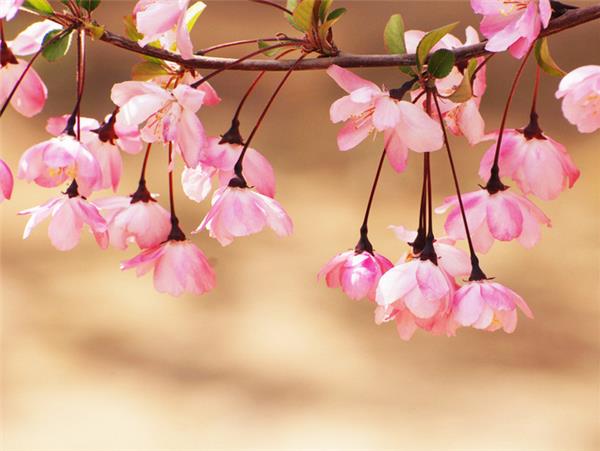
5. When the spring buds begin to stir, apply some organic fertilizer to replenish nutrients, and combine it with one thorough watering. When the leaves fall in autumn, apply organic fertilizer, also combined with one thorough watering. After the flowers fade, apply phosphorus and potassium fertilizer. For daily care, some crabapple-specific fertilizer can be purchased, and fertilizer should be applied appropriately according to the instructions.
6. Crabapple can be placed in a courtyard or on a balcony or other ventilated place. Crabapple is relatively cold-resistant, so in winter it can also be placed outside, but if it is especially, especially cold, anti-freezing measures still need to be taken.
7. To ensure the plant can flower vigorously, branch and leaf pruning should be done after the crabapple leaves fall and before the buds sprout in early spring. Weak branches, diseased and pest-infested branches and leaves, individual longer branches and leaves, and overly dense branches and leaves can be removed. Sparse parts of the branches can also be cut back to encourage more side branches to grow.
In addition, if the crabapple plant grows larger, it needs to be repotted in time, so as not to affect the growth of the crabapple.