How to grow large-leaf gardenia? A detailed guide to cultivation methods
What are the cultivation methods for large-leaf gardenia? How do they differ from those for gardenia? Let's take a look together below!
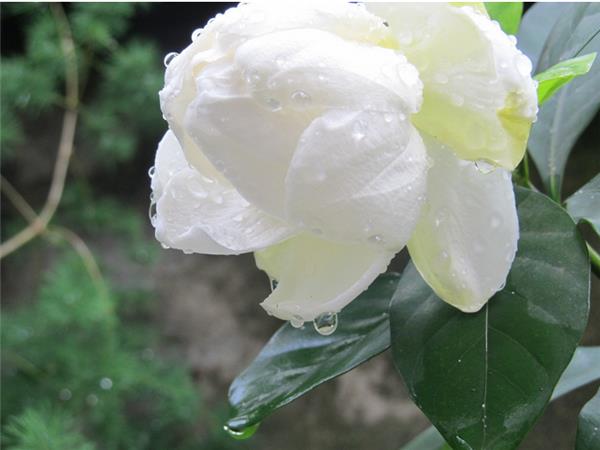
Cultivation methods for large-leaf gardenia
(1) Gardenia prefers acidic soil, while soil in the north is mostly neutral or slightly alkaline, resulting in a lack of iron available for the plant to use, which is one of the main causes of leaf yellowing. For this reason, fertile acidic potting soil should be used for growing gardenia. Generally, a mix of 4 parts leaf mold, 4 parts garden soil and 2 parts sand can be used. Then mix in 1-2 grams of sulfur powder per kilogram of potting soil. Rainwater or fermented rice-washing water is best for watering gardenia. During the growing period, water with 0.2% ferrous sulfate solution every 10-15 days, or apply alum fertilizer water every 10-15 days (the two can be alternated). This not only prevents the soil from becoming alkaline, but also replenishes iron in the soil in time, thereby preventing leaves from turning yellow.
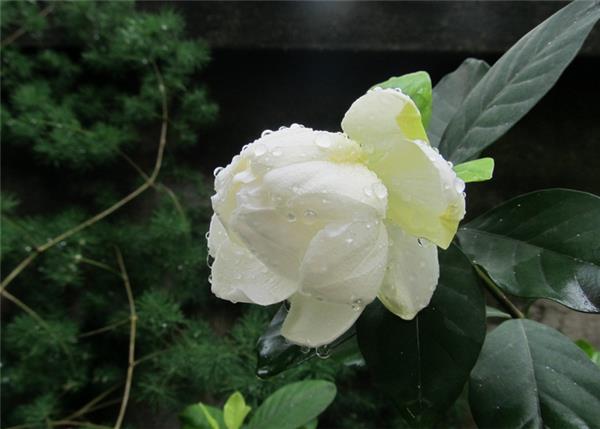
(2) Gardenia likes moisture. Besides keeping the potting soil moist regularly, you must also always pay attention to increasing air humidity. This is because the northern climate differs from that of the south: northern springs are dry with frequent dry winds, summers have high light intensity and hot weather, and winters are cold and dry. Therefore, in spring and summer, spray the leaves with clean water and sprinkle water on the nearby ground every morning and evening to increase air humidity. In winter, water less, but still spray and wash the branches and leaves regularly to keep the leaf surface clean.
(3) Gardenia likes light, but fears strong direct sunlight. If exposed to scorching sun, the leaves turn yellow and white and eventually fall off. Therefore, in summer it must be placed under a shade frame or in a spot with scattered light, letting it receive some sunlight in the early morning and evening, so as to avoid the leaves turning yellow.
(4) Gardenia is not cold-tolerant, so pay attention to moving it indoors and outdoors at the right times. Generally, move it indoors in mid-October, place it in a sunny spot, and keep the room temperature at 10°C-12°C. The following spring, do not move it outdoors too early; usually late April is the best time to move it out. If the above four points can be followed, gardenia can not only settle down in the north, but also have green leaves, abundant flowers and a strong fragrance.
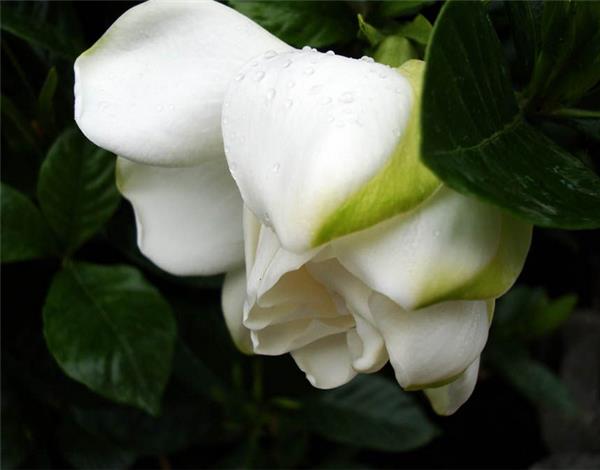
Now let's look at the key cultivation points and pruning methods for large-leaf gardenia.
Key cultivation points for large-leaf gardenia
Large-leaf gardenia has fairly strict soil requirements and grows well in acidic soil with a pH of 5-6, while soil in the north is generally neutral or alkaline. In such soil, due to the hydrolysis of iron salts, water-insoluble ferric hydroxide forms, which cannot be absorbed by the plant, causing severe iron deficiency. Although iron is not a component of chlorophyll, it is a necessary condition for chlorophyll formation, so iron deficiency is equivalent to blocking chlorophyll synthesis, thus preventing photosynthesis from proceeding normally, which is the main cause of the plant starving to death.
In addition, iron is also a component of certain oxidases and plays an important role in respiration. If large-leaf gardenia lacks iron, it will affect the plant's normal physiological activities. To solve iron deficiency, watering with "alum fertilizer water" can achieve good results. Besides this, a small amount of black alum powder can also be mixed into the potting soil, at 0.5% of the potting soil weight; during the growing season, water with 0.5%-1.0% black alum water every 10-15 days, which can also ensure the gardenia's iron requirements and allow it to grow and develop normally.
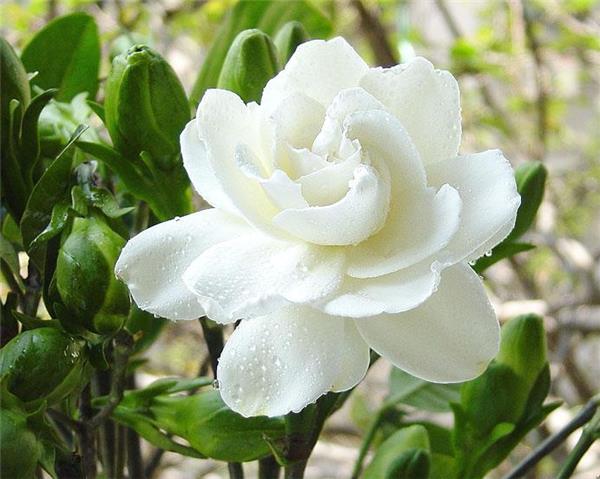
Pruning methods for large-leaf gardenia
Dormant-period pruning of large-leaf gardenia
Dormant-period pruning is mainly heavy pruning. Large-leaf gardenia is an evergreen plant, so the dormant period runs from leaf yellowing and fall to before the spring shoots emerge. The main purpose of dormant-period pruning is to remove diseased and pest-infested branches, dead branches, overlapping branches, etc., so as to form a certain plant shape and keep the growth of the main branches balanced.
If you want to see flowers earlier the next year on large-leaf gardenia, prune during the dormant period, but do not prune heavily; if you want to see flowers later, you can prune heavily.
Growing-period pruning of large-leaf gardenia
Growing-period pruning is mainly light pruning, and the suitable time is from after budding to before the new shoots stop growing. The main purpose of growing-period pruning is to control excessive growth of new shoots, improve light conditions and promote flower bud differentiation.
Generally speaking, gardenia with strong vigor and vigorous growth can be pruned more, while weak-growing ones should be pruned less. For shaping purposes, usually remove messy crossing branches, overlapping branches, parallel branches, whorled branches, opposite branches, weak branches, diseased branches, etc. The nutrients of the remaining branches are concentrated, so they can grow into robust branches.