How to Grow Gardenia? Indoor Growing Methods and Tips
How do you grow gardenia indoors? When growing gardenia at home, you need to understand its physiological characteristics well so that the leaves, flowers and fruit all look beautiful and its ornamental value is enhanced.
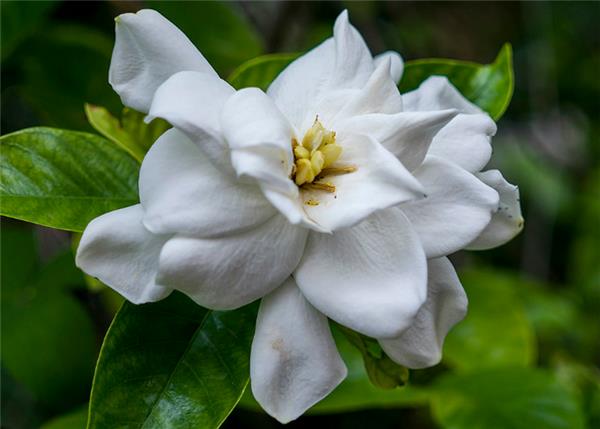
How to Grow Gardenia Indoors
1. Choose suitable potting soil
Gardenia likes acidic soil, with a suitable pH of 5 to 6. Prepare suitable soil before planting. If the soil's acidity and alkalinity are unsuitable, later care will be very troublesome.
For the growing medium, usually choose leaf mold and peat soil plus half garden soil; do not use coal cinder, or simply buy special soil for clivia, which is convenient and practical.
2. Fertilize reasonably
Gardenia likes fertilizer. When planting, add decomposed cake fertilizer to the soil as a base fertilizer.
During the growing season, use cake fertilizer and ferrous sulfate fermented into fertilizer water, and water it on once a week. A full-nutrient organic liquid fertilizer can also be used.
During the bud stage, apply a top dressing 1~2 times, watering on a potassium dihydrogen phosphate aqueous solution, which can make the flowers larger and fuller and the fragrance rich.
Stop fertilizing when the summer temperature is above 35°C and the autumn temperature is above 15°C.
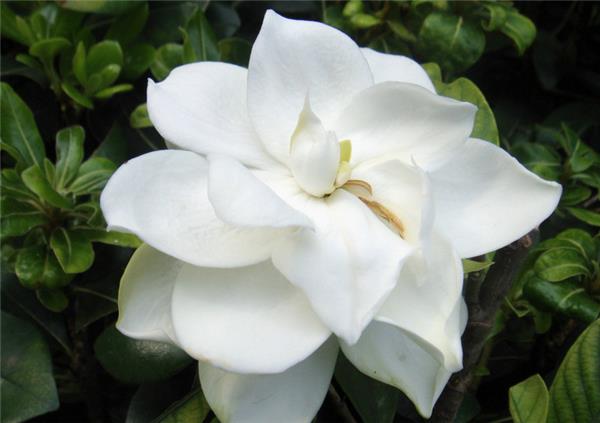
3. Water scientifically
Gardenia likes a moist, humid environment. During the growing period from April to September, keep the potting soil moist, watering so that it dries and then gets wet, and at night you can mist to wet the leaves to maintain humidity. If the plant grows too vigorously, do not water at night; water after the sun comes out in the morning.
In northern alkaline-water areas, when watering, let tap water stand for a day before watering. Every 3~5 days, water on a little citric acid aqueous solution to keep the leaves emerald green.
4. Give it plenty of sun
Gardenia's growth needs plenty of sunlight. If it is kept in half shade for a long time, the flowering branches will be thin and spindly. During care, except for shading needed in July/August and at noon, and except during winter dormancy, it can be cared for in the sun at other times.
5. Good winter dormancy
Although gardenia is cold-tolerant, after a potted gardenia goes through a severe winter its root system will be damaged, and it recovers slowly in spring. But if placed indoors with heating, where the temperature is higher and light is insufficient, the plant's growth slows and it blooms later the next year. The best method is to place the pot in a 5°C environment to let it go dormant, or wrap the flower pot with insulating material and place it outdoors in a sunny, wind-sheltered spot to overwinter.
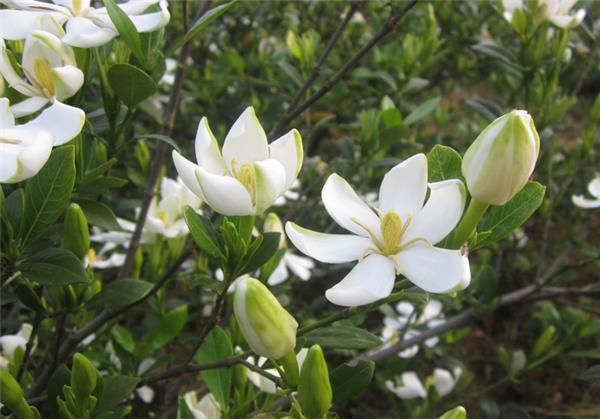
6. Prune appropriately
When the main stem of the gardenia grows to 20 cm, pinch off the growing tip and leave 3~4 branches to encourage branching. After flowering each year, prune lightly, cutting off weak branches and diseased branches. But in spring, gardenia must not be cut back at the branch tips, otherwise it will be difficult for it to bloom that year.
7. Repot and change the soil at the right time
Gardenia has strong vitality; a small seedling grows from a few cm to several tens of cm, so you should repot according to the size of the plant. When the plant's branch length is 2~3 times the diameter of the flower pot's rim, it needs repotting. When repotting, promptly prune the old roots, replace half the soil, water thoroughly, and place it in half shade for a week; after new buds grow, move it into the sun.
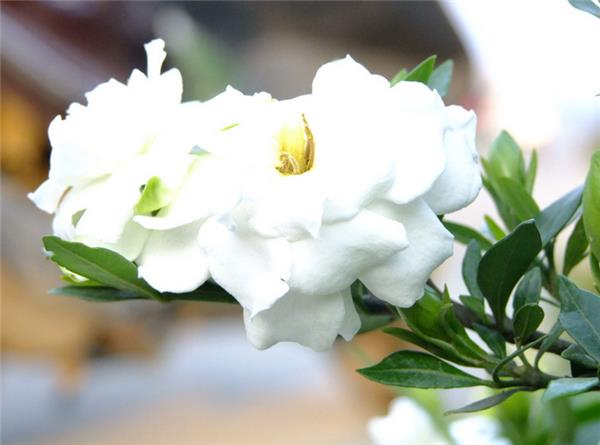
Precautions for growing gardenia
Gardenia is often prone to chlorosis with yellowing leaves. Chlorosis is caused by many reasons, so different measures must be taken for prevention and control. Chlorosis caused by fertilizer deficiency: this kind of chlorosis starts from the old leaves at the lower part of the plant and gradually spreads to the new leaves. Nitrogen deficiency: leaves simply turn yellow, and new leaves are small and brittle. Potassium deficiency: old leaves change from green to brown. Phosphorus deficiency: old leaves turn purplish red or dark red. For all the above situations, you can apply decomposed human manure or cake fertilizer. Chlorosis caused by iron deficiency: this kind of chlorosis shows on the new leaves; at first the leaves are pale yellow or white while the veins are still green, and in severe cases the veins also turn yellow or white, and eventually the leaves dry up and die. For this situation, spray a 0.2%-0.5% ferrous sulfate aqueous solution for prevention and control. Chlorosis caused by magnesium deficiency: this kind of chlorosis starts from the old leaves and gradually develops toward the new leaves, the veins remain green, and in severe cases the leaves fall off and the plant dies. For this situation, spray a 0.7%-0.8% boron-magnesium fertilizer for prevention and control. Excessive watering, freezing and so on can also cause yellow leaves, so special attention must be paid during the care process.