How to grow gardenia? Master these methods to grow gardenias easily
The flower language of the gardenia is "strength, eternal love, a lifetime of waiting, our love" - a very beautiful sentiment. Gardenia love decoded: from spring to early summer you can see the white flowers of the gardenia, and its elegant fragrance makes its presence impossible to ignore. So how do you grow gardenias well?
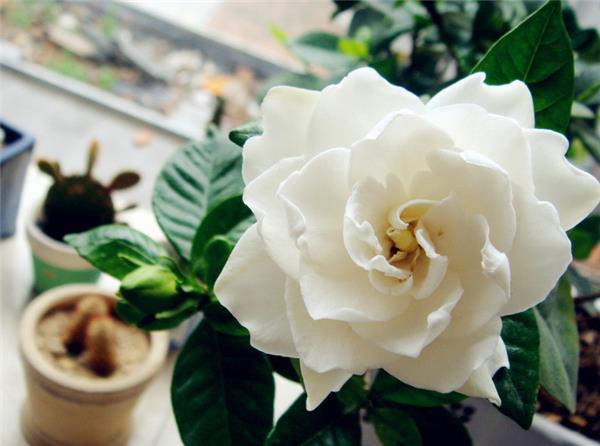
How to grow gardenias well
The gardenia is a typical acid-soil plant and fears alkaline soil. Gardenias love fertilizer. It is summer now, so you should water more, and every morning and evening spray the leaf surfaces with clean water; when the weather is hot, also sprinkle water on the ground to lower the temperature and raise humidity. At noon, do not let it be exposed to scorching sun, otherwise the leaves will certainly turn yellow. Always keep the potting soil moist. Every half a month, water once with 0.2% ferrous sulfate or alum fertilizer water (but do not misuse ferrous sulfate) to replenish the soluble iron in the soil and prevent the leaves from turning yellow.
In addition, when growing gardenias at home, you must understand their physiological characteristics well so that the leaves, flowers and fruit are all beautiful and their ornamental value is enhanced.
1. Prefers acid soil: if the soil, water and fertilizer contain alkali, the plant cannot absorb iron, which affects the formation of chlorophyll, causing branches to wither, leaves to scorch and even death. Use fertile, loose, well-drained acid soil; for example, mixing thoroughly rotted pine sawdust into the soil also works very well.
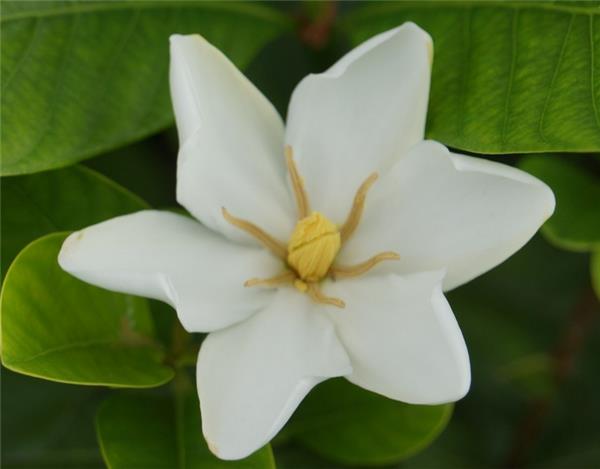
2. Prefers shade and cool: never expose it to scorching sun, but people often mistakenly think the gardenia requires full shade, which leads to mistakes in cultivation. In fact, while paying attention to providing a cool, shaded environment, you should maintain 60% light all day to meet its growth needs.
3. Prefers humidity: if the air humidity is below 70%, it will directly affect flower bud differentiation and the growth of flower buds, but too much moisture will cause root rot, withered branches, and yellowing and falling leaves. Besides normal watering, you should often spray the leaf surfaces and the nearby ground with clean water to appropriately increase air humidity.
4. Prefers fertilizer: it is best to apply thoroughly rotted fertilizers such as soybean cake, sesame paste residue and peanut bran; after fermentation and decomposition they can be acidic, but you must apply light fertilizer frequently, and never use strong fertilizer or raw fertilizer. Do not fertilize during the winter dormancy period. For plants grown less than three years, never apply human excrement or urine. Applying too much nitrogen fertilizer will cause thick branches and large, dark green leaves, but no flowers. A lack of phosphorus and potassium fertilizer will also cause failure to bloom or withering and dropping of flower buds.
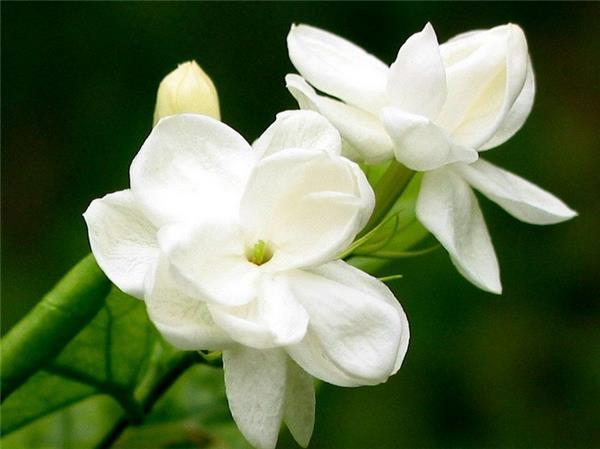
5. Prefers warmth: 18°C to 22°C during the growing period, 5°C to 10°C during the winter, and below -10°C it is prone to freezing damage.
6. Prune at the right time: the gardenia has strong sprouting ability, and branches easily overlap, becoming so dense that air cannot circulate and nutrients are dispersed. When shaping, select and keep three main branches according to the tree form, and remove at any time the other branches sprouting from root suckers. After the flowers fade, the branches should be cut back promptly to encourage new shoots to sprout below the cut. When the new shoots have grown three nodes, pinch off the tips to prevent blind growth.
7. Prevent chlorosis. There are four causes:
① Iron deficiency. Soil containing too much lime, alkali, phosphorus or manganese will affect the plant's absorption of iron and the formation of chlorophyll, causing the veins of young leaves to lose green, spreading over the whole leaf. You can apply 1/500 ferrous sulfate water or 0.2% black alum water once every 10 days.
② Magnesium deficiency. Acid red soil and excessive potassium or ammonium easily cause magnesium deficiency, making the veins of the lower old leaves lose green and turn yellow. You can spray with a 1% to 2% magnesium sulfate solution, but excessive magnesium will cause calcium deficiency and hinder the development of the xylem in roots and stems.
③ Potting soil too wet or too dry.
④ Scorching sun in summer.
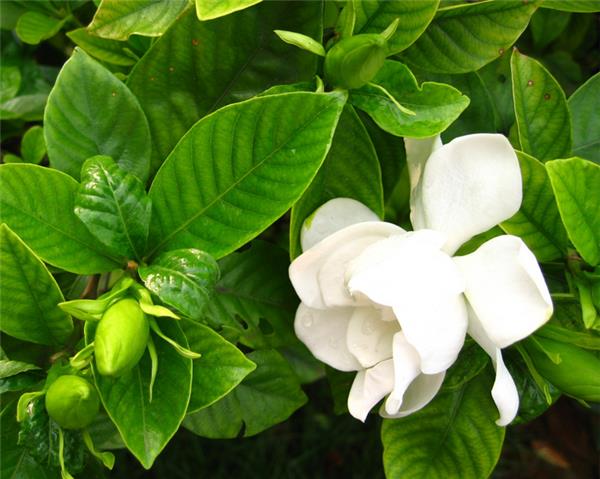
If you ask me, how about growing a gardenia at home? I will definitely answer: I fully approve.
1. Its appearance leaves you unable to find any fault. We often say that the gardenia has great ornamental value. How is it ornamental? The gardenia has luxuriant branches and leaves, its foliage is evergreen all year round, its flowers are fragrant and elegantly simple, and with green leaves and white flowers it is especially clear, beautiful and lovely. It is an excellent landscaping material for courtyards, suitable for planting in front of steps, beside ponds and along roadsides, and can also be used as a flower hedge, in pots and as a bonsai for viewing. The flowers can also be used in flower arrangements and worn as decoration. A delicate, charming little flower that from time to time gives off a fresh fragrance makes people linger and never want to leave.
2. It can bring about a qualitative change in the home environment. The greatest feature of a gardenia is its floral fragrance. As long as you plant one at home, it can be smelled for hundreds of square meters around. Just imagine, in your home, with a space of about more than 100 square meters, no matter which corner you walk to you can smell the scent of gardenia - what an enjoyable thing that would be!
3. Its role in beautifying the home is absolutely considerable. If you place a gardenia beside the TV at home, besides beautifying the indoor space and absorbing harmful indoor radiation, it also constantly gives off a delicate fragrance, covering up the original bland or even unpleasant odors, exchanging the air in the space, and filling the whole home with poetic charm.
4. Living in a space with gardenias, people become healthier. For a person living alone, the quality of the air they breathe has a great impact on their health. We usually see that people in rural areas tend to live longer and be healthier, still able to work in the fields in their seventies, while those living in cities may not be so lucky and spend more time going to the hospital. The biggest difference between rural areas and cities is that the air quality is different; rural air is obviously much better. Therefore, if we put some gardenias at home, making the air at home as fresh as in the countryside, then longevity is not necessarily impossible.
Besides beautifying the indoor space and absorbing harmful indoor radiation, it also constantly gives off a delicate fragrance, covering up the original bland or even unpleasant odors, exchanging the air in the space, and filling the whole home with poetic charm.4. Living in a space with gardenias, people become healthier. For a person living alone, the quality of the air they breathe has a great impact on their health. We usually see that people in rural areas tend to live longer and be healthier, still able to work in the fields in their seventies, while those living in cities may not be so lucky and spend more time going to the hospital. The biggest difference between rural areas and cities is that the air quality is different; rural air is obviously much better. Therefore, if we put some gardenias at home, making the air at home as fresh as in the countryside, then longevity is not necessarily impossible.